the authentic origin of ‘red herring’

Red herring, used in laying trails for hounds to follow, was misunderstood as a deliberate attempt to distract them, hence the figurative use of ‘red herring’.
Read More
“ad fontes!”
Red herring, used in laying trails for hounds to follow, was misunderstood as a deliberate attempt to distract them, hence the figurative use of ‘red herring’.
Read More‘First catch your hare’ (early 19th cent.): originated in popular humour ascribing this phrase to ‘The Art of Cookery’ (1st published 1747), by Hannah Glasse
Read Moremoonraker: a native of Wiltshire; from the tale that some of them mistook the reflection of the moon in a pond for a cheese and tried to rake it out.
Read More‘Once in a blue moon’ is a development from ‘once in a moon’, meaning ‘once a month’, hence ‘occasionally’—‘blue’ is merely a meaningless fanciful intensive.
Read More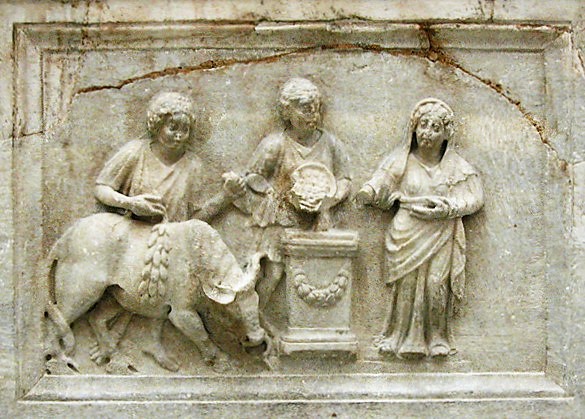
The verb ‘immolate’ is from Latin ‘immolare’, meaning, literally, ‘to sprinkle (a victim) with sacrificial meal’, from ‘mola salsa’, ‘salted spelt-meal’.
Read More
The theory that the custom of visiting one’s mother on mid-Lent Sunday derived from the custom of going to one’s mother church on that day is no proven.
Read More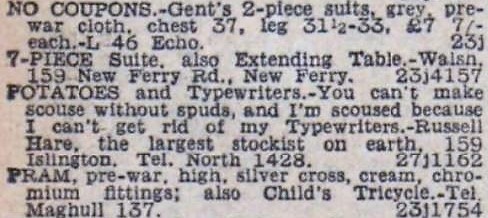
The original sense of ‘Scouse’, denoting a person from Liverpool, is ‘a stew’. The word ‘scouse’ is in turn a shortening of ‘lobscouse’, of obscure origin.
Read More
The French word for the oyster-shaped piece of meat in the hollow of the pelvic bone of a fowl is ‘sot-l’y-laisse’, literally ‘(the) fool leaves it there’.
Read More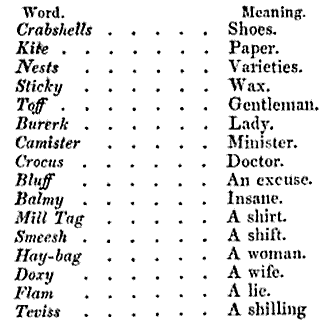
A ‘barmy’ person has a ‘frothy top’, insubstantial brains, from ‘barm’, the froth that forms on the top of fermenting malt liquors.
Read More
Of French origin, the word ‘poulet’, literally ‘chicken’, denotes a love letter. It probably refers to the fact that when folding these messages, one would make two tips resembling chicken wings.
Read More word histories