origin of ‘poulet’ (love letter)

Of French origin, the word ‘poulet’, literally ‘chicken’, denotes a love letter. It probably refers to the fact that when folding these messages, one would make two tips resembling chicken wings.
Read More
“ad fontes!”
Of French origin, the word ‘poulet’, literally ‘chicken’, denotes a love letter. It probably refers to the fact that when folding these messages, one would make two tips resembling chicken wings.
Read More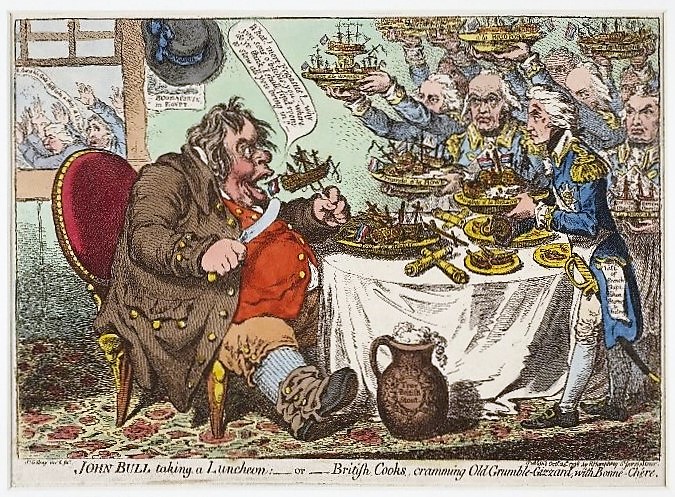
John Bull taking a Luncheon:—or—British Cooks, cramming Old Grumble-Gizzard, with Bonne-Chère. hand-coloured etching by James Gillray, published on 24th October 1798 — © Trustees of the British Museum This print was published just after Nelson’s victory at the Battle of the Nile. He is shown in the forefront of British admirals and naval heroes, serving up […]
Read More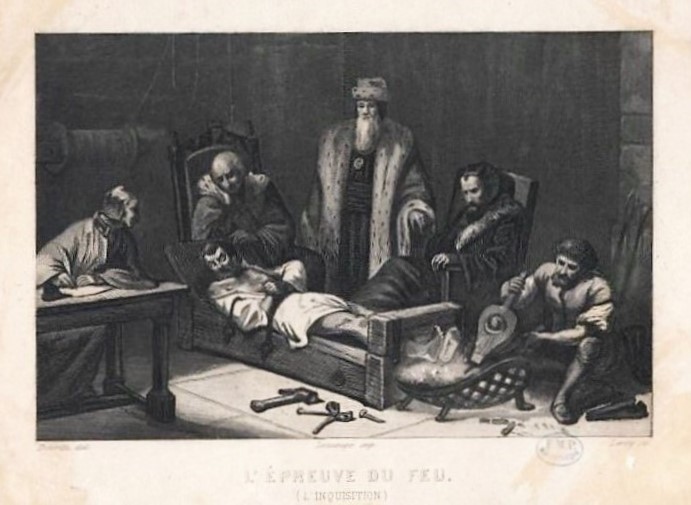
L’épreuve du feu (l’inquisition) by Devritz (painter) and Leroy (engraver) – date unknown source: BIU Santé The original meaning of the noun ordeal, from Old English ordāl, ordēl, is: an ancient test of guilt or innocence by subjection of the accused to severe pain, survival of which was taken as divine proof […]
Read MoreThe proverb (what’s) one man’s meat is another (man)’s poison means that things liked or enjoyed by one person may be distasteful to another. In this proverb, meat has its original sense of food in general, anything used as nourishment, solid food as opposed to drink. This original sense survives in sweetmeat and in the phrase […]
Read More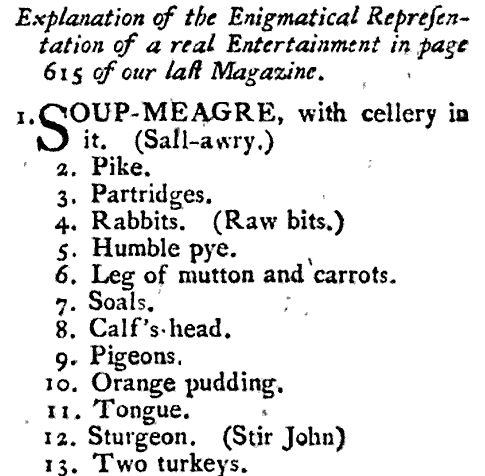
A puzzle published in The Hibernian Magazine, or, Compendium of Entertaining Knowledge (Dublin, Ireland) in 1774 punned on the humble of humble pie, which may indicate that the latter term was already used figuratively at that time. The following is from the October issue: […]
Read More
It has often been said that the noun banger appeared as British slang for sausage in the World War One trenches (cf. also Zeppelin). But, in fact, it was in use in the British Navy before the outbreak of the war. On 27th July 1904, The Tatler (London) published The real letters of […]
Read More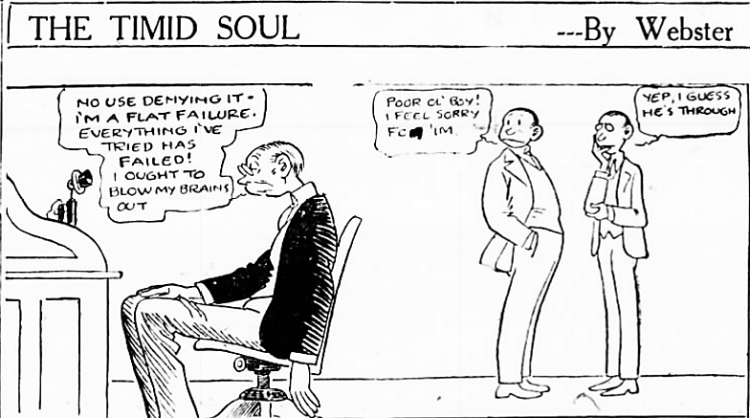
NO USE DENYING IT – I’M A FLAT FAILURE. EVERYTHING I’VE TRIED HAS FAILED! I OUGHT TO BLOW MY BRAINS OUT POOR OL’ BOY! I FEEL SORRY FOR ’IM YEP, I GUESS HE’S THROUGH THAT NIGHT TELEGRAPH OFFICE? I WANT TO SEND A WIRE TO STATION B-L-A-H, 164 BLANK ST. – YOUR CONCERT COMING […]
Read More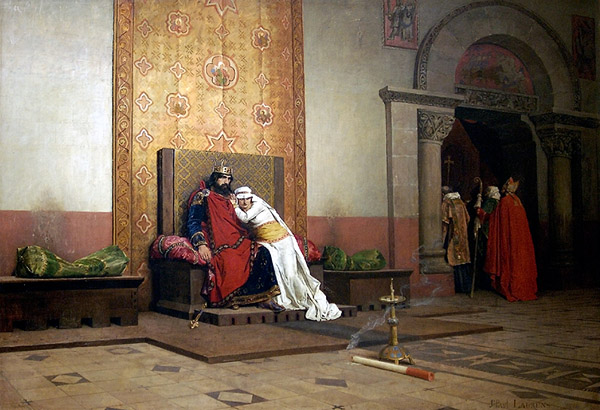
The Excommunication of Robert the Pious (1875), by the French artist Jean-Paul Laurens (1838-1921)—image: Wikimedia Commons The officiants have just excommunicated Robert by bell, book, and candle [note 1], and left the quenched candle behind. Robert II (972-1031), known as the Pious, the son of Hugues Capet, was excommunicated for incest by Pope Gregory V […]
Read More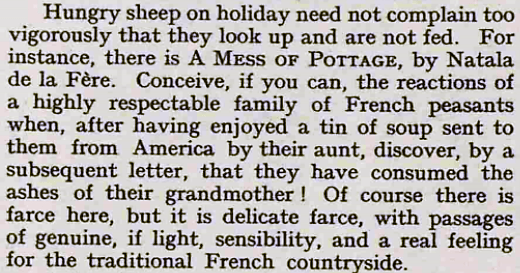
Hungry sheep on holiday need not complain too vigorously that they look up and are not fed. For instance, there is A Mess of Pottage, by Natala de la Fère. Conceive, if you can, the reactions of a highly respectable family of French peasants when, after having enjoyed a tin of soup sent to them […]
Read More
This advertisement for the second season (2014) of comedienne Amy Schumer’s sketch show, Inside Amy Schumer, highlighted both the “hot” and “mess” sides of her personality — photograph: Jamey Welch Creative The primary meanings of the noun mess are a serving of food, a course, a meal, a prepared dish of a specified […]
Read More
