The verb hash, which dates back to the mid-17th century, is from French hacher, meaning to chop, to mince, itself from the feminine noun hache, meaning an axe. (English hatchet is from the diminutive of hache, hachette.) The literal sense of the noun hash is a dish consisting of meat which has been […]
Four’s a Crowd.—A merry, irresponsible farce that dips frequently into pure crazy comedy. For this they have chosen to give Errol Flynn and Olivia de Havilland a “break” from their usual story book hero and heroine types. These two lovely young people do very well, but I cannot think that crazy comedy suits them best. […]
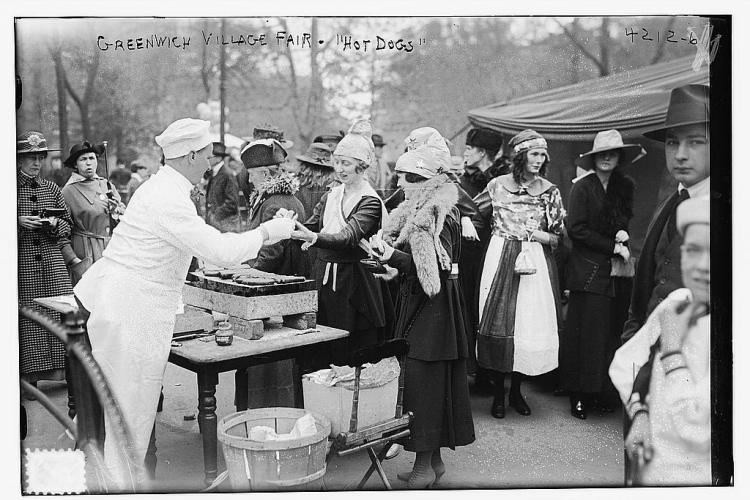
Greenwich Village Fair – “Hot Dogs” – June 1917 photograph: Library of Congress The term hot dog denotes a sausage, especially a frankfurter, served hot in a long roll split lengthways. In US slang, the noun dog has been used to denote a sausage since the late 19th century. This usage is first recorded […]
photograph: Farm Shop The noun mayonnaise denotes a thick, creamy sauce consisting of egg yolks emulsified with oil and seasoned, used as a cold dressing or accompaniment for salad, eggs, fish, etc., or as the base for other sauces. It is used in two French phrases: la mayonnaise prend, literally, the mayonnaise […]
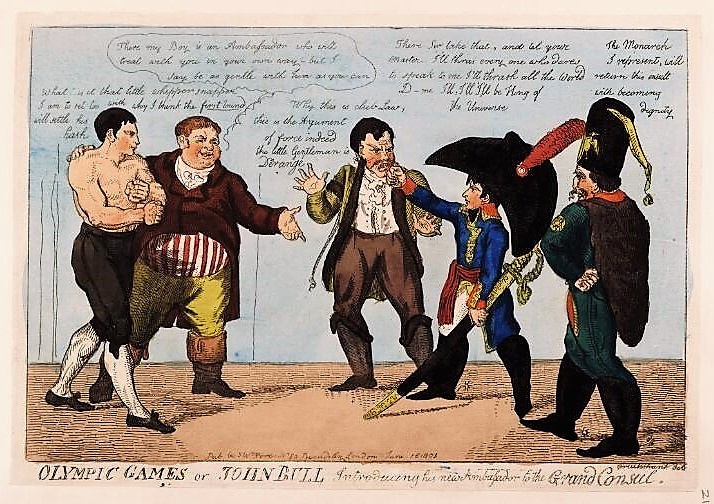
The sandwich (item of food consisting of two pieces of bread with a filling between them) is named after the British statesman John Montagu (1718-92), 4th Earl of Sandwich. It is generally said that the sandwich was invented because he once spent twenty-four hours at the gaming-table without other refreshment than some slices of beef […]
A blend of turkey, duck and chicken, the noun turducken designates a poultry dish consisting of a boned chicken inside a boned duck which is in turn placed inside a partially boned turkey, along with seasoned stuffing between the layers of meat and in the central cavity, the whole typically being cooked by roasting. It […]
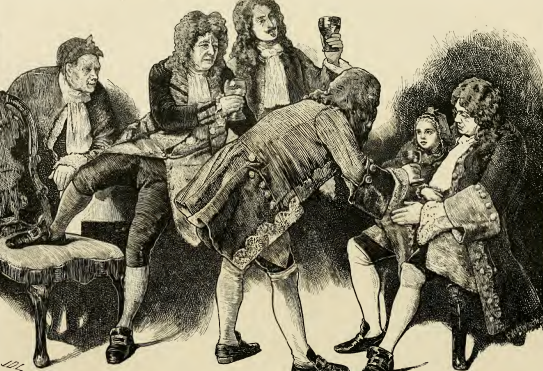
Lady Mary Wortley Montagu and the Kit-Kats – illustration from Old and New London: A Narrative of its History, its People, and its Places (1873), by Walter Thornbury (The Kit-Cat, or Kit-Kat, Club in London was a club of Whig politicians and men of letters founded in the reign (1685-8) of James II; its […]
The phrase curate’s egg means something that has both good and bad characteristics or parts. This phrase was popularised by True Humility, a cartoon by George du Maurier *, published in Punch, or the London Charivari (London, England) of Saturday 9th November 1895. This cartoon depicts a meek curate who, having been served a stale egg while […]
The colloquial terms bag of mystery and mystery bag denote a sausage, a saveloy. The British lexicographer John Stephen Farmer (1854-1916) gave the following explanations in Slang and its Analogues Past and Present ([London]: Printed for subscribers only, 1890): Bags of mystery (common).—Sausages and saveloys are so called—from the often mysterious character of their compounds. Presumably composed […]
The word ham denotes the part of the hindquarters of a pig or similar animal between the hock and the hip, hence, in cookery, the meat of this part, especially when salted or smoked. The comparison between large hands and hams (aided by the alliteration ham–hand) gave rise to the adjectives ham-fisted and ham-handed, which mean: – having large hands; – hence […]




 word histories