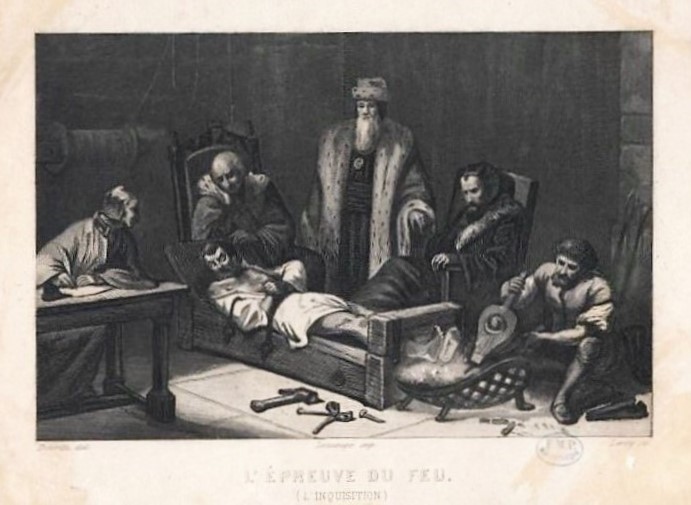
L’épreuve du feu (l’inquisition) by Devritz (painter) and Leroy (engraver) – date unknown source: BIU Santé The original meaning of the noun ordeal, from Old English ordāl, ordēl, is: an ancient test of guilt or innocence by subjection of the accused to severe pain, survival of which was taken as divine proof […]
The term old chestnut denotes a joke, story or subject that has become tedious and uninteresting through constant repetition. Here, the adjective old is simply an intensifier of the noun. The figurative use of chestnut originated in American-English theatrical slang. Diary of a Daly Débutante: being passages from the journal of a member of Augustin Daly’s […]
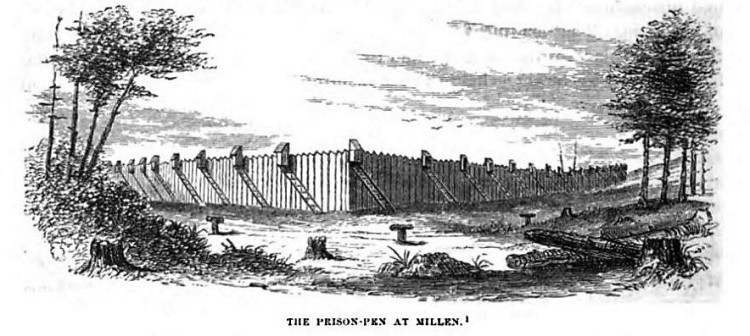
the prison-pen at Millen This pen was built of large logs driven in the ground, with sentry posts on the top, at short intervals. No shelter whatsoever was afforded the prisoners, and they were compelled to burrow in the earth, to avoid the scorching sun or the biting frost, for their captors robbed them […]
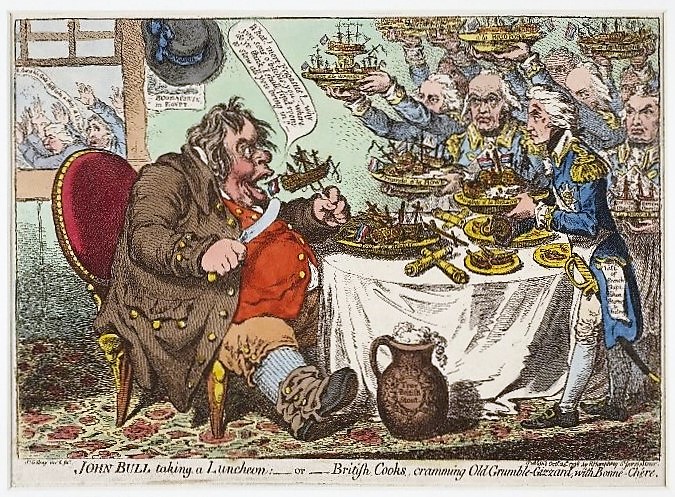
It is a circumstance rather remarkable, that the answer to Sir George Rodney’s summons of surrender, given by the respective Dutch Governours of the Islands of St. Eustatius and St. Martin’s, should be couched exactly in the same form of words without the smallest variation; from this we are either to suppose, that the […]
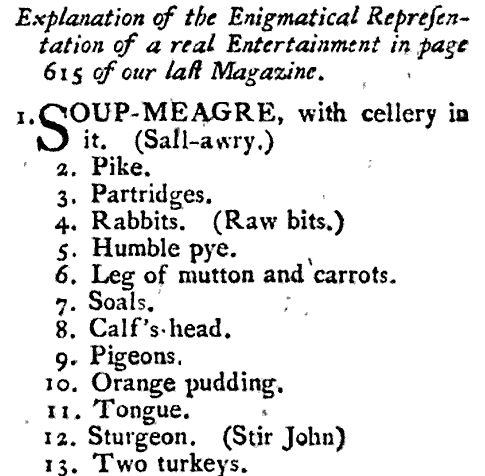
A puzzle published in The Hibernian Magazine, or, Compendium of Entertaining Knowledge (Dublin, Ireland) in 1774 punned on the humble of humble pie, which may indicate that the latter term was already used figuratively at that time. The following is from the October issue: […]
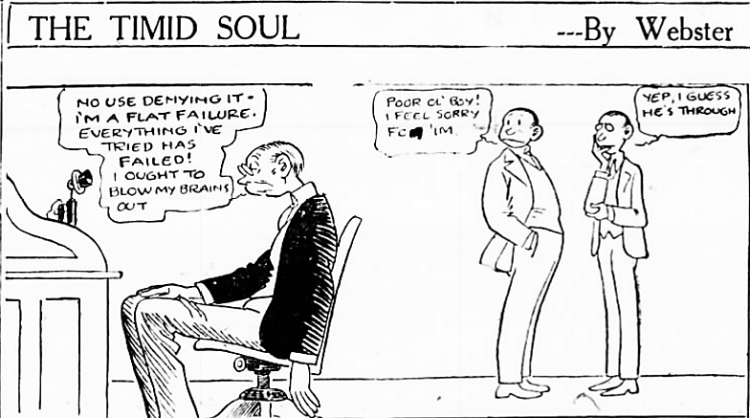
NO USE DENYING IT – I’M A FLAT FAILURE. EVERYTHING I’VE TRIED HAS FAILED! I OUGHT TO BLOW MY BRAINS OUT POOR OL’ BOY! I FEEL SORRY FOR ’IM YEP, I GUESS HE’S THROUGH THAT NIGHT TELEGRAPH OFFICE? I WANT TO SEND A WIRE TO STATION B-L-A-H, 164 BLANK ST. – YOUR CONCERT COMING […]
photograph from When exercise is dangerous: Endurance races risky for group sometimes called ‘middle-aged men in Lycra’ – the Chicago Tribune (Chicago, Illinois) – 17th July 2013 The word MAMIL is an acronym from the initial letters of middle-aged man in Lycra, probably punningly after mammal. Humorous and somewhat depreciative, it denotes a middle-aged […]
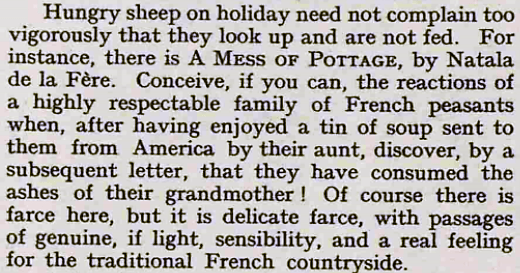
Hungry sheep on holiday need not complain too vigorously that they look up and are not fed. For instance, there is A Mess of Pottage, by Natala de la Fère. Conceive, if you can, the reactions of a highly respectable family of French peasants when, after having enjoyed a tin of soup sent to them […]
This advertisement for the second season (2014) of comedienne Amy Schumer’s sketch show, Inside Amy Schumer, highlighted both the “hot” and “mess” sides of her personality — photograph: Jamey Welch Creative The primary meanings of the noun mess are a serving of food, a course, a meal, a prepared dish of a specified […]




 word histories