The adjective fed up means annoyed, unhappy or bored, especially with a situation that has existed for a long time. The original, literal meaning is simply sated with food, since to feed up an animal or a person is to supply them with rich and abundant food. For example, the author of Whether Love be a natural or fictitious Passion, published in Pope’s Bath Chronicle of 3rd May 1764, wrote: The […]
In the chapter Our lunatic contributor of Words and names (1933), the British philologist Ernest Weekley (1865-1954) wrote: The correspondence columns of our middlebrow weeklies and of our two Sunday papers are the happy hunting-ground of the amateur etymologist. A few years ago he published the discovery that ‘nap,’ ‘a short sleep,’ was derived from Napoleon’s power of sleeping […]
A blend of magpie and piety, the word magpiety was originally invented by the English poet and humorist Thomas Hood (1799-1845) to denote talkativeness, garrulity, especially on religious or moral topics and affected piety. This author first used the word in Jarvis and Mrs. Cope, published in The New Sporting Magazine of March 1832; the poem thus begins: JARVIS AND MRS. COPE. A decidedly serious […]
Of American-English origin, the expression to have an axe to grind (American-English spelling ax) means to have a private reason for doing, or being involved in, something. It has often been attributed to Benjamin Franklin [note 1]. For example, the New English Dictionary (NED – 1888), as the Oxford English Dictionary was known, mentions “a […]
MEANING The phrase (if you’ll) excuse (or pardon) my French is used as an apology for swearing. ORIGIN The current sense seems to derive from an actual apology for speaking French. (It is therefore unnecessary to invoke the centuries-old adversarial relationship between the English and the French.) The form pardon my French is first attested in Randolph, a Novel (1823), by the American […]
Aunt Sally – from The Modern Playmate: A book of games, sports, and diversions for boys of all ages (new revised edition – 1875?), by John George Wood (1827-89) The Oxford English Dictionary (first edition – 1885) thus defined Aunt Sally: a game much in vogue at fairs and races, in which […]
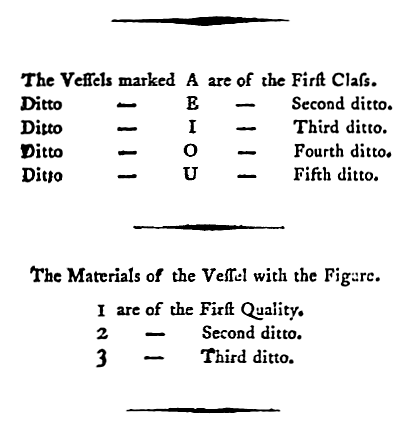
MEANING first class, outstanding ORIGIN Lloyd’s Register, historically Lloyd’s Register of Shipping, is an independent society formed in 1760 by a group of merchants operating at Lloyd’s coffee house in London, which surveys ships to ensure compliance with standards of strength and maintenance. The name also denotes an annual publication giving details […]
The word Mayday, which dates from 1923, is used as an international radio distress signal, especially by ships and aircraft. It was supposedly coined by Frederick Stanley Mockford (1897-1962), a senior radio officer at London’s Croydon Airport, but this has not been substantiated: the fact that this story has often been repeated gives it a semblance […]
This Latin expression is composed of virtus, virtue, and dormitiva, feminine of dormitivus, dormitive. It first appeared in the following lines in dog Latin of Le Malade imaginaire (The Imaginary Invalid – 1673), in which the French playwright Molière (Jean-Baptiste Poquelin – 1622-73) satirised the circular explanations sometimes used in early medicine: (original edition) BACHELIERVUS. Mihi à docto Doctore Domandatur causam & rationem, […]
The phrase trick or treat is a traditional formula used at Hallowe’en by children who call on houses threatening to play a trick unless given a treat or present. In early use, the phrase was also tricks or treats, treat or trick, and variants. This phrase seems to have originated in Ontario (capital: Toronto), a province of […]