‘coward’—from Old-French ‘cuard’, probably referring to a frightened animal with its tail between its legs—from ‘cüe’ (Modern French ‘queue’), ‘tail’, and pejorative suffix ‘-ard’ (cf. ‘bastard’)—‘cowardy, cowardy custard’, alliterative nonsensical children’s phrase (19th century)
Classical Latin ‘muscŭlus’, literally ‘a little mouse’, also denoted ‘a muscle of the body’, especially of the upper arm, from the resemblance of a flexing muscle to the movements made by a mouse; ‘muscŭlus’ was also used in the sense of ‘mussel’.
First recorded in The Leeds Mercury (Leeds, Yorkshire) of Friday 26 August 1938, the phrase ‘to use one’s loaf’ means ‘to use one’s common sense’. Here, ‘loaf’, a shortening of ‘loaf of bread’, is rhyming slang for ‘head’.
first recorded in 1480—from Portuguese ‘marmelada’ (quince marmalade), from ‘marmelo’ (quince), itself from Latin ‘malomellum’ (quince, sweet pome), a blend of Latin ‘mēlŏmĕli’ (syrup of preserved quinces) and ‘mĕlĭmēla’ (a variety of sweet pome)
The phrase ‘all behind, like a cow’s tail’ and its variants mean ‘left behind’ and ‘late in accomplishing a task’. They appeared in print in the mid-19th century in the USA, Australia and Britain.
UK, 1937, colloquial—‘to have done something more than oneself (or someone else) has had hot dinners’: used jocularly to emphasise the subject’s wide experience of a particular activity or phenomenon
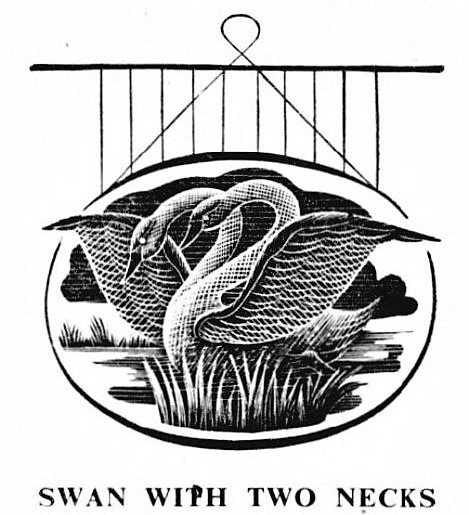
Alteration of ‘the Swan with Two Nicks’—All the Thames swans belong to the Crown, the Vintners’ Company or the Dyers’ Company. A swan with two nicks belongs to the Vintners’ Company, with one nick to the Dyers’ Company, with no nicks to the Crown.
Italian translation of Latin ‘in pectore’ (‘in the breast’, ‘in the secret of the heart’)—when a pope announces that he has appointed a cardinal whom he reserves ‘in petto’, it means that he will reveal this cardinal’s name later
The name ‘Quorn’ was first registered as a trademark—for certain edible products other than meat substitutes—by the Quorn Specialities Company of Leicester, England, in 1914. The meat substitute was subsequently developed by the successors of this company.
Of American-English origin, ‘gravy train’ is first recorded in 1899 with reference to sporting achievement, not to financial gain; it originated in the use of ‘gravy’ in the figurative sense of ‘advantage’, ‘benefit’, first recorded in 1845.