UK, 1898—Australia, 1913—used when, while addressing someone, the speaker is interrupted by someone else—in particular when the person who interrupts is a subordinate of the person whom the speaker addresses
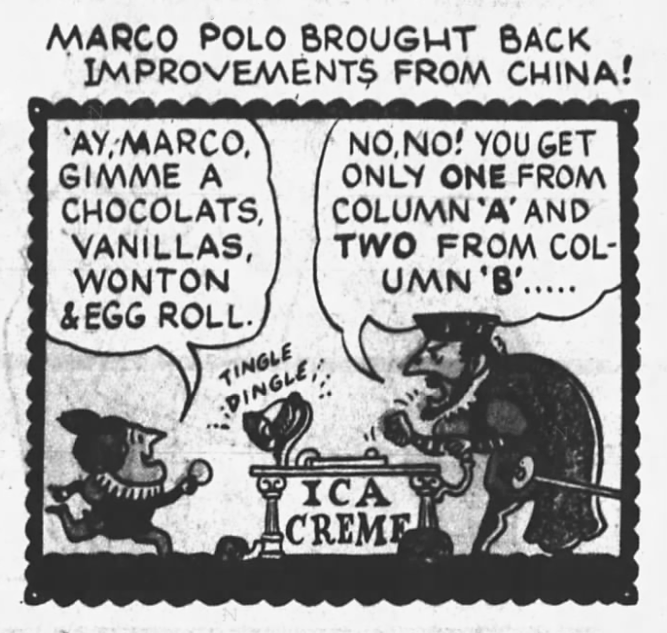
alludes to the menus in Chinese restaurants, which list the dishes in two columns, column A and column B—USA, 1956—first in reference to comedian Buddy Hackett’s routine on a Chinese waiter taking an order
said to console a child choking over his or her food—UK, obsolete—first recorded in A Complete Collection of Genteel and Ingenious Conversation (1738), by Jonathan Swift
USA, 1887—of a child: to go to bed—‘Lilywhite’ refers to the whiteness of the bedsheets—from ‘lily-white’, meaning ‘white as a lily’, hence ‘of a pure white’
UK, 1907—the ideal of an unmarried woman—the phrase was especially used when offering to an unmarried woman the last cake or piece of bread from a plate