‘bread always falls with the buttered side down’
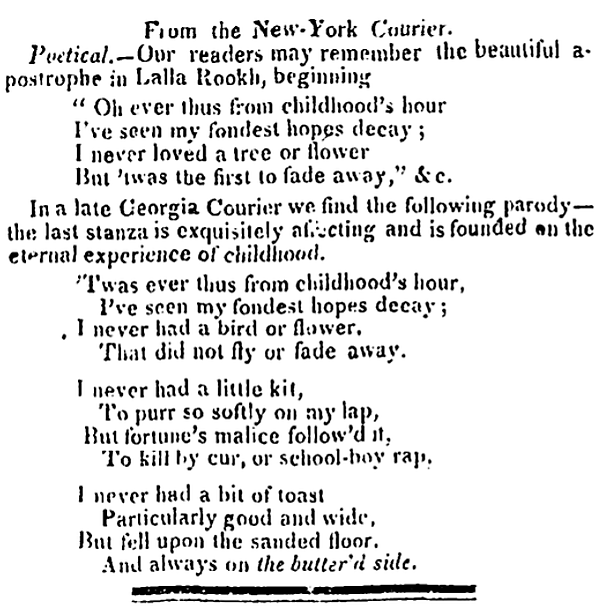
USA, 1829—expresses picturesquely the supposed law of nature according to which, for any given situation, the worst of possible outcomes will inevitably occur
Read More
“ad fontes!”
USA, 1829—expresses picturesquely the supposed law of nature according to which, for any given situation, the worst of possible outcomes will inevitably occur
Read More
USA, 1959—a summary of social life in Washington DC, especially for aged men—attributed by columnist Betty Beale to Columbia University President Grayson Kirk
Read More1911—‘Damaged Goods’, translation of ‘Les Avariés’, by French dramatist Eugène Brieux, about the dangers of ignorance concerning sexually transmitted diseases
Read More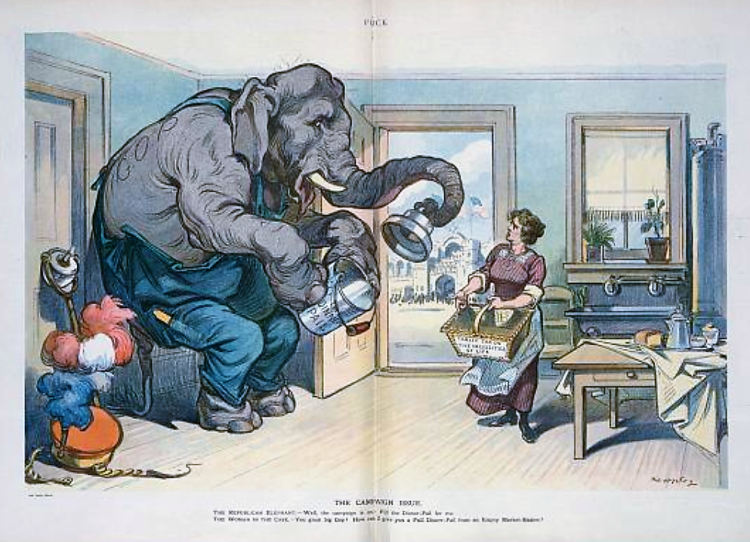
USA—from Republican slogan during the 1928 presidential campaign—‘a chicken in every pot’: from a declaration attributed to King Henri IV of France (1553-1610)
Read More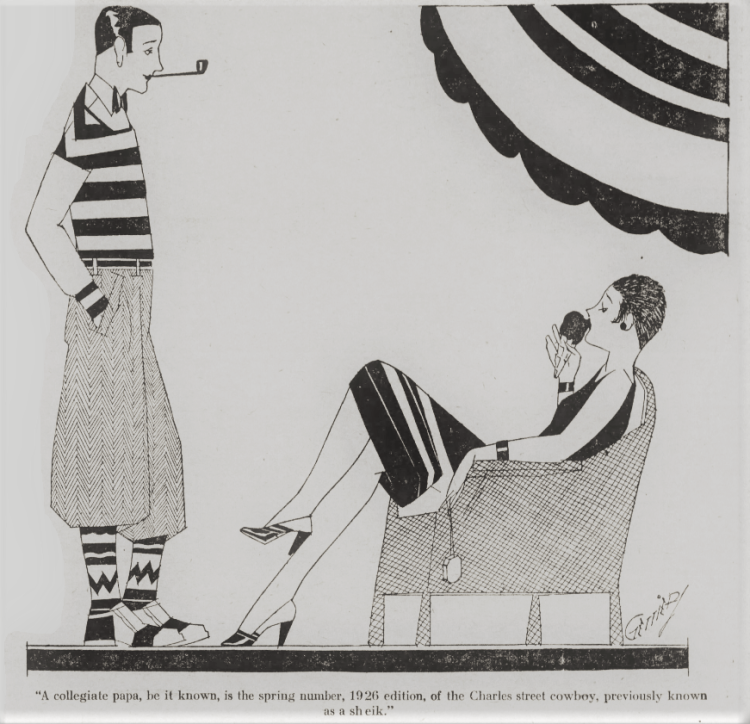
USA, 1926—meaning: it’s utter nonsense, no matter how hard you try to prove the opposite—from ‘bologna’: a large smoked sausage made of seasoned mixed meats
Read More1911—expenses rise as soon as one marries or begins cohabiting, or even carries on a romantic relationship—antonym of ‘two can live as cheaply as one’
Read More
used to mean ‘everything which is necessary, appropriate or possible’, sometimes with punning reference to the British comedy group ‘Monty Python’
Read More
1928—dessert consisting of toasted marshmallows and chocolate between graham crackers—represents a rapid pronunciation of synonymous ‘some more’ (1925)
Read MoreAmerican English, 1965—signification: to be kept in a state of ignorance and told nonsense—in use a few years later in Australian English and British English
Read More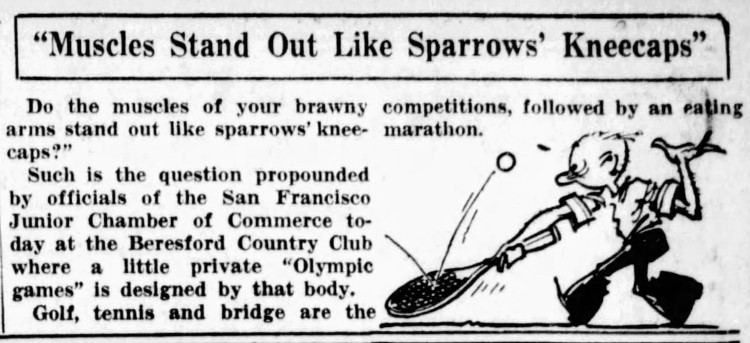
UK, 1922—(self-)disparagingly used of somebody’s physical strength—sometimes as a parody of ‘The Village Blacksmith’ (1840), by Henry Wadsworth Longfellow
Read More
