‘when push comes to shove’: meaning and origin
USA, 1889—when a situation reaches a critical point and one must commit oneself to an action or decision—the image is of having to shove when mere pushing is ineffective
Read More
“ad fontes!”
USA, 1889—when a situation reaches a critical point and one must commit oneself to an action or decision—the image is of having to shove when mere pushing is ineffective
Read MoreAustralia, 1863—originally referred to any chain of communications by which bushrangers were warned of police movements—soon extended to any rapid informal network by which information, rumour, gossip, etc., is spread
Read MoreUK, 1808—to make one’s beliefs or intentions plain—from the former practice of nailing an ensign to the mast of a ship, after damage during battle resulted in the ship’s colours no longer being clearly displayed, which otherwise might have been interpreted as a signal of surrender
Read MoreUSA, 1917—a method of treating a drug addict by sudden and complete withdrawal of the drug, instead of by a gradual process—alludes to the goose pimples, resembling the skin of a cold turkey, that a person experiences as a side effect of the treatment
Read MoreUK, 1824—thoroughly or perfectly right—‘trivet’: a metal tripod for a cooking pot or kettle to stand on—the phrase refers to a trivet’s always standing firm on its three feet
Read MoreUK, 1860—very much, very intensely—‘billy-o’ occurs only in this phrase—it is apparently composed of ‘Billy’, pet form of the male forename ‘William’, and the suffix ‘-o’, used to form slang and colloquial nouns, adjectives and interjections
Read MoreUK, 2005—the perceived indiscriminate and excessive use by the authorities of anti-social behaviour orders—apparently coined by Álvaro Gil-Robles, the Council of Europe’s Commissioner for Human Rights—‘Asbo’: acronym from the initial letters of ‘anti-social behaviour order’
Read More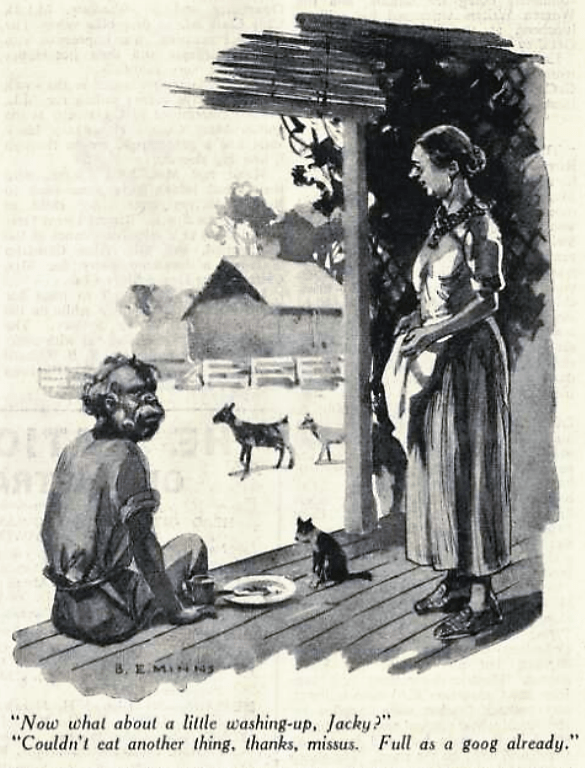
Australia, 1927—very drunk; sated with food—‘goog’, Australian-English slang for an egg, was perhaps formed on the sense of ‘gog’ in ‘goosgog’, denoting a gooseberry
Read MoreUSA, 1775—to do or say something remarkable or startling—the precise underlying notion in the choice of ‘Dutch’ is not clear—‘Dutch’ occurs in a number of derogatory or derisive English phrases
Read More
Australia—familiar name of St Vincent’s Private Hospital, Sydney—‘Jesus’ refers to the fact that the hospital is operated by a religious organisation—‘Hilton’ alludes to the hospital’s plushness
Read More
