‘La Stupenda’: meaning and origin

the nickname that the Venetian opera audience gave to Joan Sutherland when she sang Handel’s Alcina at the Fenice Theatre on 21 February 1960—Italian ‘è stupenda’ translates as ‘she is stupendous’
Read More
“ad fontes!”
the nickname that the Venetian opera audience gave to Joan Sutherland when she sang Handel’s Alcina at the Fenice Theatre on 21 February 1960—Italian ‘è stupenda’ translates as ‘she is stupendous’
Read MoreUK, 1968—British and Australian: expresses indifference towards, or rejection of, a suggestion—from ‘Umpa, Umpa, Stick It Up Your Jumper’, a song recorded in 1935 by The Two Leslies (Leslie Sarony and Leslie Holmes)
Read More1951—with pun on the noun ‘camp’ (i.e.: encampment): extremely camp (i.e.: ostentatiously and extravagantly effeminate; deliberately exaggerated and theatrical in style)
Read More
UK 1934 – USA 1935—alludes to a sardonic song by Cole Porter, about the lynching of an upper-class woman after she murders her unfaithful lover
Read More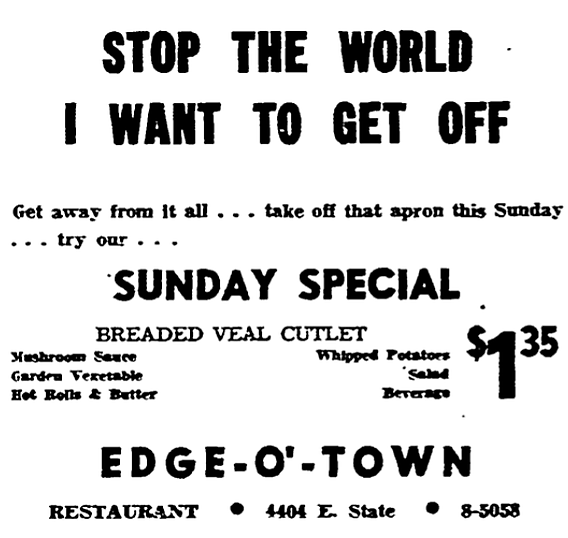
I’m tired of life (but intended serio-ironically, not in genuine despair)—USA 1951, UK 1956—popularised by ‘Stop the World—I Want to Get Off’, a 1961 British musical
Read More1970—British and Irish English—acronym from the phrase ‘all coppers are bastards’—customarily written (tattooed in particular) rather than spoken
Read More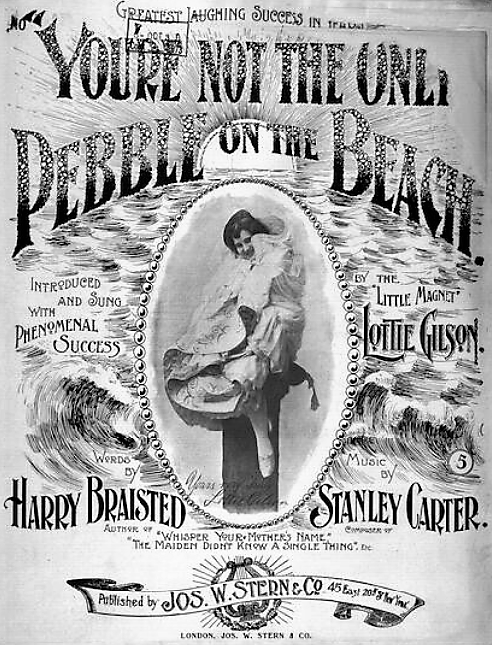
the only person or thing to be considered in a particular situation—USA, 1895—popularised by 1896 song ‘You’re Not the Only Pebble on the Beach’
Read More
USA, 1934—addressed, often with ironic pity, to someone who has had an arduous day—from very popular 1934 song, ‘Little Man, You’ve Had a Busy Day’
Read More
USA, 1956—jocular variant of equally jocular ‘see you later, alligator’ (1952)—recoined on separate occasions by various persons, independently from one another
Read More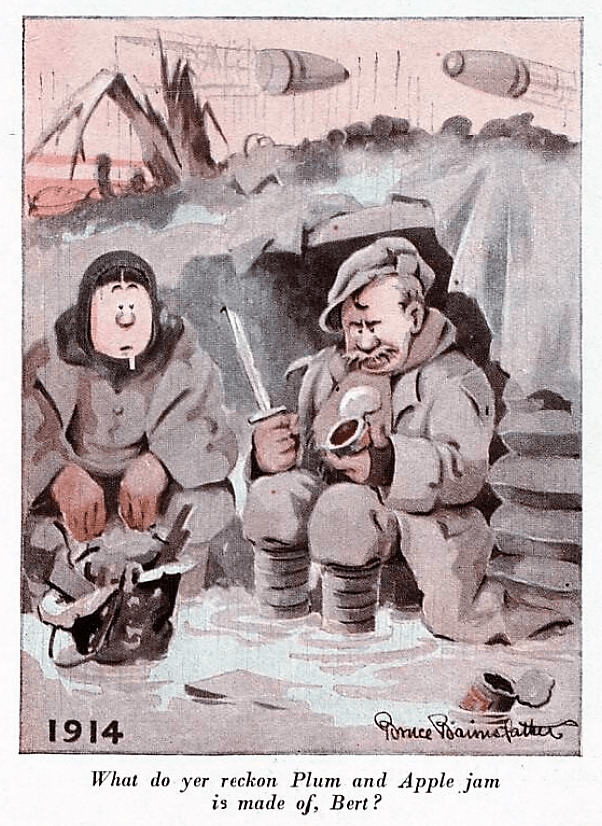
UK, 1913—from a British Army song (1908) parodying a hymn titled ‘Kind Words Can Never Die’ (USA, 1859)
Read More word histories