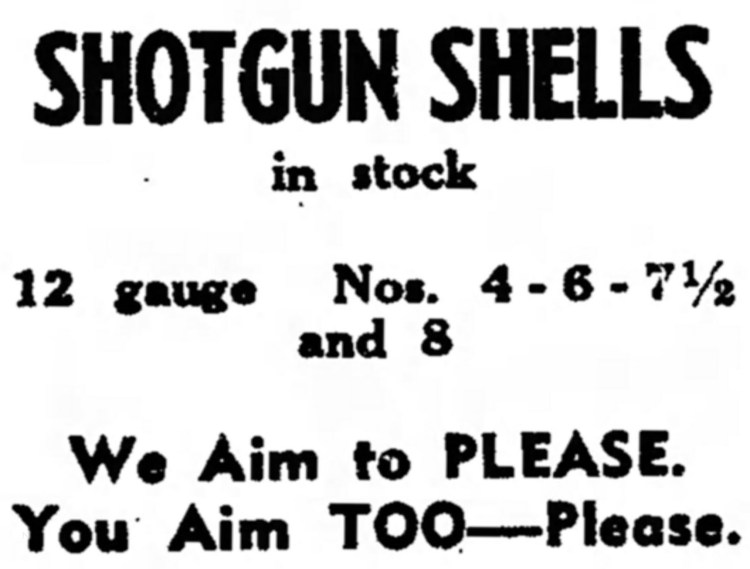
‘we aim to please’ (1817): originally chiefly used as a commercial slogan meaning ‘our customers’ satisfaction is our goal’—extended form ‘we aim to please; you aim too, please’ (1941): used in a variety of contexts
USA, 1830—used in association with ‘see’, ‘said the blind man’ puns on this verb’s primary meaning (‘to perceive with the eyes’) and secondary meanings (‘to understand’, ‘to find out’, ‘to examine’)
writing is more effective than military power or violence—UK, 1832—often erroneously ascribed to E. Bulwer-Lytton in ‘Richelieu; or, The Conspiracy’ (1839)
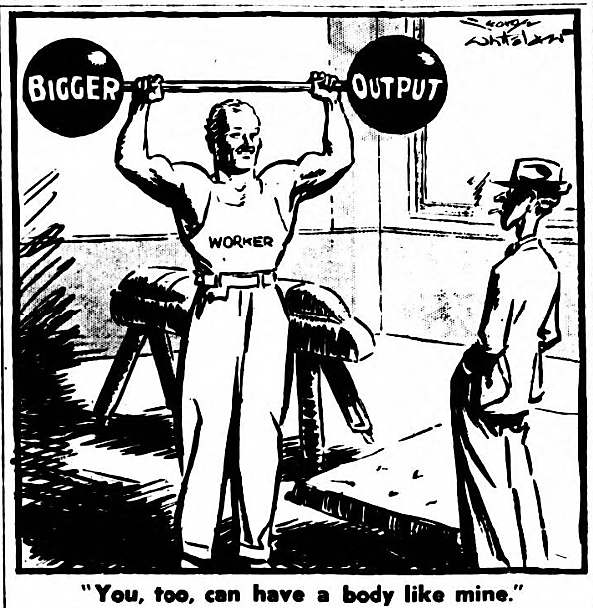
originated in magazine advertisements for the bodybuilding course created and marketed by Italian-born U.S. bodybuilder Charles Atlas (Angelo Siciliano – 1892-1972)
said to console a child choking over his or her food—UK, obsolete—first recorded in A Complete Collection of Genteel and Ingenious Conversation (1738), by Jonathan Swift