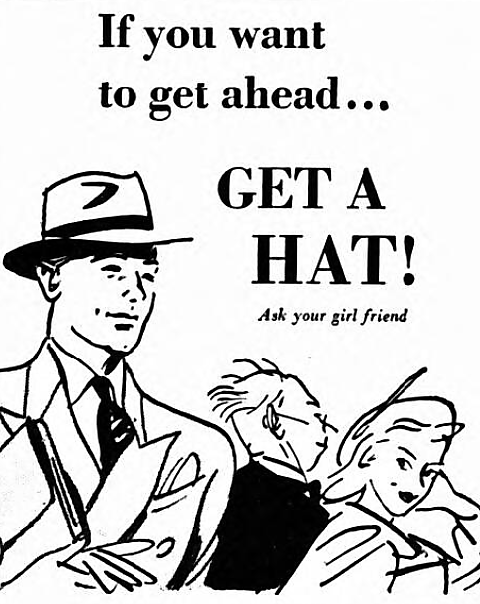
meaning and origin of the phrase ‘to play gooseberry’

The noun gooseberry denotes a round edible yellowish-green or reddish berry with a thin translucent hairy skin and the thorny shrub which bears these berries. Attested in the first half of the 16th century, it is probably based on Middle-French forms such as grosselle and groiselle (Modern French groseille), perhaps altered because of an unexplained […]

Read More

‘Joe Bloggs’: meaning and history

Like Jack, pet form of John, Joe, familiar abbreviation of Joseph, is colloquially used as a generic term for a lad, a fellow, a chap. And, like Joe Blow, Joe Citizen, Joe Doakes and Joe Six-Pack in American English, Joe Soap and Joe Bloggs in British English are generic names for an average man. —Cf. also Onion Johnny. These are the earliest […]

Read More

‘nul points’: meanings and origin

The primary meaning of the humorous pseudo-French British-English expression nul points is: a score of zero points in the Eurovision Song Contest, in which the points awarded by each country are announced in both English and French. This expression is composed of: – the French adjective nul, meaning no (that is, not one); the choice of […]

Read More

history of the portmanteau word ‘brunch’

A blend of breakfast and lunch, the noun brunch denotes a late morning meal eaten instead of breakfast and lunch. It originated, apparently in the late 19th century, as Oxford University slang and is first recorded in Lunch at Oxford, by Margaret B. Wright, published in The Independent (New York City, New York, USA) of […]

Read More

origin of ‘like a cat on hot bricks/on a hot tin roof’

The phrase like a cat on hot bricks and its American-English equivalent like a cat on a hot tin roof mean very agitated or anxious. An earlier form of the phrase was recorded by the English naturalist and theologian John Ray (1627–1705) in A Collection of English Proverbs (2nd edition – 1678): To go like […]

Read More

origin of the Hallowe’en phrase ‘trick or treat’

The phrase trick or treat is a traditional formula used at Hallowe’en by children who call on houses threatening to play a trick unless given a treat or present. In early use, the phrase was also tricks or treats, treat or trick, and variants. This phrase seems to have originated in Ontario (capital: Toronto), a province of […]

Read More

The exclamation ‘OMG’ was coined in 1917.

The exclamation OMG expresses astonishment, excitement, embarrassment, etc. It is from the initial letters of oh my God (the final element may sometimes represent gosh or goodness). This initialism is older than the Internet or even the Usenet (an early computer network established in 1980), since it is first found in a letter that the […]

Read More