Why ‘ache’ ought to be written ‘ake’.

The spelling ‘ache’ (erroneously derived from Greek ‘ákhos’) instead of ‘ake’ is largely due to Samuel Johnson in A Dictionary of the English Language (1755).
Read More
“ad fontes!”
The spelling ‘ache’ (erroneously derived from Greek ‘ákhos’) instead of ‘ake’ is largely due to Samuel Johnson in A Dictionary of the English Language (1755).
Read MoreWith words denoting some specified deficiency in a desirable or standard quantity of something, ‘short of a ——’ means ‘mentally deficient’, ‘slightly crazy’.
Read More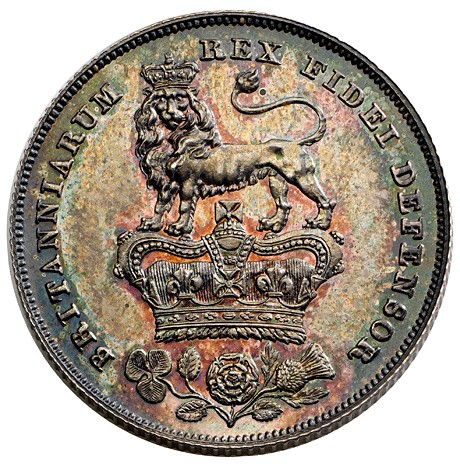
UK, 1707—‘to take the (King’s/Queen’s) shilling’: to sign up as a soldier, from the former practice of giving a shilling to a recruit when he enlisted
Read MoreUK (early form: 1763): a fanciful bet wagering the wealth that is available in Lombard Street—a centre of London banking—against something of trifling value
Read MoreIn allusion to The Tale of the Ancyent Marinere (1798), by Samuel Taylor Coleridge: the albatross killed by the mariner is hung around his neck as punishment.
Read Moreattested 1699—from the hyperbolical phrase ‘to skin a flint’ (1656)—cf. ‘to skin a flea for its hide and tallow’ and French ‘tondre un œuf’ (‘to shave an egg’)
Read More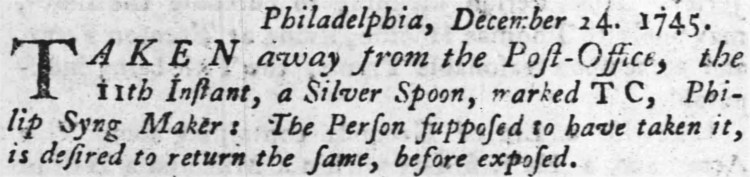
alludes to the gift of a spoon to a child at its christening—1762 as ‘one man is born with a silver spoon in his mouth, and another with a wooden ladle’
Read More
1790—from the name of a Quaker who must prove his identity against an impostor’s claims in ‘A Bold Stroke for a Wife’ (1718), a comedy by Susanna Centlivre
Read More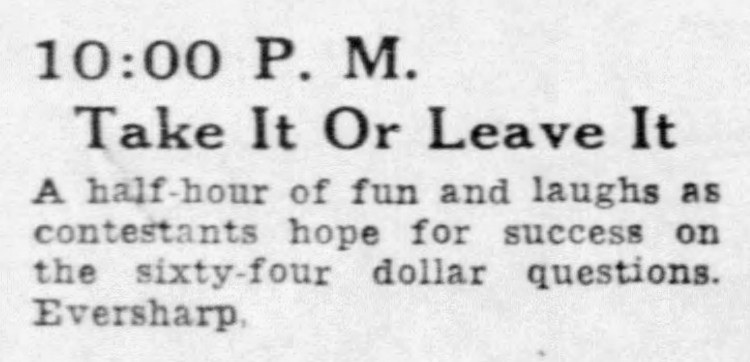
US, 1941—originated in ‘Take It or Leave It’, a radio quiz for a prize of sixty-four dollars—developed to ‘sixty-four thousand dollar question’ as early as 1943
Read More
(British) benefit paid by the state to the unemployed (1919)—from Middle-English sense ‘food or money given in charity’—from primary sense ‘portion’, ‘share’
Read More
