Of American-English origin, ‘gravy train’ is first recorded in 1899 with reference to sporting achievement, not to financial gain; it originated in the use of ‘gravy’ in the figurative sense of ‘advantage’, ‘benefit’, first recorded in 1845.
A calque of German ‘blauer Montag’, ‘blue Monday’ originally denoted a Monday on which people chose not to work as a result of excessive indulgence over the course of the weekend. Under the influence of the adjective ‘blue’ in the sense ‘dismal’, it came to denote a Monday that is depressing or trying.
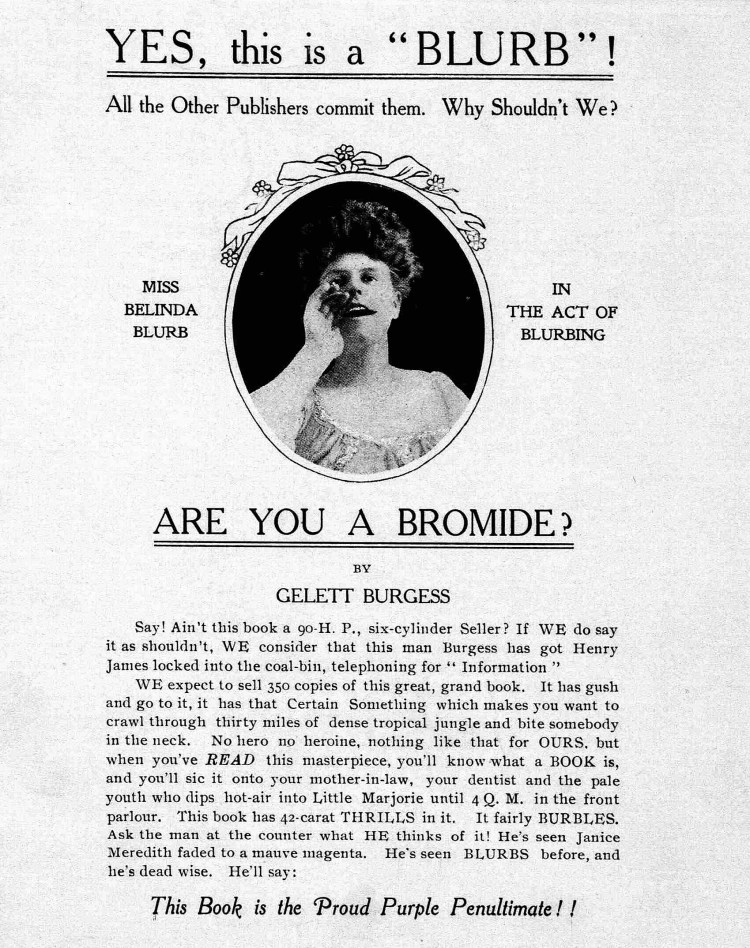
For a limited edition of his book ‘Are You a Bromide?’ sent to the guests of the 1907 annual dinner of the American Booksellers’ Association, Gelett Burgess devised a jacket showing a young lady whom he facetiously dubbed Miss Belinda Blurb.
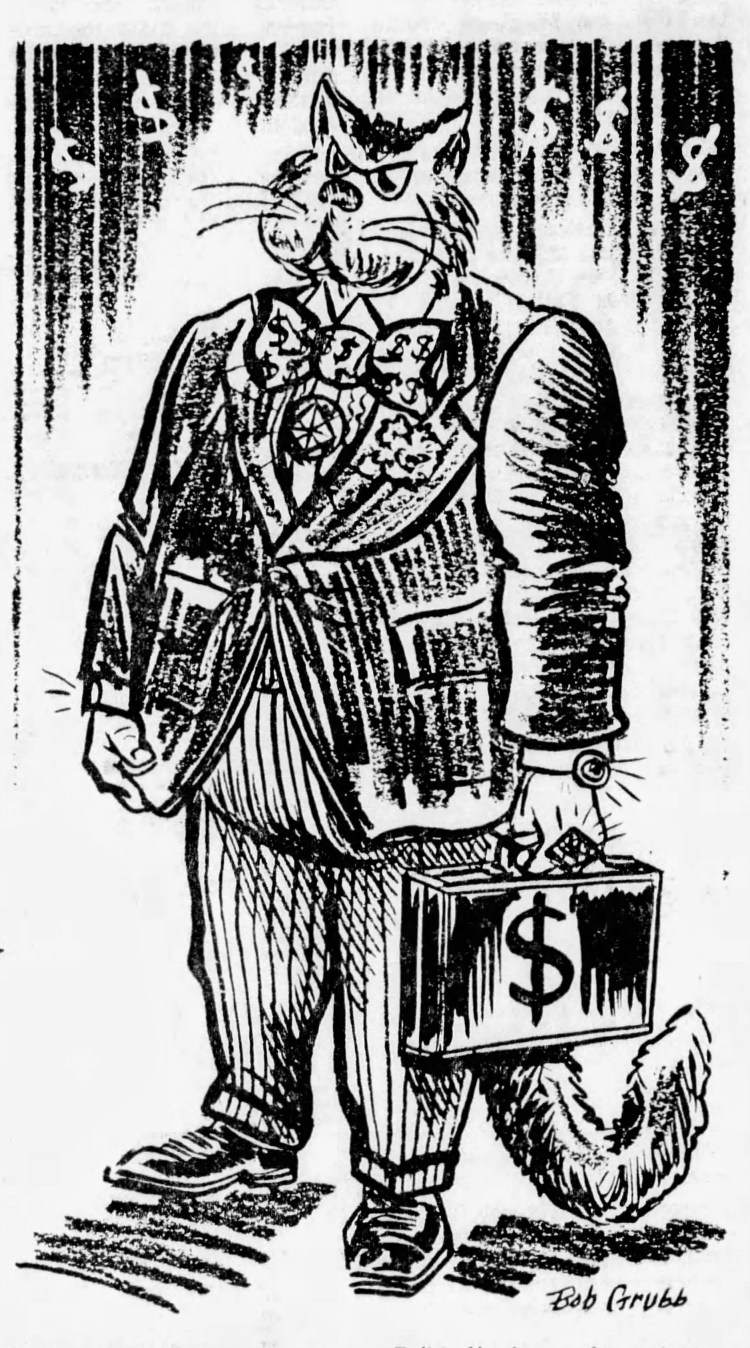
Of American-English origin, the slang term fat cat denotes a wealthy, influential person, especially one who is a heavy contributor to a political party or campaign. The earliest occurrence that I have found is from an article published in The Sun (Baltimore, Maryland) of 1 November 1925.
The verb ‘elope’ now means ‘to run away secretly in order to get married’, but it originated in Anglo-Norman as a legal term meaning, of a wife, ‘to run away from her husband with a paramour’.
The original meaning of beer o’clock is 5 p.m. as the end of the working day. Its first known user was Stephen King (born 1947), American author of novels of horror and suspense.
UK, 1972—‘XXXX’: a euphemistic substitute for a four-letter swear word, usually ‘fuck’—it did not originally refer to the Australian lager Castlemaine XXXX
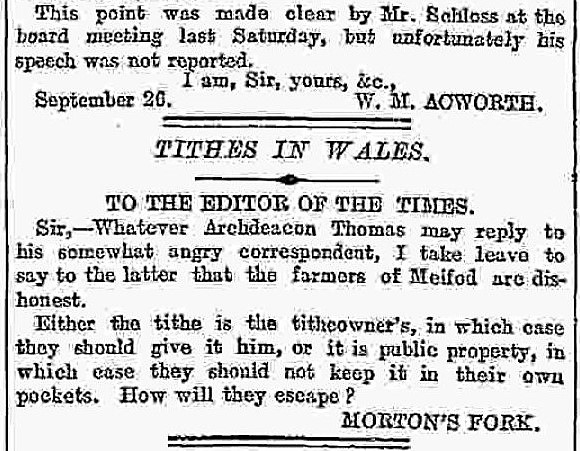
an argument said to have been used by John Morton in levying forced loans: a person living well was obviously rich; one living frugally must have savings