origin of ‘begging bowl’ (appeal for financial help)
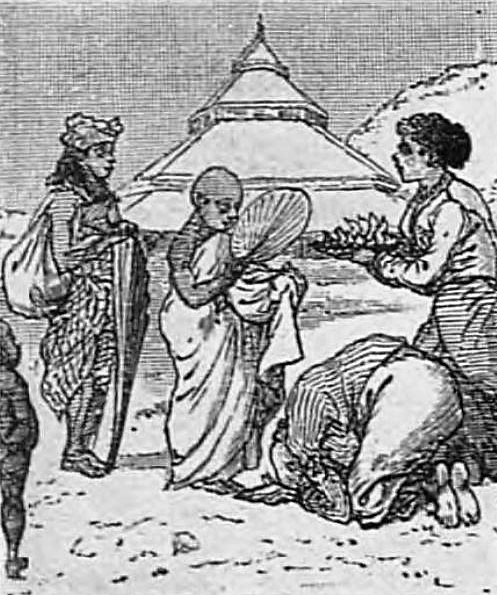
used in reference to a grovelling or obsequious appeal for financial help (1903)—originally a bowl carried by a Buddhist monk to receive food (1878)
Read More
“ad fontes!”
used in reference to a grovelling or obsequious appeal for financial help (1903)—originally a bowl carried by a Buddhist monk to receive food (1878)
Read Morea Latin-American country that is politically unstable because its economy, controlled by U.S. capital, wholly depends on the export of bananas
Read MoreUSA—‘hatchet man’ (1874): a hired Chinese assassin using a hatchet or cleaver—‘hatchet work’ (1895): a murder carried out by a hatchet man
Read Morefrom Old French and Anglo-Norman ‘aveir de peis’, ‘goods of weight’, as distinguished from the goods sold by measure or number
Read Morepayday—UK, 1831, theatrical slang—from ‘Hamlet’, where Horatio asks the Ghost if he walks because he has “hoorded treasure in the wombe of earth”
Read Morefirst recorded in The Biglow Papers (1848), by American author James Russell Lowell—based on the notion of leaving one’s hat behind in a rush of impetuosity
Read MoreUSA, 1891—a passenger in the rear seat of a car who gives the driver unwanted advice; hence, figuratively, a person who is eager to advise without responsibility
Read Moreprimary meaning of ‘boggle’ was ‘to start with fright’, originally with reference to horses—probably related to the nouns ‘bogle’ and ‘bogey’, denoting an evil spirit such as horses are reputed to see
Read More1808, as ‘to talk a horse’s hind leg off’—‘[animal’s] hind leg off’ is probably a hyperbolic extension of ‘to talk’, emphasising the speaker’s persistence or eloquence
Read MoreBritish, 1925—‘to throw a spanner in(to) the works’: to cause disruption, to interfere with the smooth running of something—synonym (American English): ‘to throw a monkey wrench into’
Read More word histories