‘silent like the ‘p’ in swimming’: meaning and early occurrences
USA, 1925—With, of course, a pun on ‘pee’, meaning ‘to urinate’, the jocular phrase ‘silent like (the) ‘p’ in swimming’ is used when exposing a difficulty in pronunciation.
Read More
“ad fontes!”
USA, 1925—With, of course, a pun on ‘pee’, meaning ‘to urinate’, the jocular phrase ‘silent like (the) ‘p’ in swimming’ is used when exposing a difficulty in pronunciation.
Read Morerefers to the fact that the winter cold is essential to plants and crops—UK, first recorded in the mid-17th century, but already proverbial
Read MoreAmerican English, 1965—signification: to be kept in a state of ignorance and told nonsense—in use a few years later in Australian English and British English
Read MoreUSA—1853 to kidnap for service aboard ship—seems to have originated in San Francisco—refers to Shanghai in China, the ships in question going to eastern Asia
Read More
Decided by the Académie française, the erroneous spelling ‘oignon’ (= ‘onion’) has become a symbol of prejudiced people, ignorant of the history of their own language.
Read MoreUK, 1892—postdates by several years variants such as ‘eat an apple on going to bed, and you will keep the doctor from earning his bread’
Read More
1858-60 steadfast political commitment—1861-62 sureness—1864-65 very low retail prices—1895-66 (economics) the lowest possible level (?)
Read More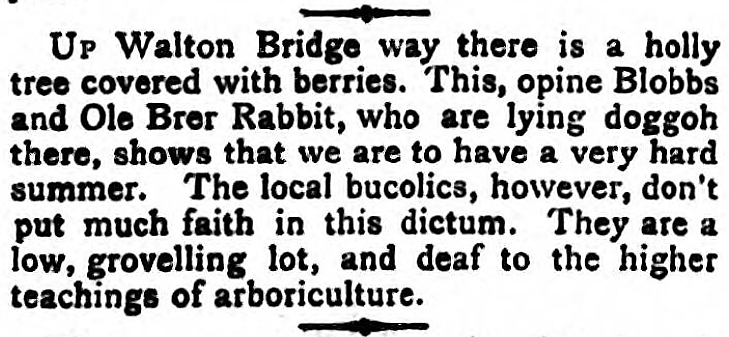
UK, 1882—to remain motionless and quiet; to keep a low profile—probably from ‘dog’ and suffix ‘-o’, with allusion to the characteristically light sleep of a dog
Read More1825, Anglo-Irish alteration of ‘by Jesus’—1867 as one word—‘the bejesus out of’ (1931) intensifies the action conveyed by the preceding verb
Read MoreUK, 1948—USA, 1952—from the image of the over-cautious man who wears both a belt and braces/suspenders to hold up his trousers
Read More word histories