‘my name is Simpson, not Samson’: meaning and origin
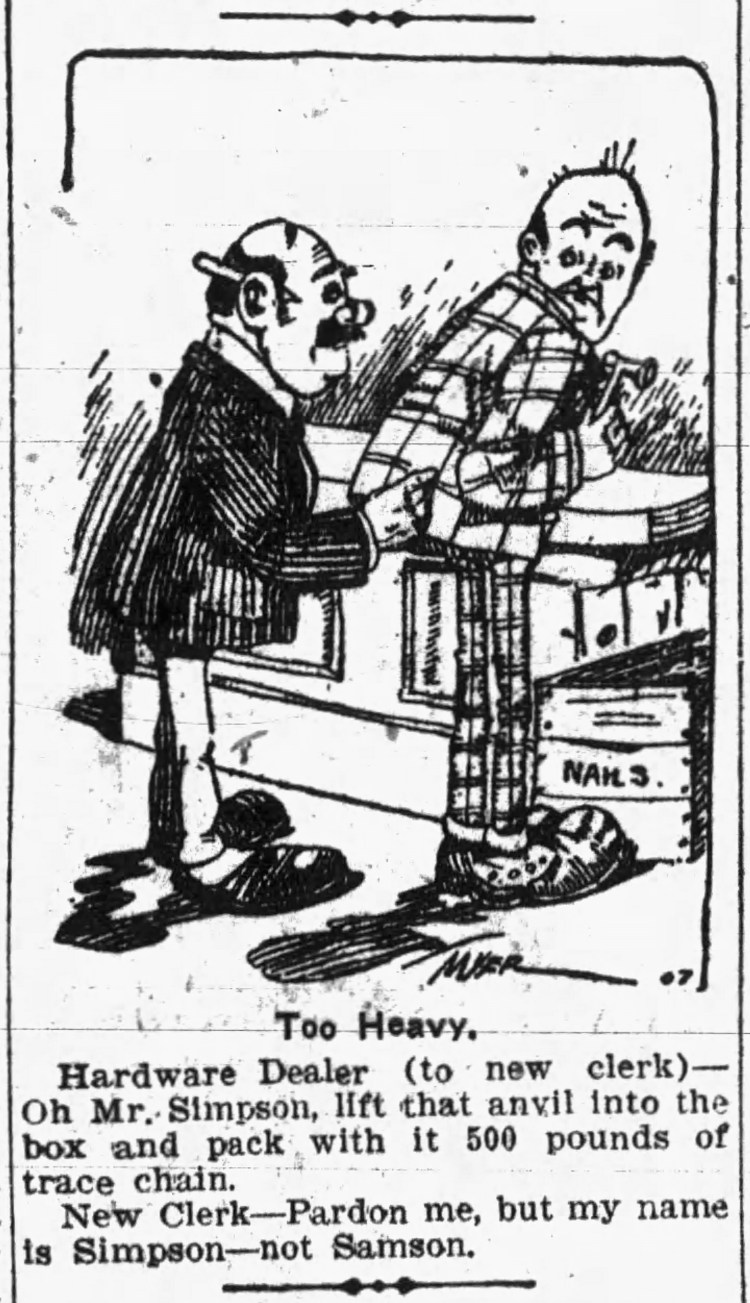
UK, 1906—used by a workman asked to lift too heavy an object—‘Simpson’ chosen for its similarity with ‘Samson’, the name of a biblical hero of enormous strength
Read More
“ad fontes!”
UK, 1906—used by a workman asked to lift too heavy an object—‘Simpson’ chosen for its similarity with ‘Samson’, the name of a biblical hero of enormous strength
Read More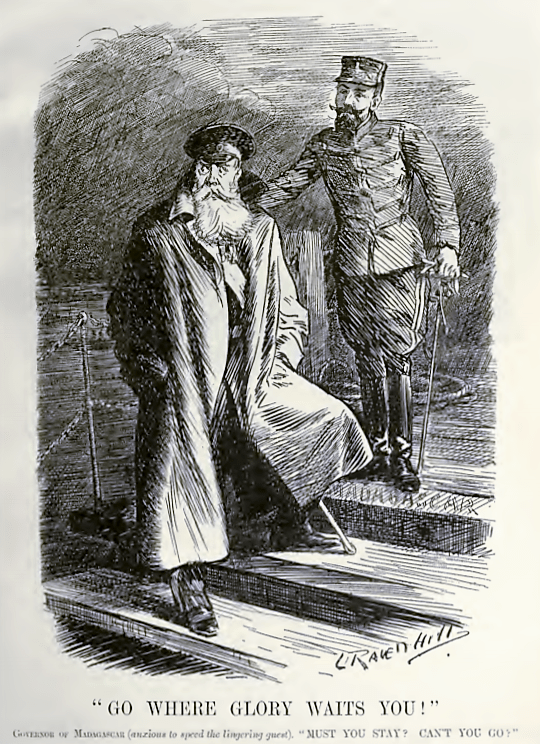
UK, 1897—alteration of ‘must you go? can’t you stay?’ in Collections and Recollections, by G. W. E. Russell—originally used in reference to guests’ departure
Read More
1) a seemingly devout or respectable person who lacks virtue—2) (with a pun on ‘holey’, i.e., full of holes) jocularly applied to holey things such as clothes
Read More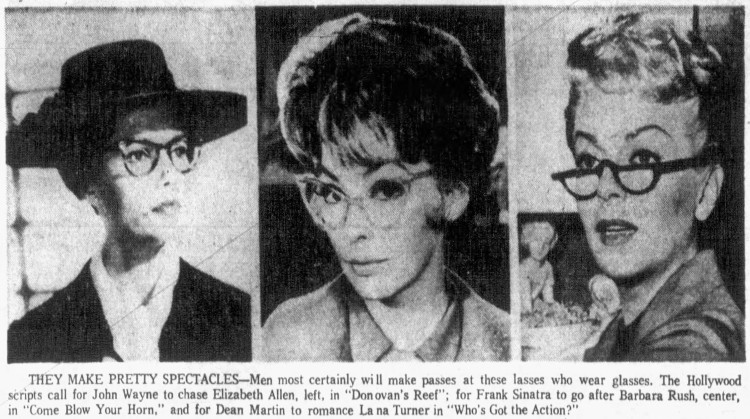
USA—from two-line poem ‘News Item’ (1926), by Dorothy Parker—has given rise to jocular variants, especially playing on ‘glasses’ (eyewear/drinking containers)
Read Moremeaning: ‘for a very long time’—UK, 1944—with a pun on ‘Pilate’, originated in the British Royal Air Force during the Second World War
Read Moreexpresses distrust at air or sea travel—USA, 1926—with a pun on ‘terror’, jocularly decouples from each other the components of ‘terra firma’ (firm land)
Read More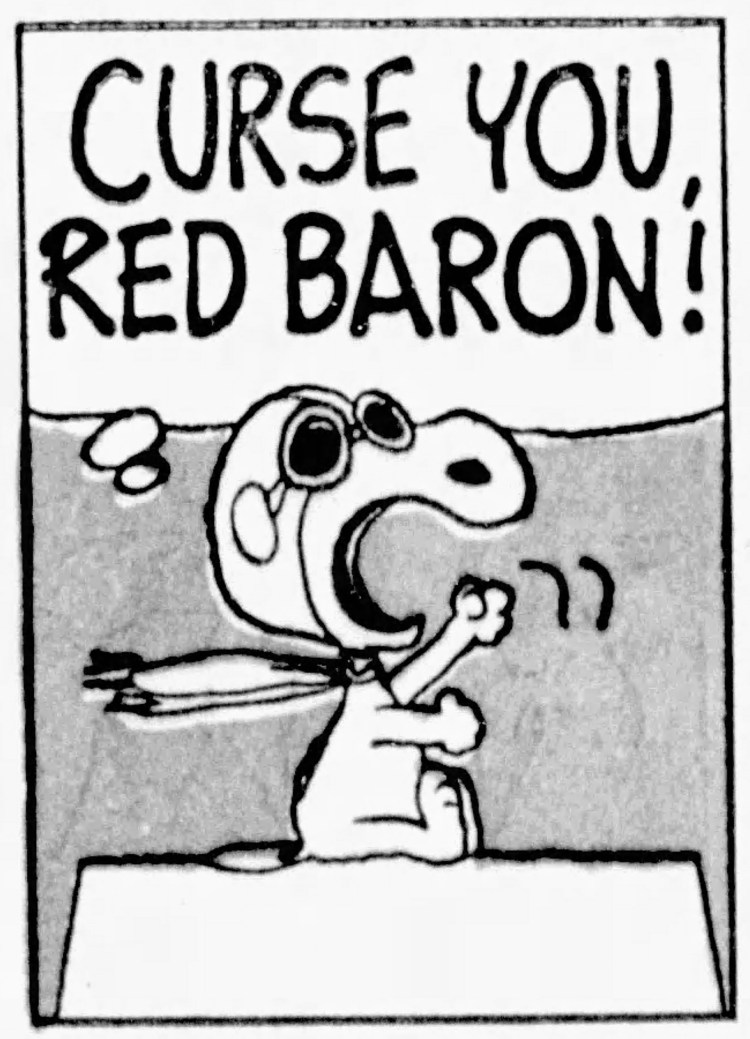
colourful way of railing at someone—USA, 1967—from Schulz’s comic strip Peanuts: Snoopy as a WW1 fighter pilot falls victim to German ace Manfred von Richthofen
Read More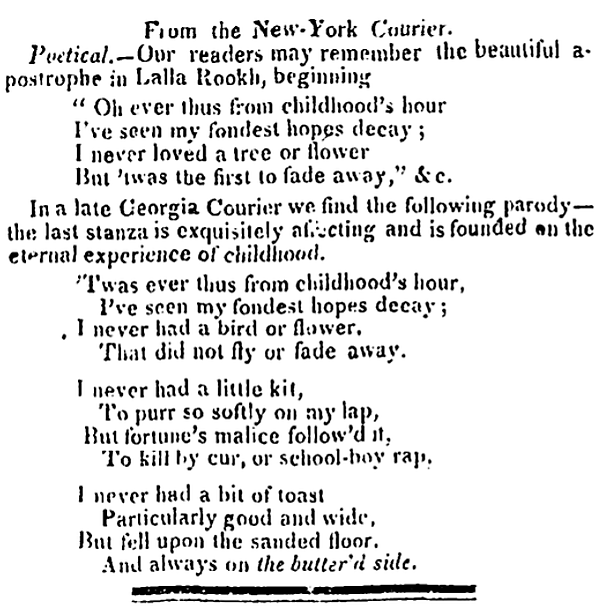
USA, 1829—expresses picturesquely the supposed law of nature according to which, for any given situation, the worst of possible outcomes will inevitably occur
Read More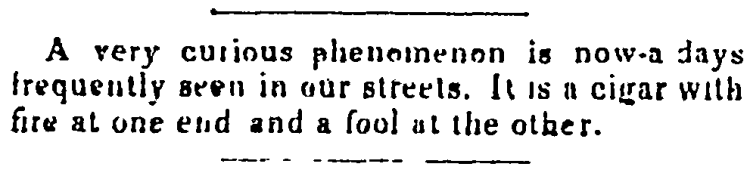
a cigar or a cigarette—USA, 1841—probably patterned on phrases such as ‘a fool at one end and a maggot at the other’, describing a fishing rod
Read More
USA, 1959—a summary of social life in Washington DC, especially for aged men—attributed by columnist Betty Beale to Columbia University President Grayson Kirk
Read More word histories