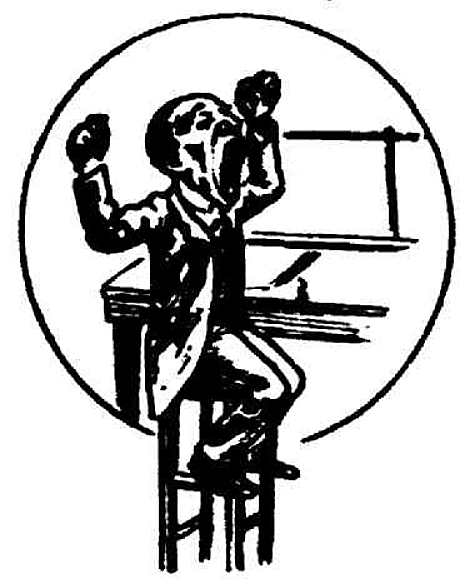
reluctance to attend school or work, or a reduction in working efficiency, experienced on a Monday morning—UK and USA, 1908; Australia, 1910—the suffix ‘-itis’ is applied to a state of mind or tendency fancifully regarded as a disease
UK, 1835—said to a person that the speaker does not wish to see again—refers to Bath, a spa in south-western England, where one goes to take the waters
UK, 1883—a gesture of derision made by putting one’s thumb to one’s nose and outspreading the fingers like a fan; can be intensified by joining the tip of the little finger to the thumb of the other hand, whose fingers are also outspread fanwise—the motivation for the choice of ‘Queen Anne’ is unknown
USA, 1868—coined by U.S. critic Richard Grant White (1822-1885) to denote a word or expression whose original acceptation (preserved in U.S. English) was changed to one that he regarded as debased
UK, 1788—very drunk—may refer to Chloe, a woman with whom the English poet Matthew Prior (1664-1721) allegedly drank, and whom he often mentioned in his poems
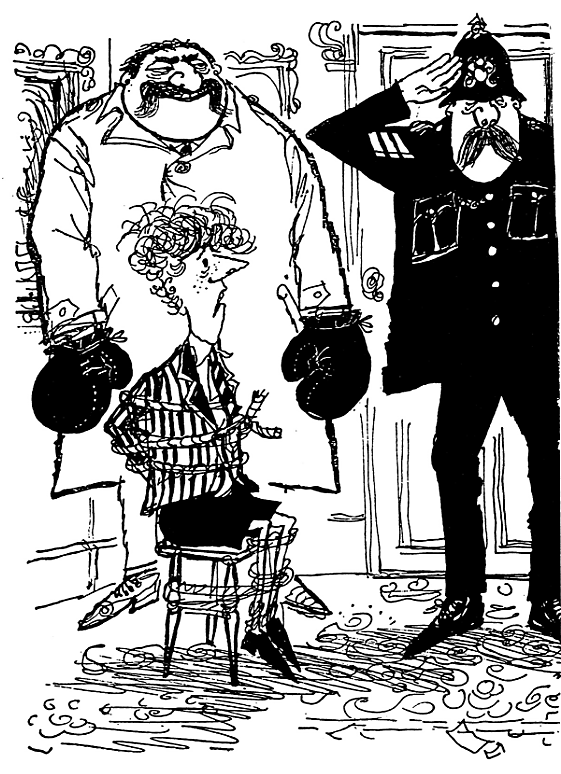
UK, 1956, children’s slang—an act of placing both hands on a person’s wrist or arm and then twisting it to produce a burning sensation—alludes to the fiendish methods of torture attributed to the Chinese
UK, 1987—a young man who behaves in an unpleasant or aggressive manner as a result of drinking (typically lager) excessively—lager, a pale beer, is favoured by the young as opposed to the dark, traditional bitter English beer
denotes effrontery—‘front’ denotes self-assurance, but the word that follows ‘than’ puns on ‘front’ in the sense of the façade of a building, a long seafront, etc.—also denotes a well-endowed woman, with reference to ‘front’ in the sense of a woman’s bust
UK, 1710—in ease and luxury—refers to the use of clover as fodder, as explained by Samuel Johnson in A Dictionary of the English Language (1755): “To live in Clover, is to live luxuriously; clover being extremely delicious and fattening to cattle.”
‘four-leaved clover’: a rare form of clover leaf having four leaflets, regarded as a lucky charm or sign of good fortune—superstition mentioned as early as 1620—sometimes associated with ‘even ash’, a rare form of ash leaf having an even number of leaflets