MEANING a heavy cotton pile fabric with lengthways ribs ORIGIN: UNKNOWN The original form of this noun, in the late 18th century, was corderoy. The earliest use of the word that I have found is from The Manchester Mercury (Manchester, Lancashire, England) of Tuesday 7th April 1772: […]
In A Dictionary of the English Language (1755), the English lexicographer Samuel Johnson (1709-84) thus defined bonfire: [from bon, good, French, and fire.] A fire made for some publick cause of triumph or exultation. In support of this etymology, bonfire in several languages is, literally, fire of joy. For example: – French feu de joie – Italian fuoco d’allegrezza – German Freudefeuer – Dutch vreugdevuur. But […]
MEANING The following definition of budget is from the New English Dictionary (i.e. Oxford English Dictionary – 1888 edition): A statement of the probable revenue and expenditure for the ensuing year, with financial proposals founded thereon, annually submitted by the Chancellor of the Exchequer, on behalf of the Ministry, for the approval of the House […]
A milliner is a person (generally a woman) who makes or sells women’s hats. But a Milliner was originally a native or inhabitant of Milan, a city in northern Italy. The word is first recorded in this sense in an Act of Parliament in 1449: That every Venician, Italian, Januey, Florentyn, Milener, Lucan, Cateloner, Albertyns, […]
MEANING the fourth estate: the press; the profession of journalism ORIGIN The first known user of the expression, designating the ordinary people, was the English author and magistrate Henry Fielding (1707-54) writing, under the pseudonym of Sir Alexander Drawcansir, Knt. Censor of Great Britain, in The Covent-Garden Journal of Saturday 13th June […]
MEANING the action of stealing goods from a shop while pretending to be a customer ORIGIN The slang use of the verb lift to mean to steal something from (a shop, etc.) seems to date back to the 16th century. One of the earliest attestations of this usage refers to the London […]
MEANING a man unduly concerned with looking stylish and fashionable ORIGIN As it was originally in use on the Scottish Border at the end of the 18th century, dandy represents perhaps the name Andrew. (From Dandie Dinmont (i.e. Andrew Dinmont), the name of a character in Guy Mannering; or, The Astrologer (1815), […]
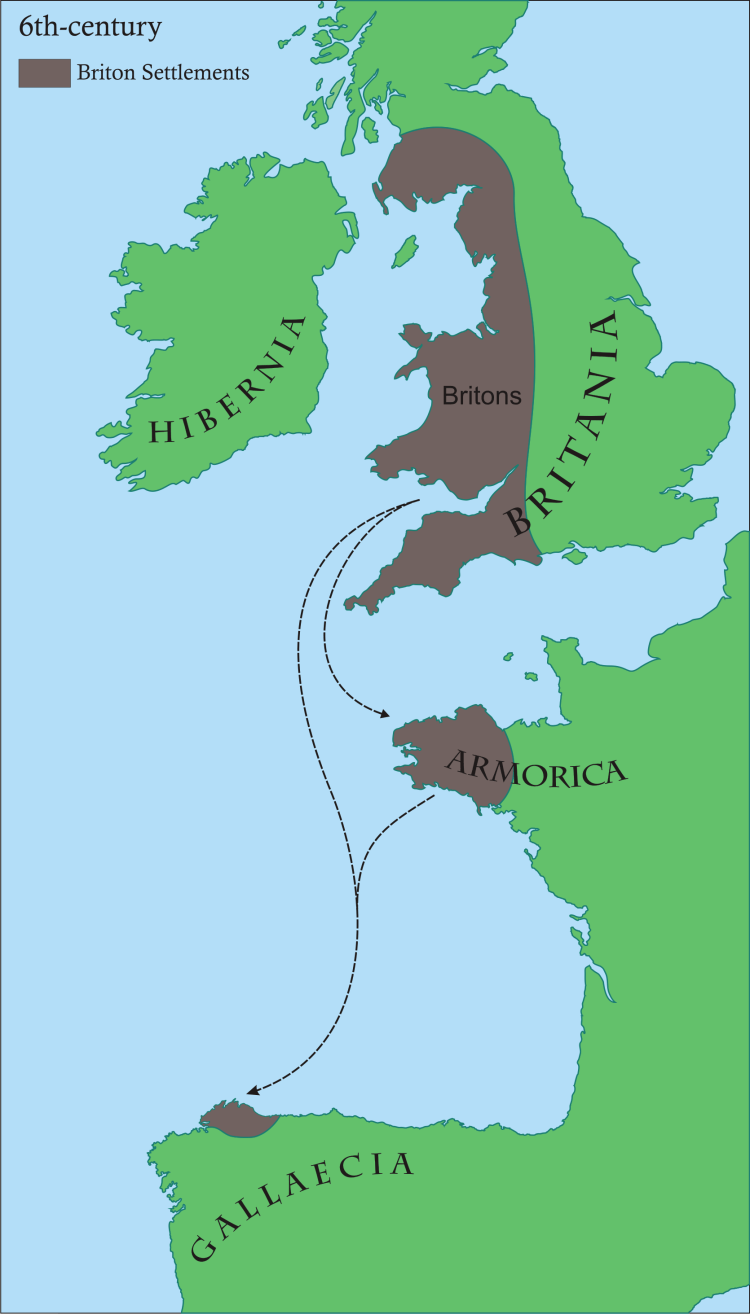
Briton settlements in the 6th century – settlements of the Angles, Saxons and Jutes in Britain, circa 600 In the following, Briton will refer to the Celtic Brittonic-speaking peoples who inhabited Britain south of the Firth of Forth, and who, following the arrival of the Anglo-Saxons in the 5th century, gradually retreated until the […]
The Anglo-Saxons were the Germanic inhabitants of England before the Conquest, i.e. the invasion and assumption of control by William of Normandy in 1066. Known as William the Conqueror, William I (circa 1027-87) defeated Harold II at the Battle of Hastings. He introduced Norman institutions and customs, including feudalism, and instigated the Domesday Book. […]
The English poet John Taylor (1578-1653) wrote, in The great eater, of Kent, or Part of the admirable teeth and stomacks exploits of Nicholas Wood, of Harrisom in the county of Kent His excessiue manner of eating without manners, in strange and true manner described, by Iohn Taylor (1630): One Iohn Dale was too hard […]