plate 19: La Trénis, Contredanse source: gallica.bnf.fr / Bibliothèque Nationale de France from the 1931 reprint of the caricatures published under the title of Le Bon Genre (1827 edition), including Observations sur les modes et les usages de Paris; the following comment about La Trénis accompanies this plate: (Année 1805.) Cette danse porte le […]
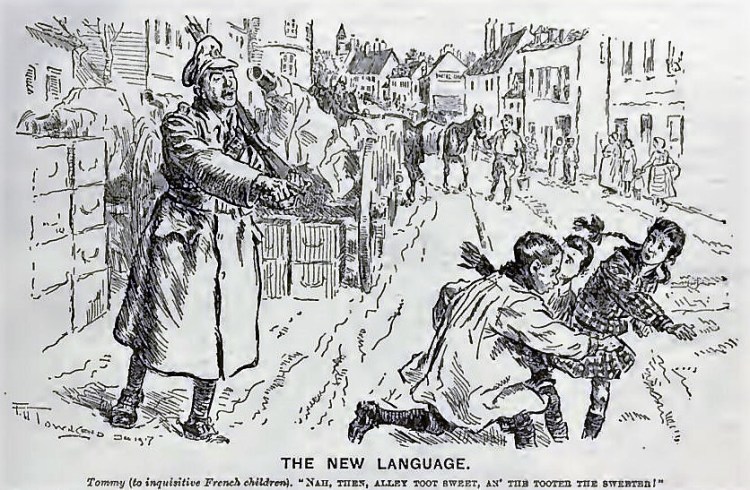
The adverb toot sweet means straight away, immediately. Humorously after the English words toot and sweet, it represents an anglicised pronunciation of the synonymous French adverb tout de suite. Before the First World War, it was only used in representations of French speech. For example, an article titled Galloglossia, published in Sharpe’s London Magazine […]
The term old chestnut denotes a joke, story or subject that has become tedious and uninteresting through constant repetition. Here, the adjective old is simply an intensifier of the noun. The figurative use of chestnut originated in American-English theatrical slang. Diary of a Daly Débutante: being passages from the journal of a member of Augustin Daly’s […]
Originally meaning ‘person of ridiculous appearance’, ‘quiz’ (students’ slang, late 18th century) was jocularly derived from the Latin interrogative pronoun ‘quis’ in “Vir bonus est quis?” (“Who is a good man?”)—a good, ingenuous, harmless man being likely to become an object of ridicule or even of harassment.
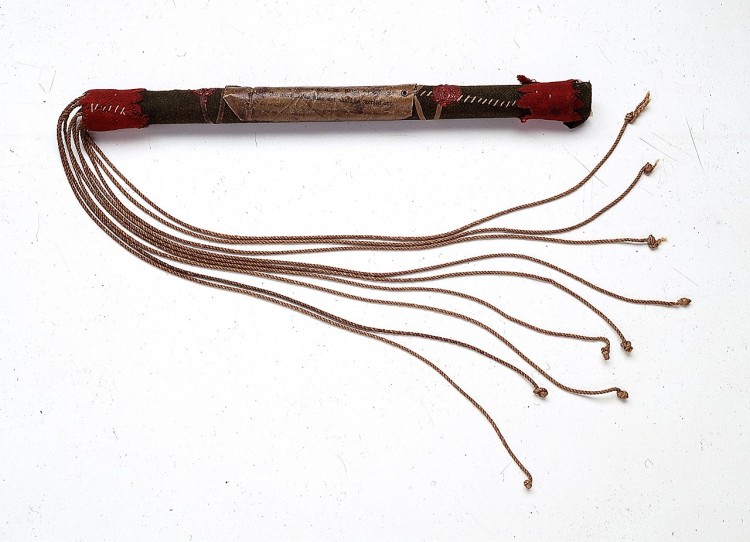
cat-o’-nine-tails (1866-79) – photograph: National Maritime Museum The noun cat-o’-nine-tails denotes a rope whip with nine knotted cords, formerly used, especially at sea, to flog offenders. This instrument of punishment was authorised in the British navy and army until 1881—cf. also to run the gauntlet. The word is first recorded in Love for […]
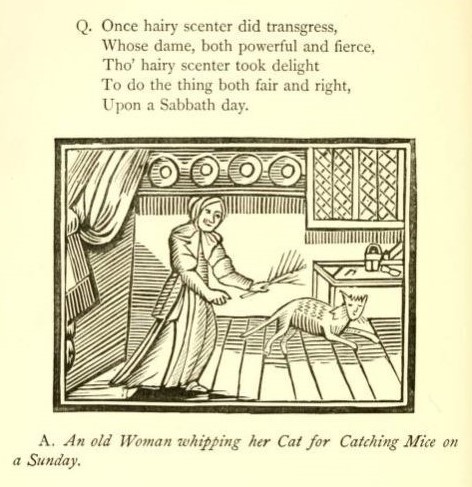
Q. Once hairy scenter did transgress, Whose dame, both powerful and fierce, Tho’ hairy scenter took delight To do the thing both fair and right, Upon a Sabbath day. A. An old Woman whipping her Cat for Catching Mice on a Sunday. from The True Trial […]
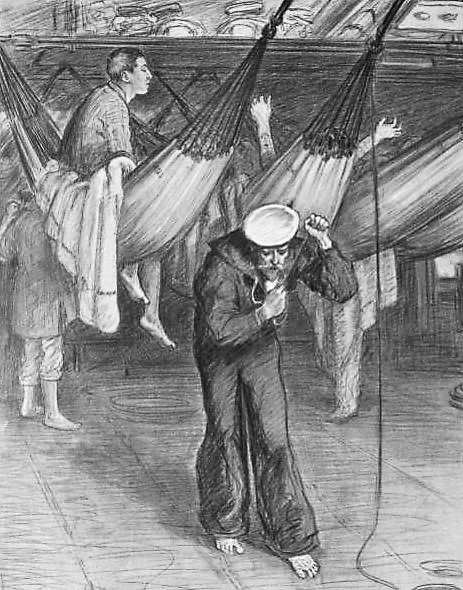
HOW A SAILOR BEGINS HIS DAY’S WORK A Scene on board H.M.S. “Trafalgar.” The boatswain blows his whistle at 5 o’clock in the morning and cries, “All hands.” Diving in and out beneath the hammocks he goes with bent head calling the same old cry of Nelson’s day: “Rise and shine. Show a leg—show […]
advertisement for Blotto brothers’ triporteurs Le Jardin des Modes nouvelles – 15th October 1913 The adjective blotto, which means drunk [however, cf. note 1], originated in British military slang during the First World War. It is first recorded in this sense in the chapter Slang in a War Hospital of Observations of an Orderly: […]
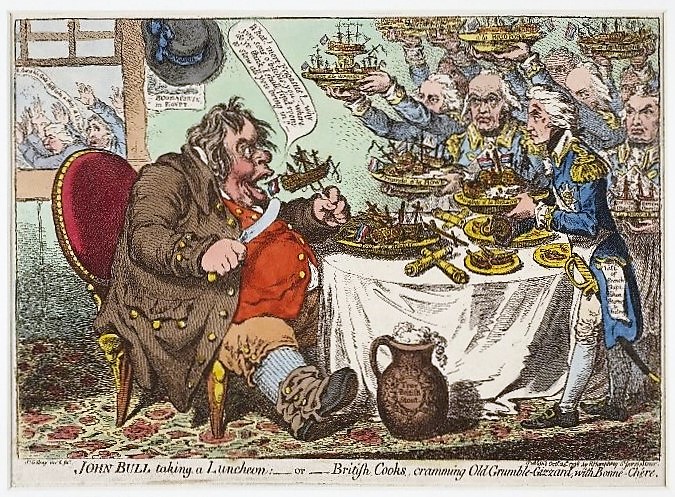
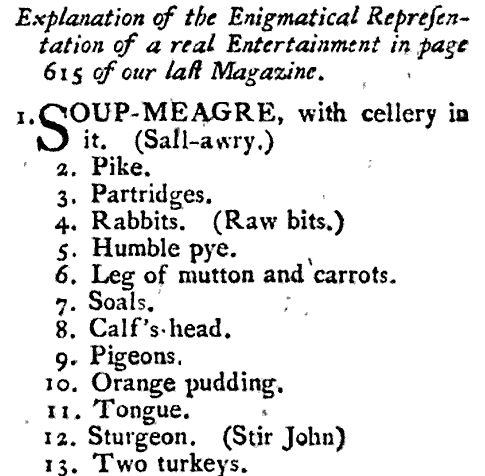
A puzzle published in The Hibernian Magazine, or, Compendium of Entertaining Knowledge (Dublin, Ireland) in 1774 punned on the humble of humble pie, which may indicate that the latter term was already used figuratively at that time. The following is from the October issue: […]


 word histories