TABLOID DRAMA. SHAKESPEARE “BOILED DOWN” FOR THE MUSIC HALLS. Mr. Cecil Raleigh is in favour of Shakespeare being “boiled down” for the music-hall stage. It was after Mr. George Fuller Golden’s lecture on the influence of theatres upon the music-halls, to the members of the O.P. Club at the Criterion Restaurant, last night, […]
Politicians usually work with blue smoke and mirrors. What appears to be real is mostly an illusion, and what is unlikely turns out to be real. But sometimes, the blue smoke and mirrors don’t work. When you can’t produce a budget, you can’t call a news conference and pretend you did. from The News […]
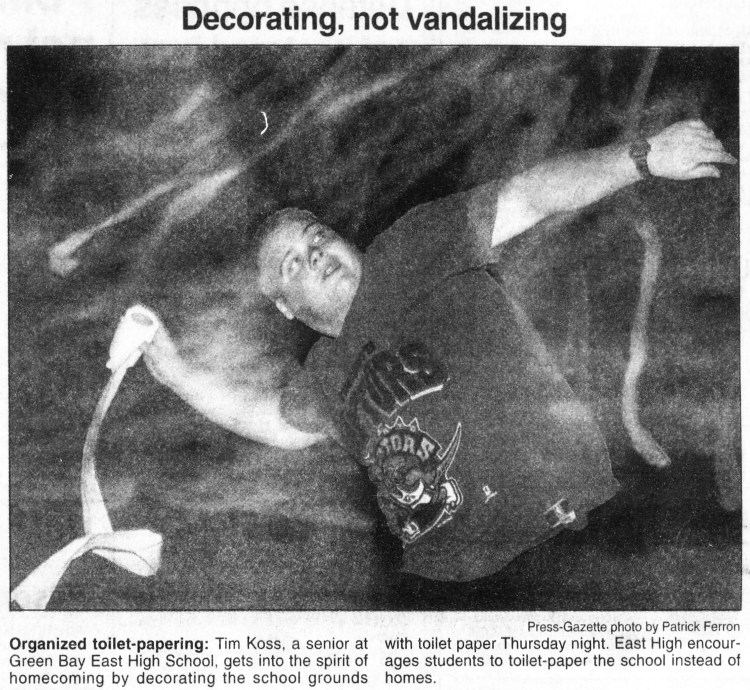
Decorating, not vandalizing Organized toilet-papering: Tim Koss, a senior at Green Bay East High School, gets into the spirit of homecoming by decorating the school grounds with toilet paper Thursday night. East High encourages students to toilet-paper the school instead of homes. from Green Bay Press-Gazette (Green Bay, Wisconsin) of 29th September 1995 […]
The verb hash, which dates back to the mid-17th century, is from French hacher, meaning to chop, to mince, itself from the feminine noun hache, meaning an axe. (English hatchet is from the diminutive of hache, hachette.) The literal sense of the noun hash is a dish consisting of meat which has been […]
Four’s a Crowd.—A merry, irresponsible farce that dips frequently into pure crazy comedy. For this they have chosen to give Errol Flynn and Olivia de Havilland a “break” from their usual story book hero and heroine types. These two lovely young people do very well, but I cannot think that crazy comedy suits them best. […]
BETHNAL GREEN MUSEUM OF CHILDHOOD Cambridge Heath Rd, E2 (980 2415). Sat-Thurs 10am-6pm, Sun 2.30-6pm. Jolly Hockey Sticks. Schoolgirls through the eyes of Angela Brazil¹ & others. May 30-Sept 30. from The Illustrated London News – May 1984 (¹ Angela Brazil (1868-1947), British author of schoolgirls’ stories) The exclamation jolly hockey stick(s) is […]
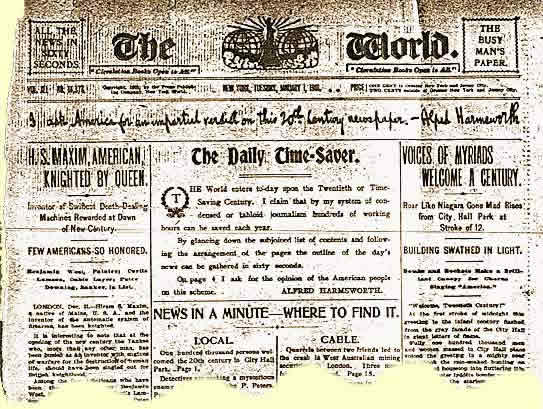
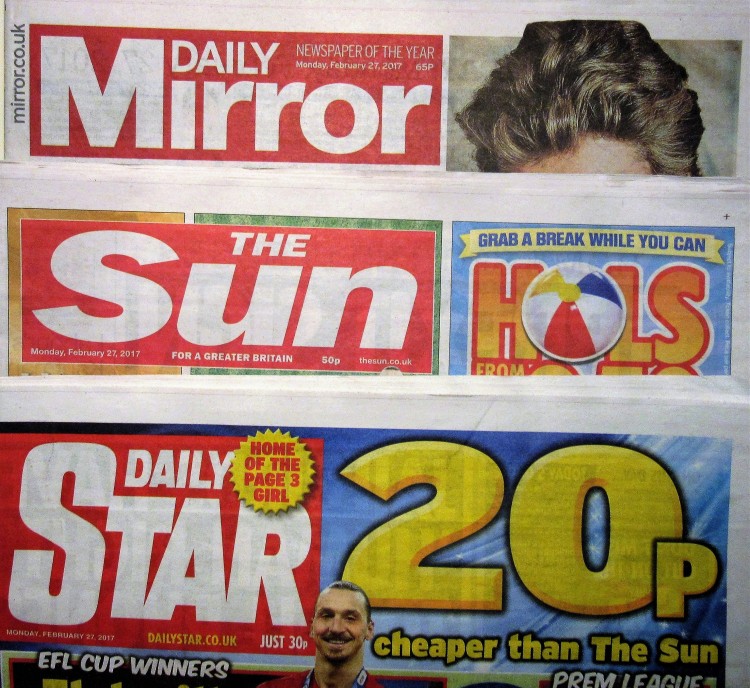
three red tops: the Daily Mirror, The Sun, the Daily Star In the following, the noun tabloid has the sense of a newspaper having pages half the size of those of the average broadsheet, aimed at the mass market, with relatively little serious political or economic content but considerable amounts of sport, celebrity gossip, scandal and trivial […]
The phrase curate’s egg means something that has both good and bad characteristics or parts. This phrase was popularised by True Humility, a cartoon by George du Maurier *, published in Punch, or the London Charivari (London, England) of Saturday 9th November 1895. This cartoon depicts a meek curate who, having been served a stale egg while […]
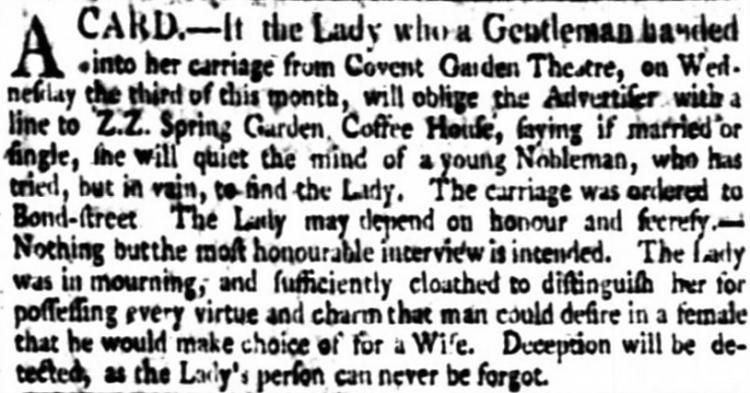
advertisement published in The Times (London) on 18th December 1800: A CARD.—If the Lady who a Gentleman handed into her carriage from Covent Garden Theatre, on Wednesday, the third of this month, will oblige the Advertiser with a line to Z. Z., Spring Garden Coffee House, saying if married or single, she will […]
The primary meaning of the humorous pseudo-French British-English expression nul points is: a score of zero points in the Eurovision Song Contest, in which the points awarded by each country are announced in both English and French. This expression is composed of: – the French adjective nul, meaning no (that is, not one); the choice of […]