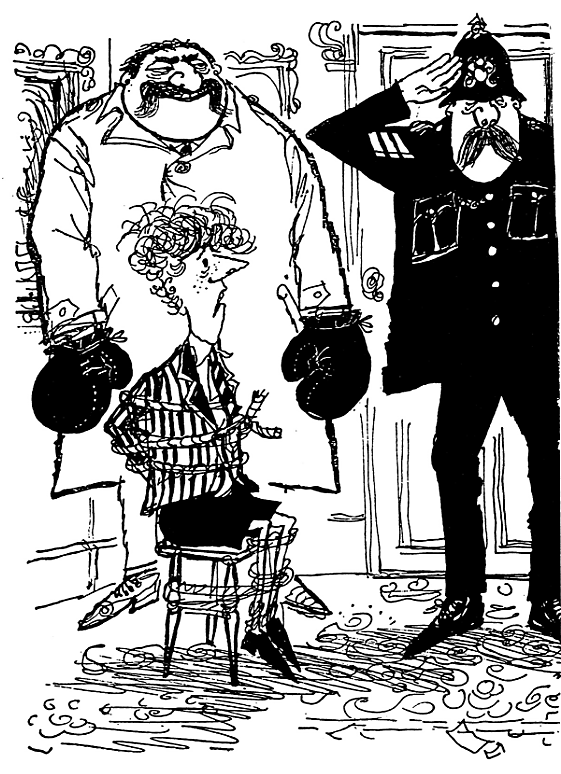
originated (1915) as the jocular beginning, destined to grip the reader’s attention, of a hypothetical novel or short story—soon (1919) came to be also used either without precise meaning or as a jocular exclamation
1947—is used to express an attitude of insularity and hostility to foreigners attributed to the British—a shortening of ‘golliwog’, the derogatory and offensive noun ‘wog’ designates a non-white person
1979—nickname given, in particular, to singer Olivia Newton-John—alludes to the type of popular music that (like a milkshake) is discarded as soon as it has been consumed
UK, 1938—old-fashioned informal British-English adjective meaning ‘in good order’, ‘fine’—origin obscure: perhaps from Hindi ‘ṭhīk hai’ (‘all right’) or from ‘the ticket’ (‘the correct thing’); or it may simply be a purely fanciful formation
UK, 1835—said to a person that the speaker does not wish to see again—refers to Bath, a spa in south-western England, where one goes to take the waters
UK, 1788—very drunk—may refer to Chloe, a woman with whom the English poet Matthew Prior (1664-1721) allegedly drank, and whom he often mentioned in his poems
USA, 1937, as a wrestling term—an act of placing both hands on a person’s wrist or arm and then twisting it to produce a burning sensation—alludes to the fiendish methods of torture attributed to the ‘(Red) Indians’
UK, 1956, children’s slang—an act of placing both hands on a person’s wrist or arm and then twisting it to produce a burning sensation—alludes to the fiendish methods of torture attributed to the Chinese
UK, 1710—in ease and luxury—refers to the use of clover as fodder, as explained by Samuel Johnson in A Dictionary of the English Language (1755): “To live in Clover, is to live luxuriously; clover being extremely delicious and fattening to cattle.”
Australia—used to express unluckiness or unhappiness—first recorded in The Four-legged Lottery (1958), by Australian novelist Frank Hardy, who later often reused it