origin of the word ‘pink’
The noun ‘pink’ for the flower is perhaps short for ‘pink eye’, ‘small or half-shut eye’ (cf. French ‘œillet’, ‘carnation’, diminutive of ‘œil’, ‘eye’).
Read More
“ad fontes!”
The noun ‘pink’ for the flower is perhaps short for ‘pink eye’, ‘small or half-shut eye’ (cf. French ‘œillet’, ‘carnation’, diminutive of ‘œil’, ‘eye’).
Read MoreThe expression ‘esprit d’escalier’, ‘wit of the staircase’, originally referred to a witty remark coming to mind on the stairs leading away from a gathering.
Read More
The original form of this phrase was ‘pigs fly with their tails forward’. Also: the French, Italian, Portuguese and Spanish equivalent expressions.
Read More
The French word for the oyster-shaped piece of meat in the hollow of the pelvic bone of a fowl is ‘sot-l’y-laisse’, literally ‘(the) fool leaves it there’.
Read More‘Mad as a hatter’ might be from ‘like a hatter’, an intensive phrase meaning ‘like mad’, perhaps related to the verb ‘hotter’, expressing motion and emotion.
Read More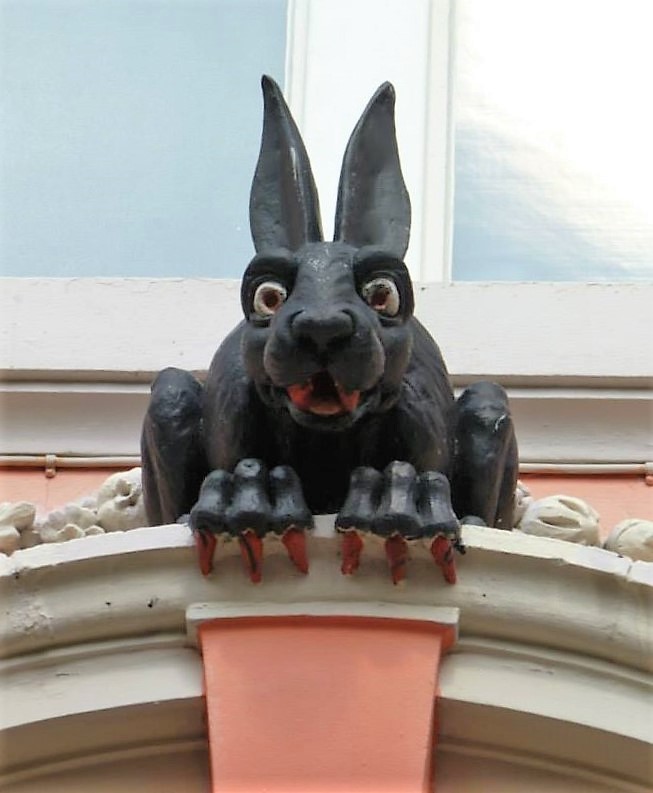
‘(As) mad as a March hare’ refers to the fact that, in the breeding season, the hare is characterised by much leaping, boxing and chasing in circles.
Read More
Of French origin, the word ‘poulet’, literally ‘chicken’, denotes a love letter. It probably refers to the fact that when folding these messages, one would make two tips resembling chicken wings.
Read More
plate 19: La Trénis, Contredanse source: gallica.bnf.fr / Bibliothèque Nationale de France from the 1931 reprint of the caricatures published under the title of Le Bon Genre (1827 edition), including Observations sur les modes et les usages de Paris; the following comment about La Trénis accompanies this plate: (Année 1805.) Cette danse porte le […]
Read More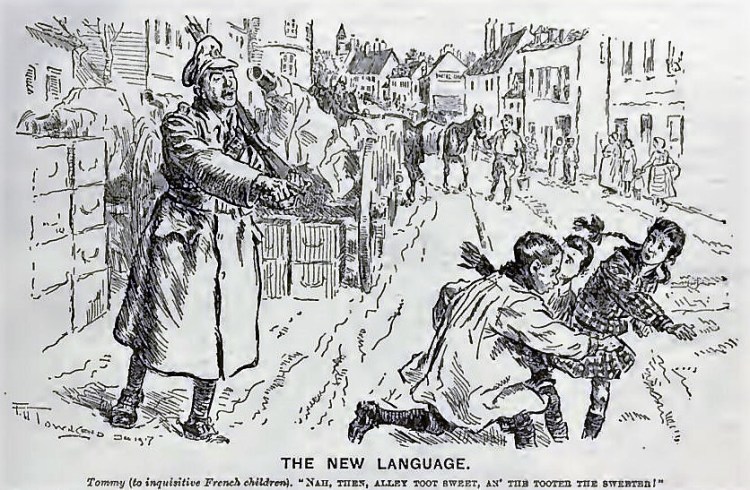
The adverb toot sweet means straight away, immediately. Humorously after the English words toot and sweet, it represents an anglicised pronunciation of the synonymous French adverb tout de suite. Before the First World War, it was only used in representations of French speech. For example, an article titled Galloglossia, published in Sharpe’s London Magazine […]
Read More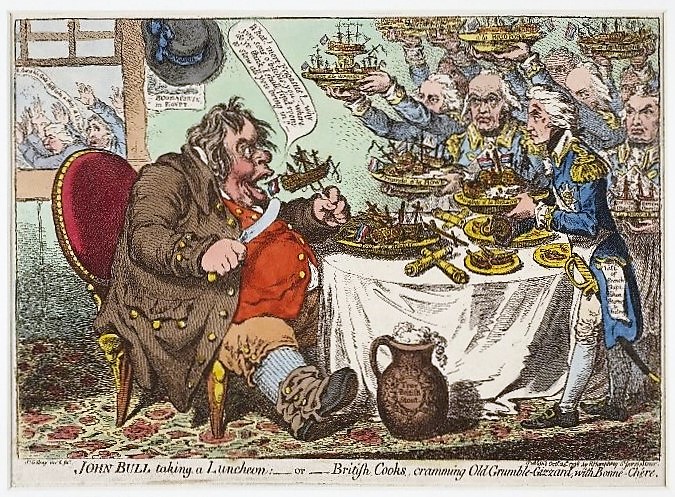
John Bull taking a Luncheon:—or—British Cooks, cramming Old Grumble-Gizzard, with Bonne-Chère. hand-coloured etching by James Gillray, published on 24th October 1798 — © Trustees of the British Museum This print was published just after Nelson’s victory at the Battle of the Nile. He is shown in the forefront of British admirals and naval heroes, serving up […]
Read More word histories