origin of ‘beard the lion in his den’ (confront someone on their own ground)
Scotland, 1749—from the idea of daring to grab a lion’s “beard” and figurative uses of ‘beard’: (verb) ‘confront’ – (noun) ‘face’
Read More
“ad fontes!”
Scotland, 1749—from the idea of daring to grab a lion’s “beard” and figurative uses of ‘beard’: (verb) ‘confront’ – (noun) ‘face’
Read More‘robe’ originally denoted something that has been robbed—French ‘voler’ (‘to fly’) has come to mean ‘to steal’ via falconry
Read More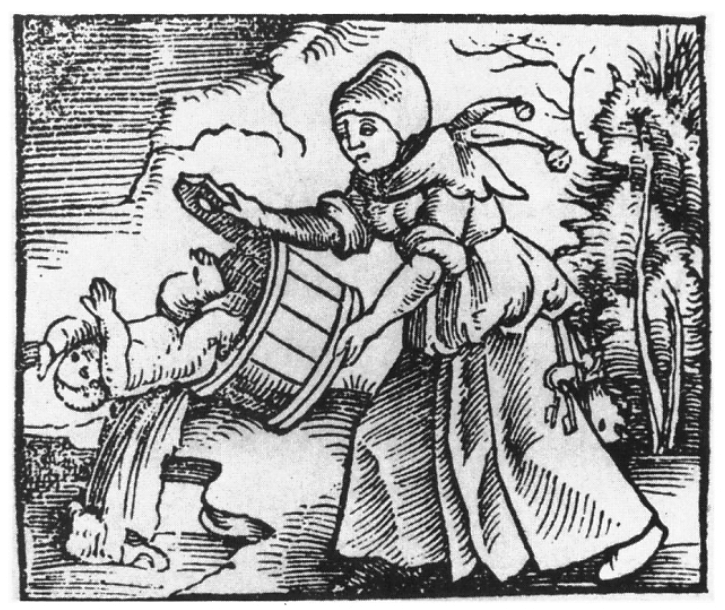
mid-19th century—loan translation from German ‘das Kind mit dem Bade ausschütten’ (to empty out the child with the bath), early 16th century
Read More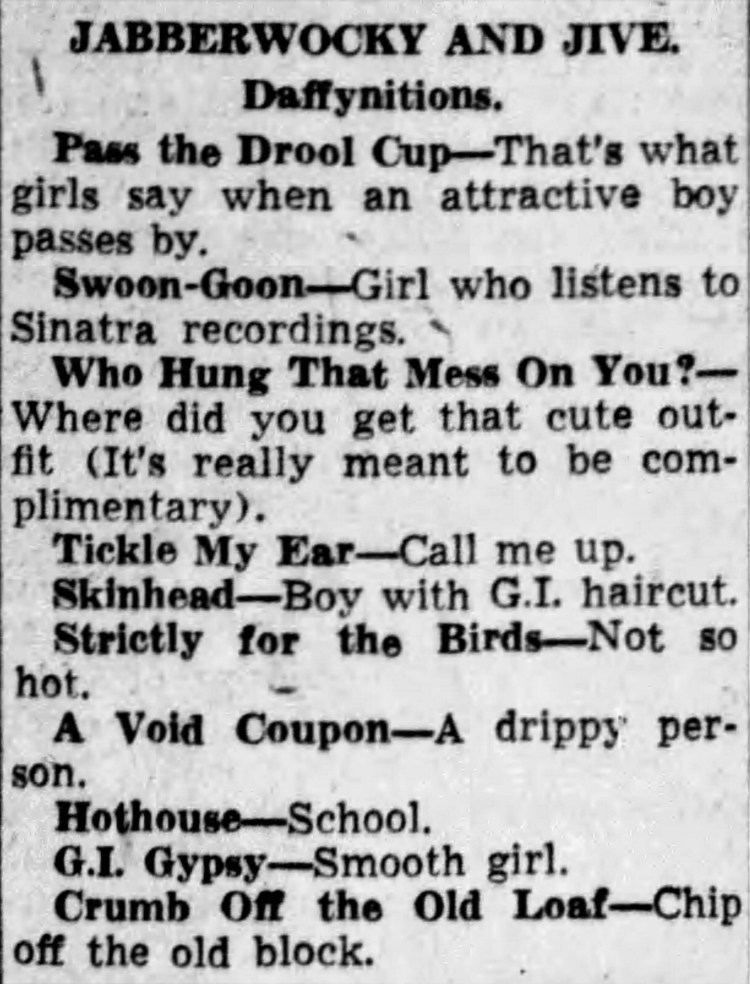
army slang, early 1940s—euphemistic shortening of ‘shit for the birds’—seems to allude to birds eating droppings from horses and cattle
Read MoreUK, 1837—something intended, but failing, to impress—if damp, a squib [a small firework] will fail to work
Read MoreUSA, 1931—presented as being of French origin, but French earliest known uses, in 1933, are from American English
Read MoreUK, 1755—loan translation from French ‘un mauvais quart d’heure’ (1710), which has also been used in English since 1830
Read MoreUK, 1869—inaccurate translation of Latin ‘panem and circenses’ (literally ‘bread and circus games’) as used by the Roman poet Juvenal
Read MoreThe image of one’s bread getting or being buttered has long been used to denote getting or having benefits, advantages.
Read More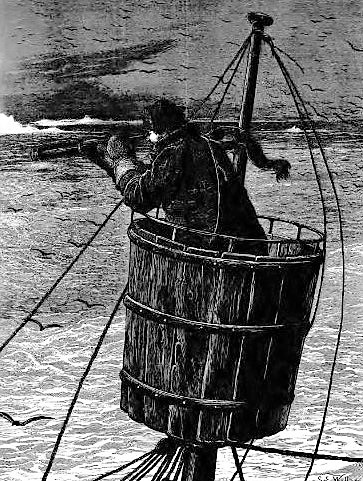
UK, early 19th century—The invention of the crow’s nest is attributed to the Arctic whaler William Scoresby Senior (1760-1829).
Read More word histories