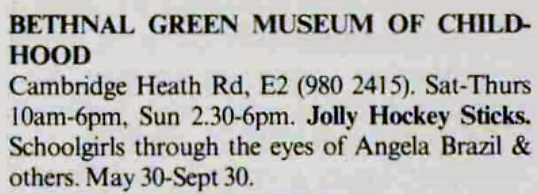
BETHNAL GREEN MUSEUM OF CHILDHOOD Cambridge Heath Rd, E2 (980 2415). Sat-Thurs 10am-6pm, Sun 2.30-6pm. Jolly Hockey Sticks. Schoolgirls through the eyes of Angela Brazil¹ & others. May 30-Sept 30. from The Illustrated London News – May 1984 (¹ Angela Brazil (1868-1947), British author of schoolgirls’ stories) The exclamation jolly hockey stick(s) is […]
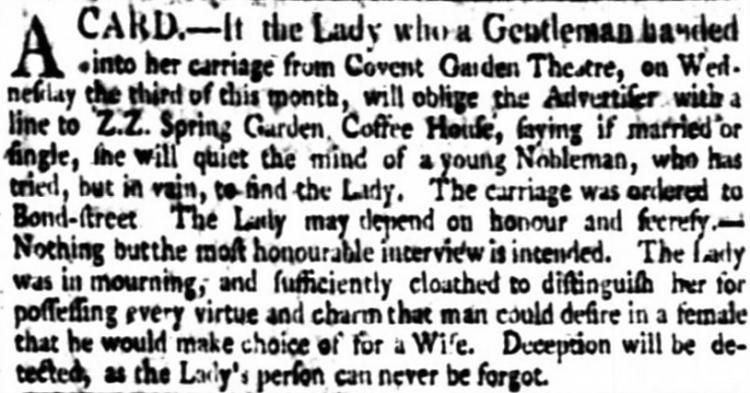
advertisement published in The Times (London) on 18th December 1800: A CARD.—If the Lady who a Gentleman handed into her carriage from Covent Garden Theatre, on Wednesday, the third of this month, will oblige the Advertiser with a line to Z. Z., Spring Garden Coffee House, saying if married or single, she will […]
The primary meaning of the humorous pseudo-French British-English expression nul points is: a score of zero points in the Eurovision Song Contest, in which the points awarded by each country are announced in both English and French. This expression is composed of: – the French adjective nul, meaning no (that is, not one); the choice of […]
L’astucieuse Viviane était étendue aux pieds de Merlin, by Gustave Doré (1832-1883) from Les Idylles du roi (Paris – 1868), translation of Idylls of the King by Alfred Tennyson The phrase rift in the lute means sign of disharmony between persons, especially the first evidence of a quarrel that may become worse. A rift is a crack in an object, […]
The proper noun Disgusted (with initial capital D) was originally used as a self-designation by a member of the public writing anonymously to a newspaper in order to express outrage about a particular issue—cf. also meaning and history of ‘to write to The Times about it’. The earliest instance of this noun that I have found is […]
The phrase trick or treat is a traditional formula used at Hallowe’en by children who call on houses threatening to play a trick unless given a treat or present. In early use, the phrase was also tricks or treats, treat or trick, and variants. This phrase seems to have originated in Ontario (capital: Toronto), a province of […]



 word histories