‘couldn’t train a choko vine over a country dunny’: meaning and origin
Australia, 1969—is used of an ineffectual person—‘choko’ (i.e., ‘chayote’): the cucumber-like fruit of a cucurbitaceous vine (‘Sechium edule’)
Read More
“ad fontes!”
Australia, 1969—is used of an ineffectual person—‘choko’ (i.e., ‘chayote’): the cucumber-like fruit of a cucurbitaceous vine (‘Sechium edule’)
Read MoreAustralia, 1890, & New Zealand, 1891—is used, in sports, of slowness, in particular as a disparaging comment on a racehorse
Read Morehas been used with reference to feebleness and ineffectualness since the late 19th century
Read Moreis used of an ineffectual person—Australia, 1984—originally used in sports of team selectors
Read Morealso ‘game as an ant’, ‘game as a bulldog ant’, etc.—Australia, 1874—plucky, courageous, willing to put up a fight against considerable odds
Read More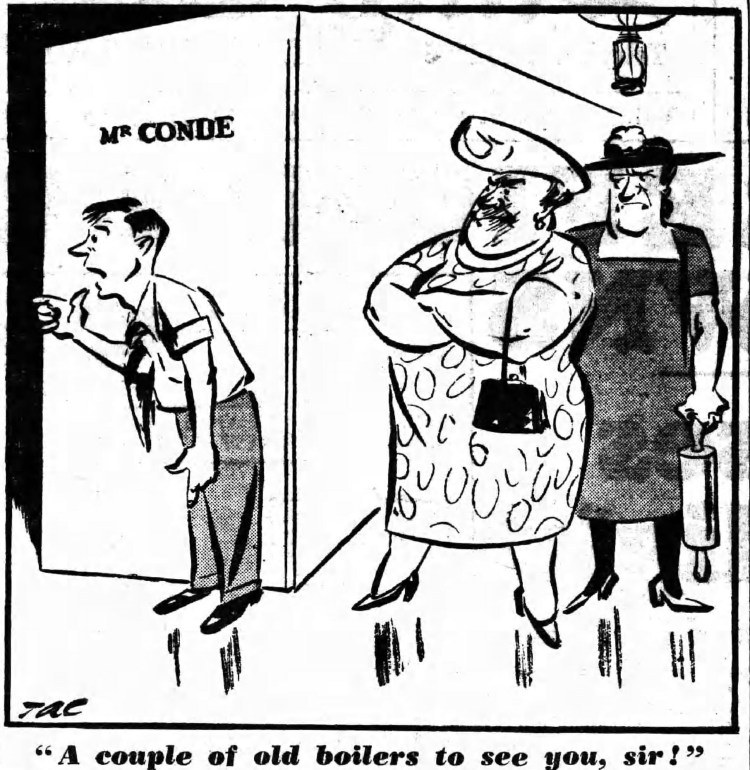
Australia, 1950—UK, 1962—derogatory and offensive: a middle-aged or elderly woman, especially one who is unattractive or unfeminine—refers to ‘boiler’, i.e., a tough old chicken for cooking by boiling
Read Morethe State of New South Wales—Australia, 1905—alludes to New South Wales as the ‘mother’ colony, i.e., the first colony that Britain founded in Australia—hence (1908) ‘Ma Stater’, a native or inhabitant of New South Wales
Read Morethe discipline of moving rapidly and freely over or around the obstacles presented by an urban environment by running, jumping, climbing, etc.—French—altered spelling of the noun ‘parcours’ in ‘parcours d’obstacles’ (i.e., ‘obstacle course’)
Read Morethe solution to a problem is very straightforward and easy—UK, 1901—supposedly said by Sherlock Holmes to Dr. Watson—but this phrase is not (in this form) found in any of Arthur Conan Doyle’s stories
Read Morean international athletic competition, modelled on the Olympic Games, for disabled athletes—UK, 1953—from the prefix ‘para-‘ in ‘paraplegic’ and ‘-lympics’ in ‘Olympics’—cf. early synonym ‘Paraplegic Games’
Read More
