meaning and origin of ‘not to know (something) from Shinola’
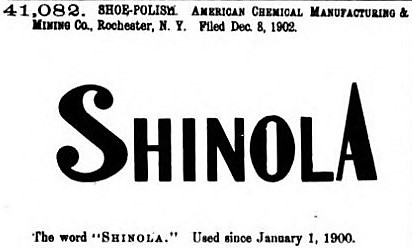
USA, 1946—to be completely unaware or innocent—from ‘Shinola’, the trade name of an American brand of shoe polish
Read More
“ad fontes!”
USA, 1946—to be completely unaware or innocent—from ‘Shinola’, the trade name of an American brand of shoe polish
Read MoreUK, 1820—to show willingness to enter into a contest or take up a challenge, especially in business or politics—originally (1804) used in boxing with reference to the custom of throwing a hat into the ring to signal willingness to enter a contest
Read MoreUSA, 1906—popularised by a telegram sent to boxer Joe Gans by his mother, requesting him before a fight to win and ‘bring home the bacon’
Read MoreUSA, 1891—a passenger in the rear seat of a car who gives the driver unwanted advice; hence, figuratively, a person who is eager to advise without responsibility
Read MoreUK, 1934—image said to have been first used by Lenin about the Russian soldiers who were abandoning the war during the Russian Revolution of 1917
Read Moremeaning: everything is or will turn out all right—Scotland, 1891—‘bob’ probably related to the adjectives ‘bob’ and ‘bobbish’, meaning ‘well, in good health and spirits’
Read MoreBritish, 1925—‘to throw a spanner in(to) the works’: to cause disruption, to interfere with the smooth running of something—synonym (American English): ‘to throw a monkey wrench into’
Read Moremeaning: ‘there is nothing to prevent someone or something from being successful’—from a late-19th-century metaphor specifically used of poker games with ‘a sky-high limit’ on stakes
Read Moremeaning: ‘thoroughly dejected or disappointed’—appeared (1973) in Tyne and Wear (north-eastern England)—originated apparently in football parlance, in which it soon became a cliché
Read MoreUSA—‘to look, or to feel, (like) a million dollars’, or ‘(like) a million bucks’: to look, or to feel, extremely good, or extremely attractive (early 20th century)—sometimes used in contrast to ‘like thirty, or 30, cents’: cheap, worthless (late 19th century)
Read More
