USA, 1937—to have or cultivate a particular image or reputation which has no basis in reality; to engage in empty talk—now often thought of as referring to Texans, but originally attributed to Native Americans
USA, 1990—a persistent or indefatigable person or phenomenon—refers to ‘Energizer Bunny’, the name of a battery-operated toy rabbit represented as never running out of energy, featured from 1988 in a television advertising campaign for batteries
Since the mid-20th century, with reference to garden tea parties, the phrase ‘cucumber sandwiches on the lawn’ and its variants have been used to characterise traditional Englishness.
USA, 1907—refers to the supply of something to a place where it is not needed—in particular, ‘could sell sand in the Sahara’ is applied to an efficient salesman, and, by extension, to a persuasive person
USA, 1931—originated in sporting parlance—emphasises the meaning of the adjective it immediately follows—that adjective usually is ‘hot’ (used literally or figuratively) or describes agitation, erraticism
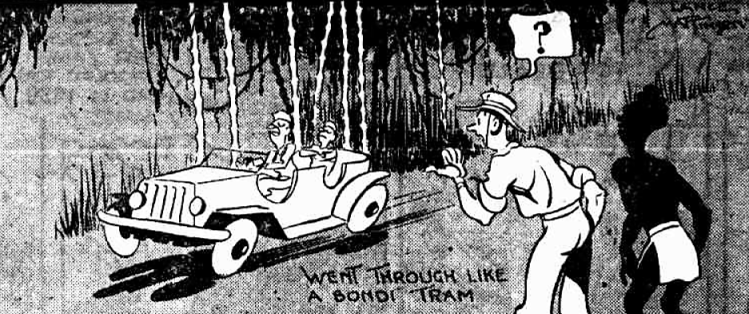
Australia, 1940—means ‘speedily’—refers to the tram service between Sydney, New South Wales, and Bondi Beach, a popular beach located 4 miles east of Sydney city centre
USA, 1933—usually followed by an incongruous supposition—an allegation of incompetence addressed to the driver of a motor car by another motorist, or by a cyclist or a pedestrian
derisive appellation given to Australian Rules (football), because the ball is often kicked high into the air, requiring players to leap and catch it—Australia, 1945—slang of the Australian armed forces during World War II
USA, 1937, as a wrestling term—an act of placing both hands on a person’s wrist or arm and then twisting it to produce a burning sensation—alludes to the fiendish methods of torture attributed to the ‘(Red) Indians’