‘early doors’ (near the beginning)
UK, 1976—the colloquial phrase ‘early doors’ means ‘early on’, ‘at an early stage’—frequently occurs in the context of football—of unknown origin
Read More
“ad fontes!”
UK, 1976—the colloquial phrase ‘early doors’ means ‘early on’, ‘at an early stage’—frequently occurs in the context of football—of unknown origin
Read Moreto go away and stop being a nuisance—chiefly used in the imperative as a contemptuous dismissal—USA, 1883—the image is of somebody jumping into a lake and drowning
Read Moreto have qualities other than mere attractiveness, especially intelligence—UK, 1955—paradoxically, in early use, often employed in a sexist manner
Read Morehumorous—a polite variant of the informal phrase to ‘take the mickey out of’, meaning ‘to tease or ridicule’—UK, 1956
Read Moreto die, or to come to grief, in violent or exceptionally unpleasant circumstances—Australia, 1897—here, the adjective ‘sticky’ means ‘unpleasant’
Read More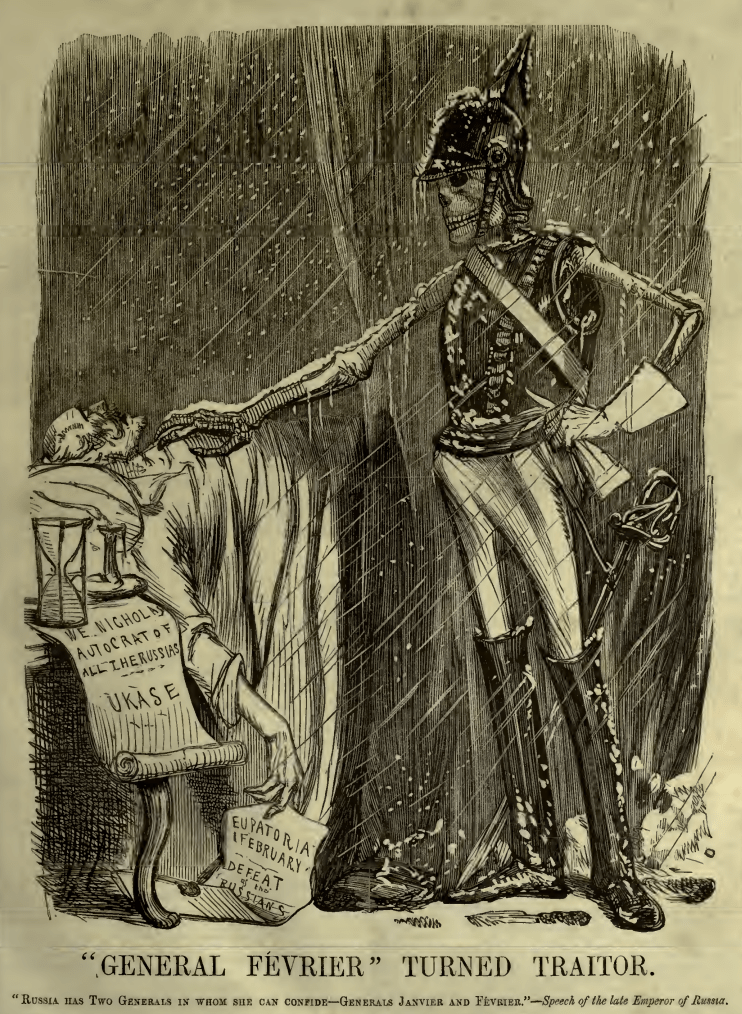
personify January and February as army commanders, especially in reference to winter as detrimental or destructive to a military campaign—apparently coined by Russian Prince Alexander Menshikov in 1855, during the Crimean War
Read Morefrom ‘the history of the four kings’, punning on ‘the four kings’ (the four playing cards in a pack, each bearing a representation of a king) and ‘the Book of Kings’ (the name of two, formerly four, books of the Old Testament)
Read More18th century—used humorously and ironically to denote old news, usually with the implication that the person whom the speaker is referring to is simply stating the obvious or restating a well-worn or accepted truth
Read MoreUK, 1921—someone who is capable, reliable or trustworthy in the management of a situation—1854: originated in cricket, with reference to skill and reliability in catching a ball—later applied to rugby players (1894) and to goalkeepers in soccer (1899)
Read More
from the image of a speeding explosive projectile—primary meaning (of a motorcar, an aircraft, a motorcycle, an animal, a person): to move very fast—later (also ‘to go down like a bomb’ and ‘to go down a bomb’): to be very successful or popular
Read More
