‘to come a cropper’: meanings and origin
(literally): to fall heavily; (figuratively): to fail completely—UK, 1847—‘cropper’ may be derived from ‘crop’ in the phrase ‘neck and crop’ (1791), which originally referred to a heavy fall
Read More
“ad fontes!”
(literally): to fall heavily; (figuratively): to fail completely—UK, 1847—‘cropper’ may be derived from ‘crop’ in the phrase ‘neck and crop’ (1791), which originally referred to a heavy fall
Read Morea person with facial acne—Californian high-school slang, 1963—in this expression, the pimples caused by facial acne are likened to slices of pepperoni on a pizza
Read Moreto criticise or attack somebody aggressively or decisively; to target an adversary’s weakest or most vulnerable point—USA, 1879—the image is of attacking a person fatally in the throat or neck, where the jugular vein runs
Read MoreUK, 1976—the colloquial phrase ‘early doors’ means ‘early on’, ‘at an early stage’—frequently occurs in the context of football—of unknown origin
Read Moreto go away and stop being a nuisance—chiefly used in the imperative as a contemptuous dismissal—USA, 1883—the image is of somebody jumping into a lake and drowning
Read Moreto have qualities other than mere attractiveness, especially intelligence—UK, 1955—paradoxically, in early use, often employed in a sexist manner
Read Morehumorous—a polite variant of the informal phrase to ‘take the mickey out of’, meaning ‘to tease or ridicule’—UK, 1956
Read Moreto die, or to come to grief, in violent or exceptionally unpleasant circumstances—Australia, 1897—here, the adjective ‘sticky’ means ‘unpleasant’
Read More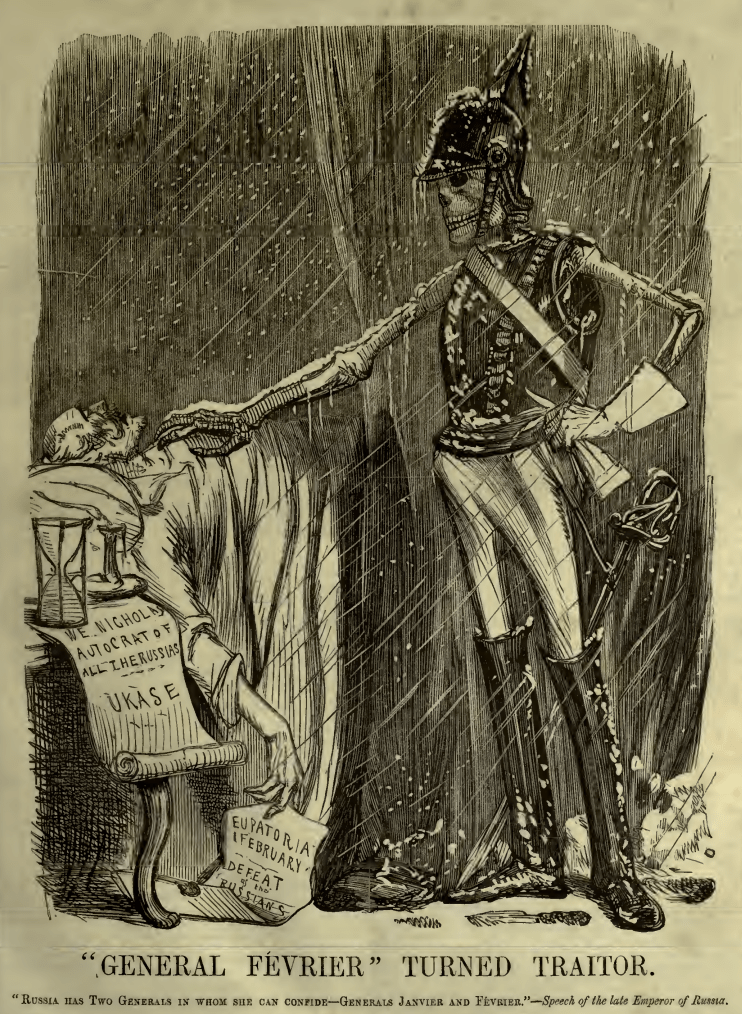
personify January and February as army commanders, especially in reference to winter as detrimental or destructive to a military campaign—apparently coined by Russian Prince Alexander Menshikov in 1855, during the Crimean War
Read Morefrom ‘the history of the four kings’, punning on ‘the four kings’ (the four playing cards in a pack, each bearing a representation of a king) and ‘the Book of Kings’ (the name of two, formerly four, books of the Old Testament)
Read More word histories