‘blue funk’ (American usage)
a state of depression or despair—1893—a shift in meaning of the British-English expression ‘blue funk’, denoting a state of extreme nervousness or dread (the original meaning in American English)
Read More
“ad fontes!”
a state of depression or despair—1893—a shift in meaning of the British-English expression ‘blue funk’, denoting a state of extreme nervousness or dread (the original meaning in American English)
Read Moreabsenteeism among police officers (and by extension other workers) who claim to be ill but are in fact absent to support union contract demands or negotiations—USA, 1967—alludes to the traditional colour of police uniforms
Read More
to put someone in a difficult, vulnerable or compromising situation, especially by exposing them to blame—USA, 1945, sports—the image is of suspending wet washing in the open so that it can dry
Read Moreused conversationally to declare, often ironically, that one shares the opinion, sentiment, predicament, etc., of the previous speaker—USA, early 20th century
Read Morea ruse or stratagem that is still effective although it has been used for a long time—USA, 1929—seems to have originated in sports
Read Moreto abandon or betray someone in order to protect or advance one’s own interests—originally (British politics, 1971) ‘to push someone under a bus’—derived from ‘to walk under a bus’ (British politics, 1966)
Read Moresmartly dressed—from the verb ‘fig out/up’, meaning ‘to smarten up’—this verb is probably an alteration of the verb ‘feague’, of uncertain origin, meaning ‘to make (a horse) lively’
Read More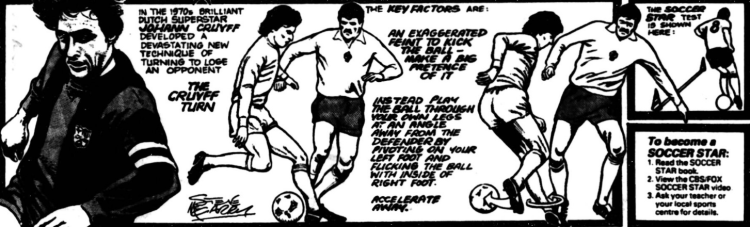
in soccer: a manoeuvre used by one player to evade another—UK, 1980s—refers to Dutch footballer Johan Cruyff, who first brought this manoeuvre to public attention by performing it in 1974
Read Morethe action, excitement or trouble starts—USA, late 19th century—originally alluded to the release of a balloon to mark an event
Read Morean event or occasion at which the expected principal participant is not present—coined after ‘Hamlet without the Prince’—‘Lear without the King’ 1904—‘Henry V without the King’ 1964
Read More word histories