to calm down and relax—a blend of ‘chill’ (to calm down and relax) and ‘relax’—however, explained in 1992 as a blend of ‘chill’ (to calm down and relax) and ‘max’ (to lounge, i.e., to lie, sit or stand in a relaxed or lazy way)
UK, 1921—‘frogspawn’: a jocular appellation for ‘tapioca pudding’ (also for ‘sago pudding’)—originated in schoolchildren’s slang—refers to the fact that both tapioca pudding and sago pudding very much resemble frogspawn, i.e., a soft substance like jelly which contains the eggs of a frog
Australia, 1986—a man’s protruding belly—‘verandah’ denotes an open-sided roofed structure over a shop—in this phrase, ‘toy shop’ denotes the male genitals
Australia, 1935—meaning: ‘to deliberately ignore someone’s presence, request, etc.’—has erroneously been said to have originated in army slang during the Second World War
USA, 1963—a female police officer or a female traffic warden—puns on ‘dick’, slang for a man’s penis, and the name of Dick Tracy, a comic-strip detective created in 1931 by the U.S. cartoonist Chester Gould
UK, 1819—has been used in various jocular phrases referring to alcohol consumption—punningly alludes to ‘lush’, which, as a noun, denotes alcoholic drink, and, as a verb, means to consume alcohol—‘the City of Lushington’: a convivial society, consisting chiefly of actors, which met at the Harp Tavern, London
The following slang expressions have been used to designate the mouth: ‘box of ivories’ (also ‘ivory-box’); ‘box of dominoes’ (also ‘domino-box’); ‘bone-box’; ‘potato-box’; ‘potato-jaw’; ‘potato-trap’; ‘kissing-trap’.
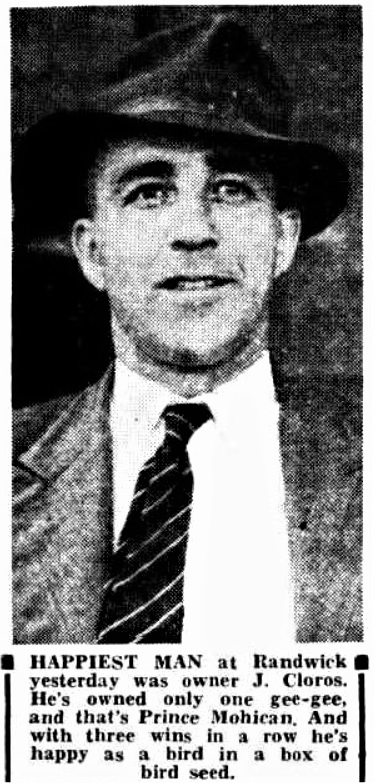
Australia and New Zealand, 1939—to be in good spirits, ‘chirpy’—the image is of a boxful of chirping birds (cf. the extended form ‘happy as a bird in a box of birdseed’)—New-Zealand variant ‘to be a box of fluffy ducks’, also ‘to be a box of fluffies’
UK and USA, 1816—to tell a long, far-fetched story—of nautical origin? (perhaps alludes to making ropes from lengths of yarn on board ship: the men would have told one another stories while performing this long and tedious task)




 word histories