UK, 1898—Australia, 1913—used when, while addressing someone, the speaker is interrupted by someone else—in particular when the person who interrupts is a subordinate of the person whom the speaker addresses
refers to “All right, have it your own way—you heard a seal bark”, the caption to a drawing by James Thurber, originally published in The New Yorker of 30th January 1932
USA, 1909—a derogatory description of a specific place or occupation, typically used by somebody who is getting expelled from this specific place or occupation
USA, 1833—jocular phrase meaning that the speaker does not care what he is being called—a U.S. and Australian variant uses ‘breakfast’ instead of ‘dinner’
UK, early 18th century—addressed to one who, saying ‘coming!’ (i.e., ‘in a minute’), takes a long time to arrive—used by extension of anything that is being delayed
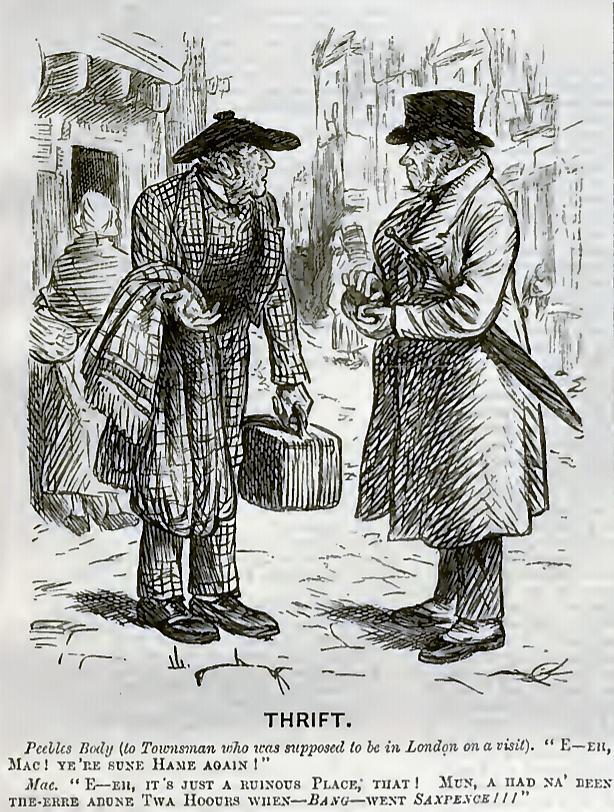
UK, 1870—based on the stereotype of Scots being miserly—from the story of the Scotsman who complained that he had to spend, in London, the small sum of sixpence