‘up to dolly’s wax’: meanings and origin
Australia, 1909—to the greatest possible extent; sated with food—dolls used to have modelled wax heads with a neck shaped so that it could be sewn to a stuffed rag body
Read More
“ad fontes!”
Australia, 1909—to the greatest possible extent; sated with food—dolls used to have modelled wax heads with a neck shaped so that it could be sewn to a stuffed rag body
Read MoreAustralia, 1888—defined by Wilkes in A Dictionary of Australian Colloquialisms (1990) as “An imaginary rich uncle overseas, backing some venture in which the unwary may be persuaded to invest.”
Read More1947—is used to express an attitude of insularity and hostility to foreigners attributed to the British—a shortening of ‘golliwog’, the derogatory and offensive noun ‘wog’ designates a non-white person
Read MoreUSA, 1976—Australia, 1982—trendy middle- to upper-middle-class people, who are often conservationists, and who, in some cases, have moved from cities and urban areas into country areas
Read More
applied to a rich person complaining of having insufficient means of existence; to a person who is merely free from financial worry—USA, 1936—coined humorously after ‘not to have two pennies to rub together’
Read MoreUK, 1835—said to a person that the speaker does not wish to see again—refers to Bath, a spa in south-western England, where one goes to take the waters
Read More
UK, 1987—a young man who behaves in an unpleasant or aggressive manner as a result of drinking (typically lager) excessively—lager, a pale beer, is favoured by the young as opposed to the dark, traditional bitter English beer
Read More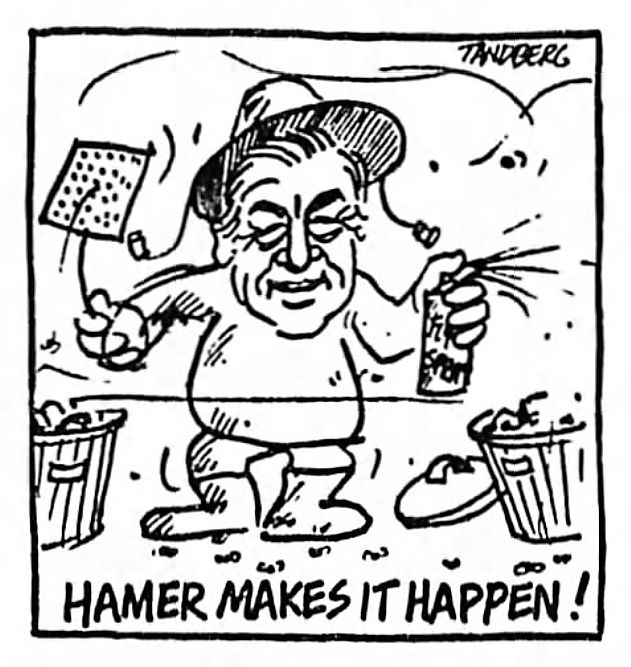
the movement of the hand in brushing away flies—first recorded in 1967 in a speech by Fred Chaney, Member of the Australian House of Representatives—variants: ‘the Queensland salute’; ‘the Barcoo salute’
Read MoreUK, 1710—in ease and luxury—refers to the use of clover as fodder, as explained by Samuel Johnson in A Dictionary of the English Language (1755): “To live in Clover, is to live luxuriously; clover being extremely delicious and fattening to cattle.”
Read Moredenotes effrontery—‘front’ denotes self-assurance, but the word that follows ‘than’ puns on ‘front’ in the sense of the façade of a building, the part of a garment covering a person’s front, etc.
Read More
