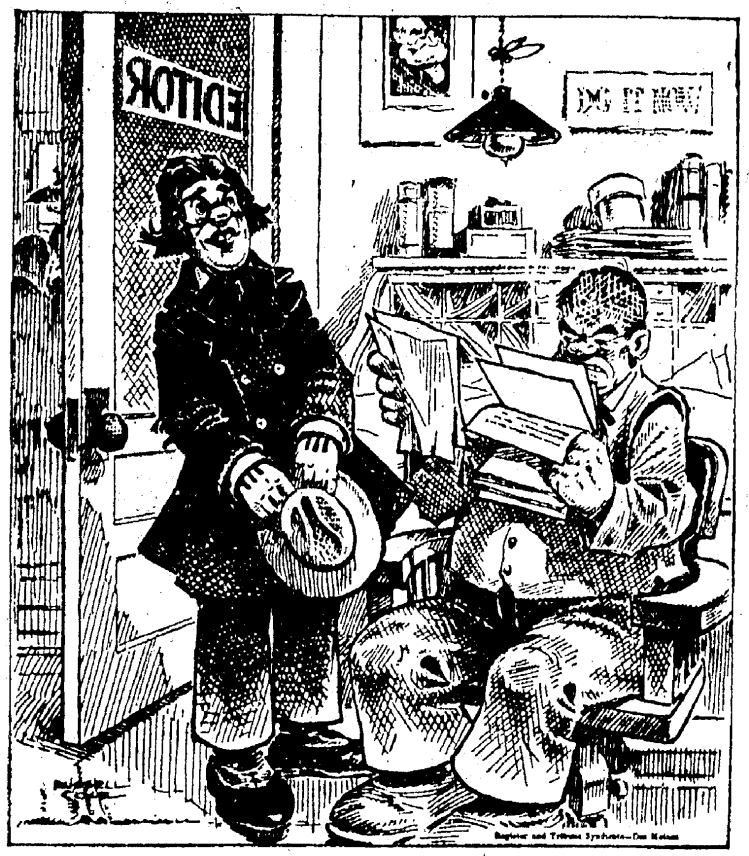
USA, 1905—a situation that is likely to lead to disaster or misfortune, especially because of negligence or neglect; someone who behaves in a way that is likely to cause trouble
USA, 1976—the outcome of a situation cannot be assumed—may allude to the stereotype of a large female soprano singing the final aria of an opera—from ‘church ain’t out ’till the fat lady sings’ (1976), itself from ‘church ain’t out until the singing is over’ (1872)
colloquial, Australia, 1910—‘the night’s (only) a pup’, or ‘the day’s (only) a pup’, means the night, or the day, is young—refers to ‘pup’ in the sense of a young dog
USA, 1872—the first clause refers to accurate calculations, the second punningly refers to the manipulation of those calculations—based on the figure called chiasmus, i.e., in which the order of words in the first clause is inverted in the second
the name of a decree issued in Nazi Germany in December 1941, under which individuals suspected of resistance or other underground activities were arrested and deported suddenly and without trace, frequently during the night—by extension: any situation, event, etc., characterised by mystery, obscurity or secrecy
USA, 1937—to have or cultivate a particular image or reputation which has no basis in reality; to engage in empty talk—now often thought of as referring to Texans, but originally attributed to Native Americans
USA, 1907—refers to the supply of something to a place where it is not needed—in particular, ‘could sell sand in the Sahara’ is applied to an efficient salesman, and, by extension, to a persuasive person
UK, 1918—a malediction, typically uttered as a parting shot after a quarrel—seems to have originated as one child’s threat to another—the reason the word ‘rabbit’ was chosen is unknown