‘loony bin’: meaning and origin
1909 to 1923 in stories by English author P. G. Wodehouse—a facetious appellation for a home or hospital for people with mental illnesses—‘loony’: shortened form of ‘lunatic’
Read More
“ad fontes!”
1909 to 1923 in stories by English author P. G. Wodehouse—a facetious appellation for a home or hospital for people with mental illnesses—‘loony’: shortened form of ‘lunatic’
Read MoreUSA, 1889—when a situation reaches a critical point and one must commit oneself to an action or decision—the image is of having to shove when mere pushing is ineffective
Read MoreUK, 1808—to make one’s beliefs or intentions plain—from the former practice of nailing an ensign to the mast of a ship, after damage during battle resulted in the ship’s colours no longer being clearly displayed, which otherwise might have been interpreted as a signal of surrender
Read MoreUK, 2005—the perceived indiscriminate and excessive use by the authorities of anti-social behaviour orders—apparently coined by Álvaro Gil-Robles, the Council of Europe’s Commissioner for Human Rights—‘Asbo’: acronym from the initial letters of ‘anti-social behaviour order’
Read MoreUSA, 1775—to do or say something remarkable or startling—the precise underlying notion in the choice of ‘Dutch’ is not clear—‘Dutch’ occurs in a number of derogatory or derisive English phrases
Read More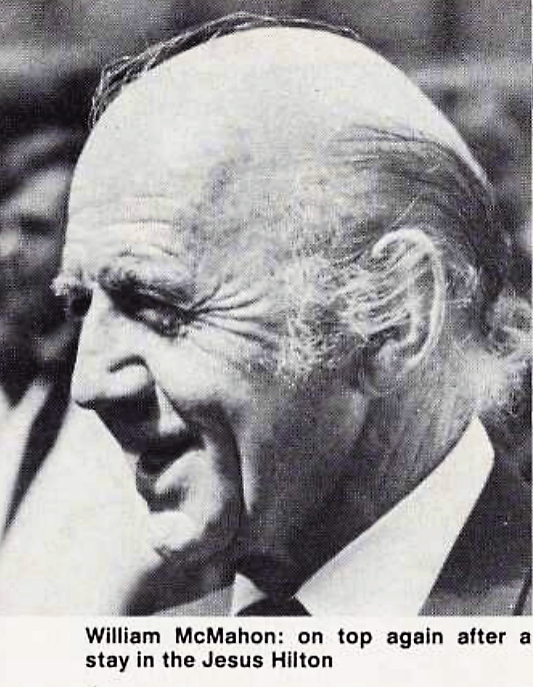
Australia—familiar name of St Vincent’s Private Hospital, Sydney—‘Jesus’ refers to the fact that the hospital is operated by a religious organisation—‘Hilton’ alludes to the hospital’s plushness
Read More
Australia, 1966—typically Australian in character—alteration of the phrase ‘as American as apple pie’, with reference to the prominence of meat pie in Australian diet
Read MoreAustralia, 1982—a stretch of Oxford Street, in Sydney, which is the city’s main gay district—refers to the use of Vaseline to ease anal intercourse, and based on the alliteration in /v/
Read MoreUK, 1928—of a public-house: very basic and lacking in comforts—refers to the former practice of covering the floor of a public-house with sawdust into which customers spat
Read More19th century—refer to two handkerchiefs, one used as a clothing accessory, the other for blowing the nose—hence, figuratively ‘for display rather than for use’ and ‘one for display and one for use’
Read More
