‘Johnny Arab’: meaning and origin
UK, 1920—an Arab man—‘Johnny’, a pet form of ‘John’, is used, with modifying word, to designate a person, especially a man, of the type, group, profession, etc., specified
Read More
“ad fontes!”
UK, 1920—an Arab man—‘Johnny’, a pet form of ‘John’, is used, with modifying word, to designate a person, especially a man, of the type, group, profession, etc., specified
Read Morea standard or device for the measurement of foolishness or folly—coined by the British author Sydney Smith (1771-1845) in ‘Second Letter to Archdeacon Singleton, Being the Third of the Cathedral Letters’ (London, 1838)
Read MoreUSA, 1957—the rhythm method of birth control, as permitted by the Roman Catholic Church—with allusion to the unpredictable efficacy of this contraceptive method: from ‘Vatican’, denoting the authority of the Roman Catholic Church, and ‘Russian roulette’
Read MoreUK, 1974—applied jocularly to any supposed network of prominent or influential Welsh people, especially one which is strongly nationalistic—a blend of ‘Taffy’, denoting a Welshman, and ‘Mafia’
Read MoreUK, 1847—a fall in value, especially a reduction in wages—one of several expressions denoting the opposite in meaning of the noun qualified by the genitive case of ‘Irishman’—for example: ‘Irishman’s promotion’ (a demotion) and ‘Irishman’s hurricane’ (nautical: a flat calm)
Read More‘serious trouble’—USA, 1866—from the image of taking off one’s shirt before getting into a fight, and from ‘hell’ in the sense of ‘a severe reprimand’, as in ‘to give someone hell’
Read More‘femiphobia’ (USA) 1907—‘feminophobia’ (UK) 1914—an irrational fear or dislike of women—from Latin ‘fēmina’ (woman) and combining form ‘-phobia’—probably each coined on various occasions by different persons, independently from each other
Read More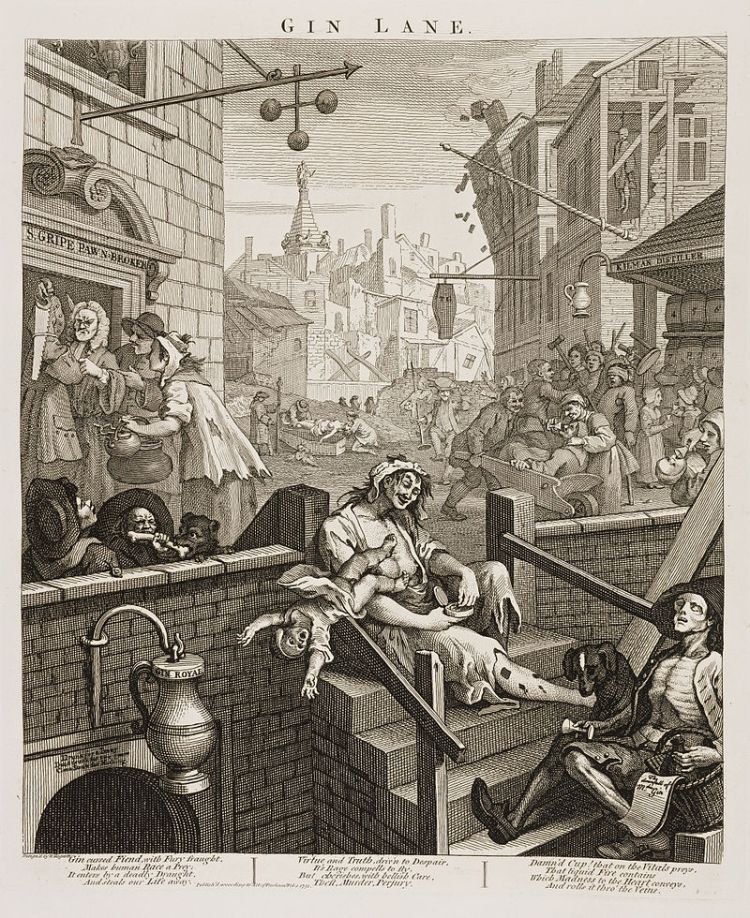
UK, 1904—denotes gin (i.e., a clear alcoholic spirit distilled from grain or malt and flavoured with juniper berries)—‘mother’s ruin’ alludes to the evils caused by the consumption of gin
Read MoreIn reference to the names of various stretches of the Spanish Mediterranean coast which are popular with British holidaymakers, the Spanish noun ‘costa’ is used humorously as the first element in various invented place names.
Read Morea nickname given to London, which has, since the collapse of the Soviet Union, attracted Russian oligarchs—also used earlier in reference to Communism—modelled on Russian city names such as ‘Leningrad’ and ‘Stalingrad’
Read More
