‘winedot’: meaning and origin
Australia, 1933—an addict of cheap wine or/and of methylated spirits—apparently coined jocularly after ‘Wyandotte’, denoting a domestic chicken of a medium-sized American breed
Read More
“ad fontes!”
Australia, 1933—an addict of cheap wine or/and of methylated spirits—apparently coined jocularly after ‘Wyandotte’, denoting a domestic chicken of a medium-sized American breed
Read MoreAustralian English, 1848: any urban area (said to be of Aboriginal origin)—Irish and British English, 1862: Dublin and London—alludes to smoke as characteristic of an urban area
Read More1950—‘grasshopper’ and its shortened form ‘grassy’, typically used in the plural, denote a tourist, especially a visitor to Canberra—the image is that a coachload of tourists is similar to a swarm of grasshoppers
Read More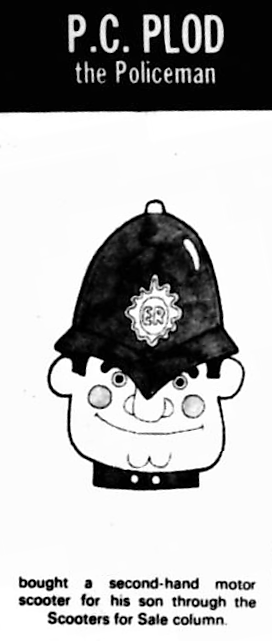
UK, 1963—‘Mr. Plod’, also ‘P.C. Plod’, ‘Plod’: a humorous or mildly derogatory appellation for a policeman or for the police—alludes to ‘Mr. Plod’, the name of the policeman in stories by the English author of children’s fiction Enid Blyton
Read MoreAustralia, 1950—a traffic warden in the state of New South Wales—‘brown’ probably refers to the colour of those traffic wardens’ uniform—‘bomber’ may refer to the fact that many of those traffic wardens were originally war veterans; or perhaps to the Australian-English use of the noun ‘bomb’ for an old car
Read MoreIn reference to the names of various stretches of the Spanish Mediterranean coast which are popular with British holidaymakers, the Spanish noun ‘costa’ is used humorously as the first element in various invented place names.
Read Morecompromising information collected for use in blackmailing, discrediting or manipulating a person, group, etc.—borrowed from Russian (Soviet secret police) ‘kompromat’, from ‘kompro-’ in ‘komprometirujuščij’, meaning ‘compromising’, and ‘mat-’ in ‘material’, meaning ‘material’
Read MoreIndia, 1958—euphemistic appellation for verbal or physical sexual harassment of a woman by a man in a public place—refers to Eve, the first woman in the biblical account of the creation of the world, who is seen as a temptress
Read MoreUSA, 1975—to hastily or furtively leave a restaurant, cafe, etc., in order to avoid paying for one’s bill—also used as a noun, especially as a modifier—has also been used of meals eaten quickly
Read MoreLancashire, England, 1939—used in similative and comparative phrases such as ‘as —— as soft Mick’ and ‘more —— than soft Mick’, the noun ‘soft Mick’ (also ‘Soft Mick’) indicates a great quantity or degree
Read More
