notes on ‘backwards, the way Molly went to church’
means ‘backwards’, also ‘reluctantly’—USA, 1865—of unknown origin—allegedly borrowed from Irish English, but nothing seems to support this allegation
Read More
“ad fontes!”
means ‘backwards’, also ‘reluctantly’—USA, 1865—of unknown origin—allegedly borrowed from Irish English, but nothing seems to support this allegation
Read Morea chaotic or disastrous situation that holds a ghoulish fascination for observers—UK, 1980, as ‘like viewing a car crash in slow motion’—USA, 1991, used without ‘like’ by George Colony, president of Forrester Research
Read MoreAustralia, 1885; New Zealand, 1894—indicates that a person is suffering from bad luck—the implication is that this bad luck is punishment for a crime committed by the person
Read More
Australia, 1954—derogatory nickname for the metal eagle at the top of the Australian-American Memorial in Canberra—alludes to the fact that, from a distance, the eagle’s upswept wings look like a rabbit’s ears
Read More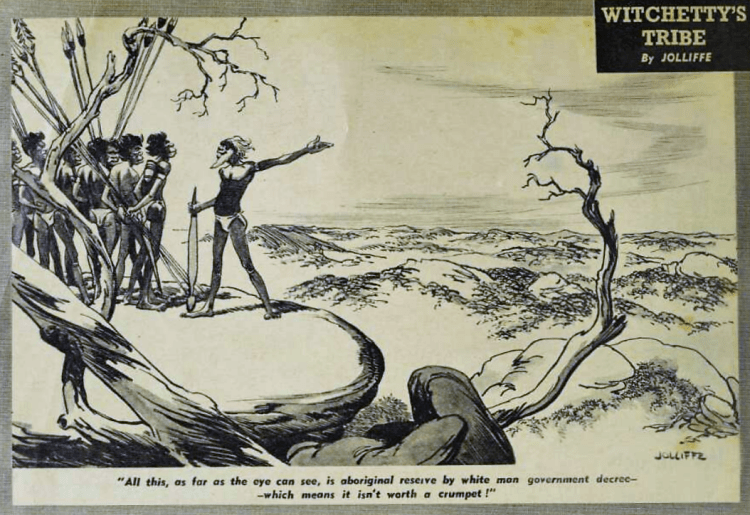
Australia, 1944—utterly worthless—one of the phrases built on the pattern ‘not worth a —’, such as ‘not worth a tinker’s curse’
Read More1942—an arena of fierce or ruthless rivalry—borrowed from French: literally ‘basket of crabs’—the image is of crabs fighting, if not devouring one another, when kept in a basket
Read Morealso ‘Christmas grip’—Australia, prison slang, 1953—a grabbing of another’s testicles—the image is of a handful of nuts
Read MoreAustralia, 1930—when used negatively, means ‘far away from’; when used affirmatively, means ‘not too far away from’—refers to the fact that a roaring bull can be heard over a great distance
Read MoreAustralia—a promiscuous male—coined in 1983, during a parliamentary debate, by Michael Hodgman, then Member of the Australian House of Representatives, to describe Bob Hawke, then Prime Minister of Australia
Read MoreAustralia, 1954—extremely ugly; extremely tired—the noun ‘sandshoe’ denotes a light canvas shoe with a rubber sole
Read More
