a 19th-century document on English phrases
remarks on English phrases (‘to rain cats and dogs’, ‘tit for tat’, ‘the devil to pay’, etc.) – from Notes and Queries (London), 9th November 1861
Read More
“ad fontes!”
remarks on English phrases (‘to rain cats and dogs’, ‘tit for tat’, ‘the devil to pay’, etc.) – from Notes and Queries (London), 9th November 1861
Read More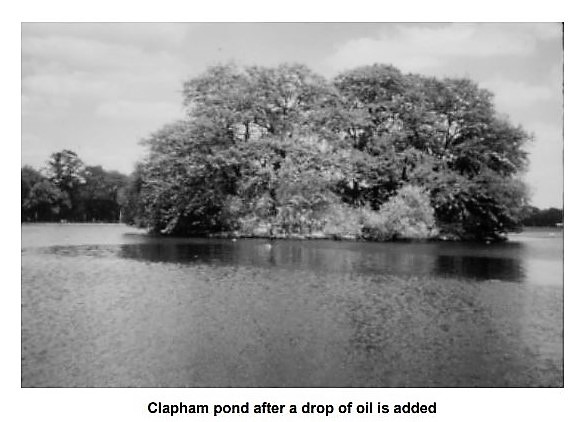
alludes to the calming effect of oil on the agitated surface of water; common knowledge since ancient times, first scientifically observed by Benjamin Franklin
Read MoreUSA, 1959—‘like watching paint dry’ or ‘as —— as watching paint dry’:used to denote an extremely dull activity or experience
Read Moreto desert someone in trouble—late 16th cent.—from French ‘lourche’, which denoted a game resembling backgammon and was used as an adjective meaning discomfited
Read More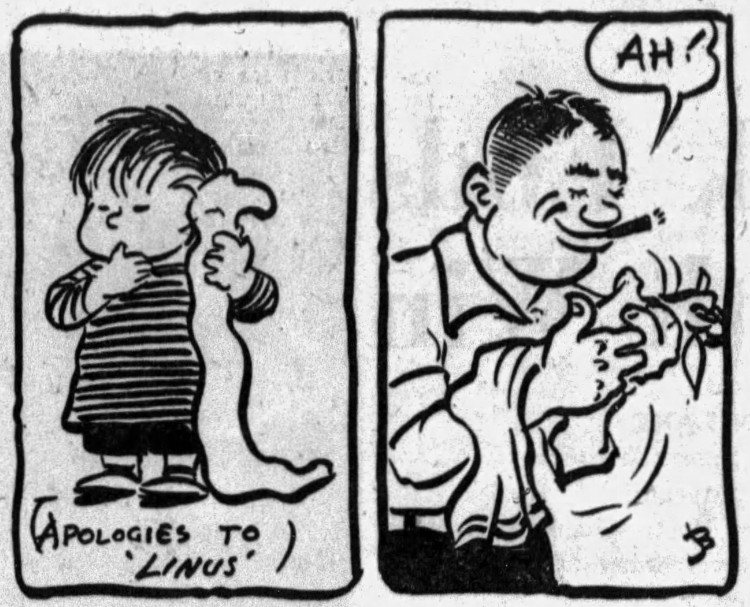
US, 1958: security blanket—from ‘Linus’, the name of a small boy who carries a blanket for comfort in the comic strip ‘Peanuts’, by Charles M. Schulz
Read More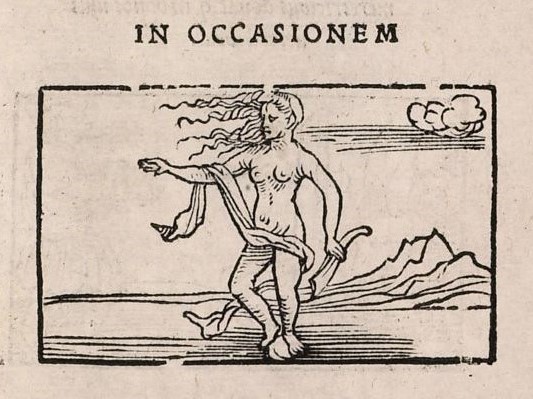
Opportunity was represented as woman completely bald except for a forelock: she can only be seized as she runs towards someone, not be caught thereafter.
Read More
early 17th century, with ‘the Dead Sea’ and ‘the deep sea’—originated in the image of a choice between damnation (‘the Devil’) and drowning (‘the sea’)
Read More
1942—In US Air Force’s slang, ‘eager beaver’ denoted an alert and efficient student cadet, with allusion to the animal’s industriousness.
Read Morelate 17th century—probably based on the resemblance between the shape of the heart and that of a cockleshell – or of the body the shell protects
Read More
probably British English, 1880s—to make an effort to improve or reform, ‘to pull oneself together’—based on the image of sprucing oneself up
Read More
