UK, 1995—a derogatory designation of New Labour, i.e., a right-wing/social democratic trend in Labour thinking and policy, advocated by Tony Blair—‘Tory’: the British Conservative Party; ‘lite’ (phonetic respelling of the adjective ‘light’): a moderated version of something
1907—whether one likes it or not; haphazardly—a humorous variant of ‘willy-nilly’, after the personal name ‘William’ (‘William’ being familiarly shortened to ‘Willy’)
USA (New England), 1868—alternately sunny and cloudy conditions usually indicate rain—the adjective ‘shet’ is a variant of ‘shut’—it was perhaps in order to provide a rhyme for the adjective ‘wet’ that the variant ‘shet’ was chosen in the proverb
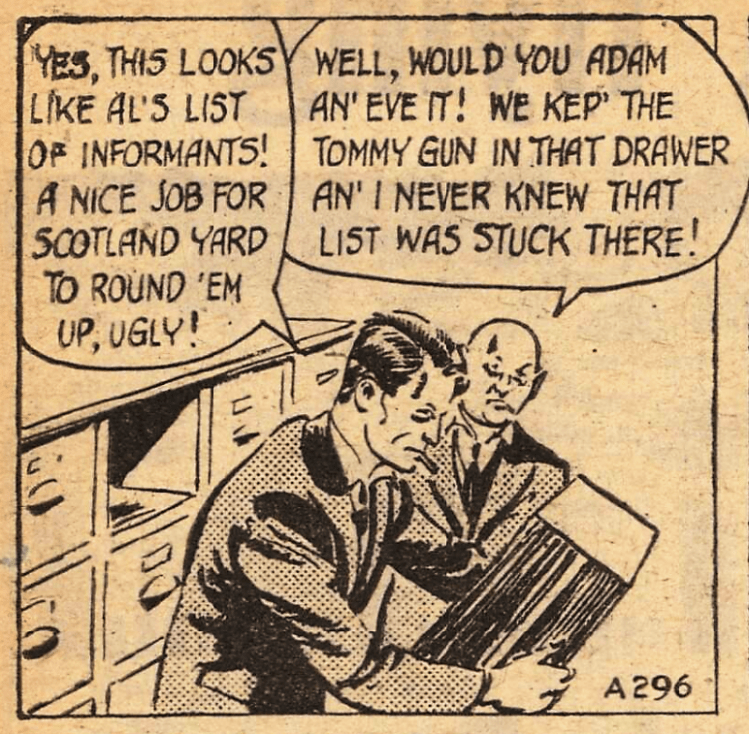
UK, 1925—the verb ‘Adam and Eve’ is rhyming slang for ‘to believe’—there is no truncation, contrary to the usual rhyming-slang formation (cf. ‘scooby’, rhyming slang for ‘clue’, which is short for ‘Scooby Doo’)
UK, 1983—‘Ruby Murray’, the name of a Northern-Irish singer (1935-1996), is rhyming slang for the noun ‘curry’, denoting a dish of meat, vegetables, etc., cooked in an Indian-style sauce of hot-tasting spices and typically served with rice.
UK, 1972—the offence of taking a car without the owner’s consent, especially for the purpose of joyriding, which was a social phenomenon prevalent in north-eastern England—acronym for ‘taking without owner’s consent’
UK, 1826—a place behind the bony point of the elbow at which a knock results in a sensation of tingling pain—in early use was perhaps partly punning on the homophones ‘humerus’ and ‘humorous’
USA, 1839—the whole group or set of people, animals or things—origin unknown—perhaps from the Dutch expression ‘de hele kit en boedel’, meaning ‘the entire house and everything in it’
USA, 1883—deliberate transposition of the initial consonants of ‘plot’ and ‘thickens’ in ‘the plot thickens’—‘the plot thickens’, attested in 1672, means: the storyline becomes more complex or convoluted

 word histories