‘on one’s Jack Jones’: meaning and origin
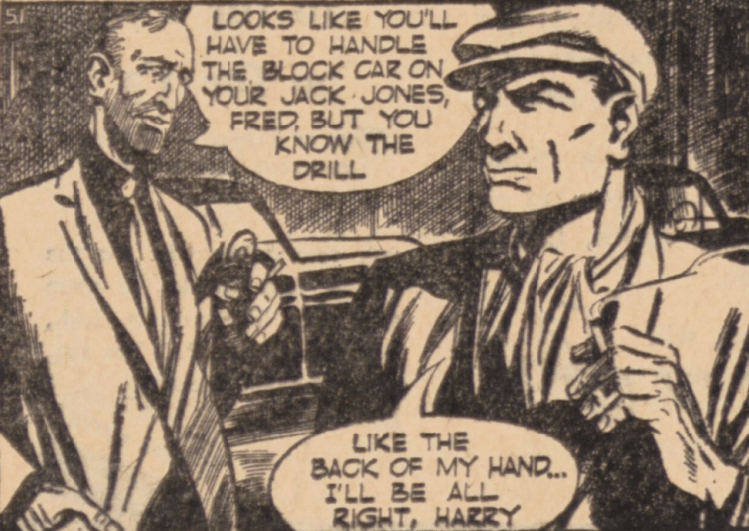
‘on one’s own’—UK, 1926—‘Jack Jones’ is rhyming slang for ‘alone’, or for ‘own’ in ‘on one’s own’
Read More
“ad fontes!”
‘on one’s own’—UK, 1926—‘Jack Jones’ is rhyming slang for ‘alone’, or for ‘own’ in ‘on one’s own’
Read MoreAustralia, 1986—used as an assurance that all is fine, or to express one’s agreement or acquiescence—euphemistic alteration, with switching of the initial consonants, of ‘no fucking worries’
Read Morean intelligence operative, also an intelligence operation—UK, 1966—from ‘sneaky’ (furtive, deceitful) and ‘beaky’ (referring to an overly inquisitive person, with allusion to a prominent nose)
Read Morevery stupid—popularised by Jethro Tull’s ‘Thick as a Brick’ (1972), but already existed—in early use (19th century) applied to nouns such as ‘skull’ and ‘head’, used metonymically for ‘intelligence’
Read MoreIn French, the concept of dependency underlies the semantic distribution of some basic lexical items: the female is strictly defined in her relation of dependency to the male, as a daughter or as a spouse.
Read Morealso ‘to drop one’s h’s’—not to pronounce the letter h at the beginning of words in which it is pronounced in standard English—1855—1847 as ‘not to sound one’s h’s’
Read Moreused as an interjection to assert truthfulness, honour or sincerity—USA, 1851, as ‘honest Indian’—perhaps alludes to the fact that, in their past interactions with Europeans, Native Americans had to give assurance of their good faith
Read Morealso ‘no joy without annoy’—meaning: there is a trace of trouble or difficulty in every pleasure—was already a common proverb in the late sixteenth century
Read MoreAustralia, 1927—alteration of ‘blanc’ in French ‘vin blanc’ (‘white wine’)—via rhyming slang forms such as ‘plinketty-plonk’, from phrases such as ‘vin blank’ in the slang of soldiers stationed in France during WWI
Read More
UK, 1917—used when one cannot think of, or does not wish to use, the name of a thing; by extension, a useful implement, a gadget—origin unknown
Read More
