the authentic origin of ‘to turn a blind eye’
early 19th century—shortening of ‘to turn the deaf ear and the blind eye’ and variants
Read More
“ad fontes!”
early 19th century—shortening of ‘to turn the deaf ear and the blind eye’ and variants
Read Moreprobably from Latin ‘Mater Cara’ or Italian ‘Madre Cara’, ‘dear mother’, i.e. the Virgin Mary, believed by sailors to send the petrel as a harbinger of storms
Read More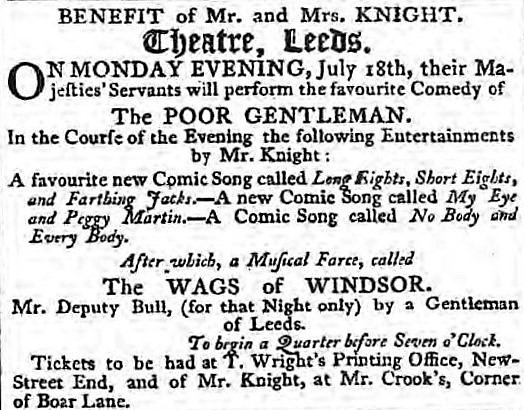
second half of the 18th century—a mere fanciful extension of ‘all my eye’—maintained in a sort of artificial life by persistent conjectures about its origin
Read More
‘according to Gunter’: correctly; reliably—early 18th century, from the name of the English mathematician Edmund Gunter (1581-1626)
Read More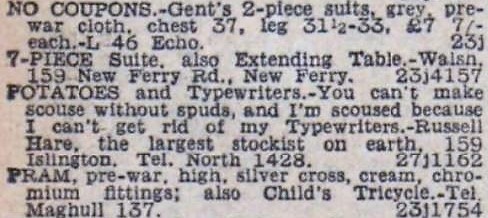
The original sense of ‘Scouse’, denoting a person from Liverpool, is ‘a stew’. The word ‘scouse’ is in turn a shortening of ‘lobscouse’, of obscure origin.
Read More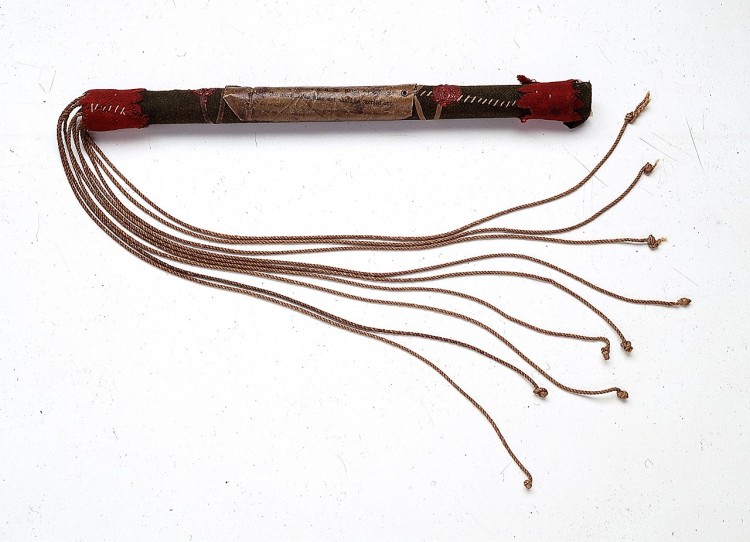
cat-o’-nine-tails (1866-79) – photograph: National Maritime Museum The noun cat-o’-nine-tails denotes a rope whip with nine knotted cords, formerly used, especially at sea, to flog offenders. This instrument of punishment was authorised in the British navy and army until 1881—cf. also to run the gauntlet. The word is first recorded in Love for […]
Read More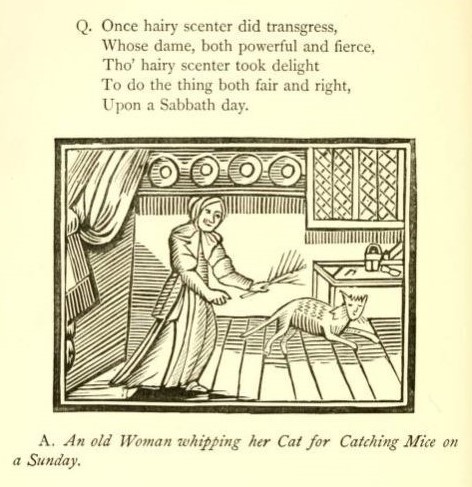
Q. Once hairy scenter did transgress, Whose dame, both powerful and fierce, Tho’ hairy scenter took delight To do the thing both fair and right, Upon a Sabbath day. A. An old Woman whipping her Cat for Catching Mice on a Sunday. from The True Trial […]
Read More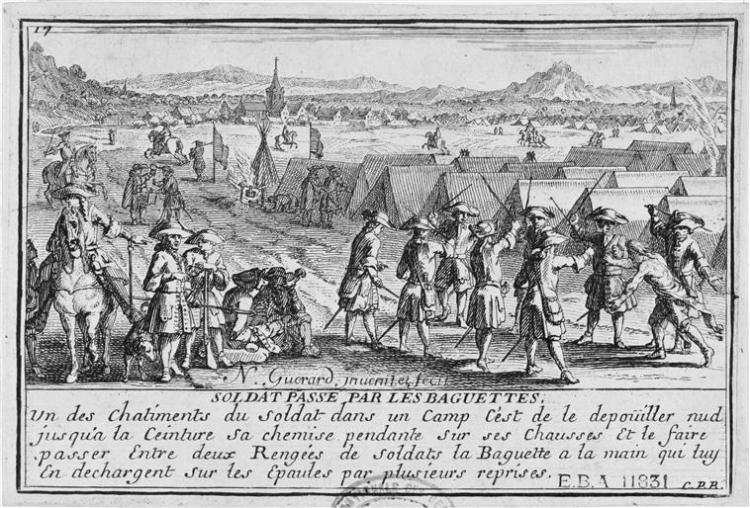
SOLDAT PASSE PAR LES BAGUETTES. Un des chatiments du soldat dans un camp c’est de le depouiller nud jusqu’a la ceinture sa chemise pendante sur ses chausses et le faire passer entre deux Rengées […]
Read More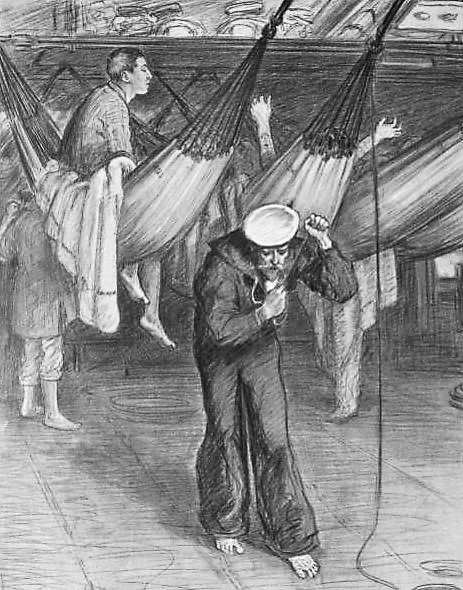
HOW A SAILOR BEGINS HIS DAY’S WORK A Scene on board H.M.S. “Trafalgar.” The boatswain blows his whistle at 5 o’clock in the morning and cries, “All hands.” Diving in and out beneath the hammocks he goes with bent head calling the same old cry of Nelson’s day: “Rise and shine. Show a leg—show […]
Read More
It has often been said that the noun banger appeared as British slang for sausage in the World War One trenches (cf. also Zeppelin). But, in fact, it was in use in the British Navy before the outbreak of the war. On 27th July 1904, The Tatler (London) published The real letters of […]
Read More word histories