‘scholasticide’: meaning and origin
the systematic destruction of Palestinian education by Israel—apparently coined in 2009 by Karma Nabulsi, Fellow in Politics at St Edmund Hall, University of Oxford
Read More
“ad fontes!”
the systematic destruction of Palestinian education by Israel—apparently coined in 2009 by Karma Nabulsi, Fellow in Politics at St Edmund Hall, University of Oxford
Read MoreUK, 1950, as ‘old boy net’—a system of favouritism and preferment operating among people of a similar social, usually privileged, background, especially among former pupils of public schools
Read MoreUSA, 1945—‘Kleenex’ (a proprietary name for a soft, disposable paper tissue) is used in similes expressing, in particular, disposability, ephemerality, fragility, weakness
Read More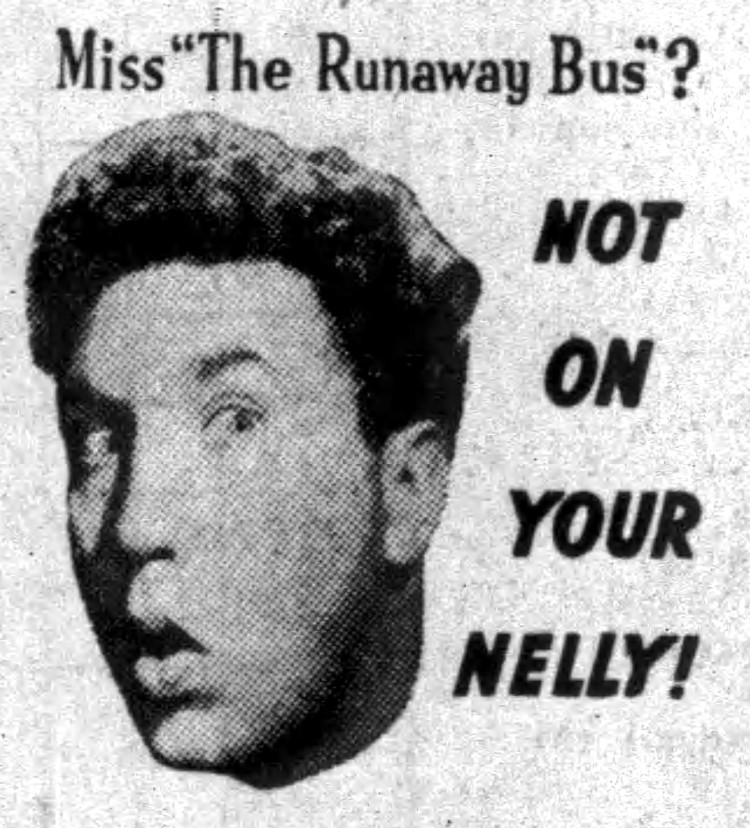
‘not under any circumstances’—Royal Air Force slang, 1942—short for ‘not on your Nelly Duff’, i.e., ‘not on your life’, ‘Nelly Duff’ being rhyming slang for ‘puff’ as used colloquially in the sense of ‘life’
Read MoreAustralia, 1943—a foolish or silly person—from the synonymous noun ‘dill’ (1933), itself apparently a back-formation from the adjective ‘dilly’, meaning ‘foolish’, ‘silly’
Read Moreone of the German air raids in 1942 on places of cultural and historical importance in Britain—from ‘Baedeker’: any of a series of guidebooks to foreign countries, issued by the German publisher Karl Baedeker (1801-1859) and his successors
Read MoreUK, 1915—a female worker in a munitions factory, especially during the First World War (1914-18)—from ‘munition’ and the suffix ‘-ette’, denoting women or girls linked with, or carrying out a role indicated by, the first element
Read Morea person embodying the civilised qualities supposedly characteristic of both an officer in the armed forces and a gentleman—UK, 1749, in the Articles of War
Read More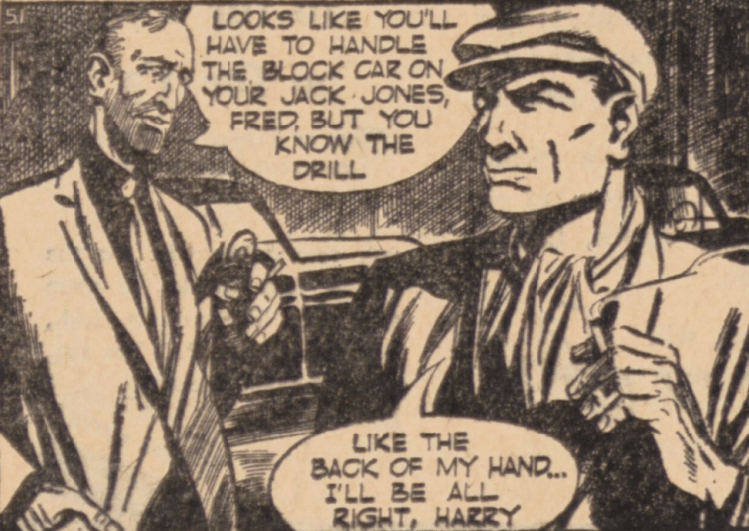
‘on one’s own’—UK, 1926—‘Jack Jones’ is rhyming slang for ‘alone’, or for ‘own’ in ‘on one’s own’
Read Moreto hurry up (1849 in Charles Dickens’s David Copperfield); the image is of a skater gliding rapidly over an ice surface—also, in early use (USA, 1886): to get drunk; the rolling gait of a drunk person is likened to the swaying motion of an ice skater
Read More word histories