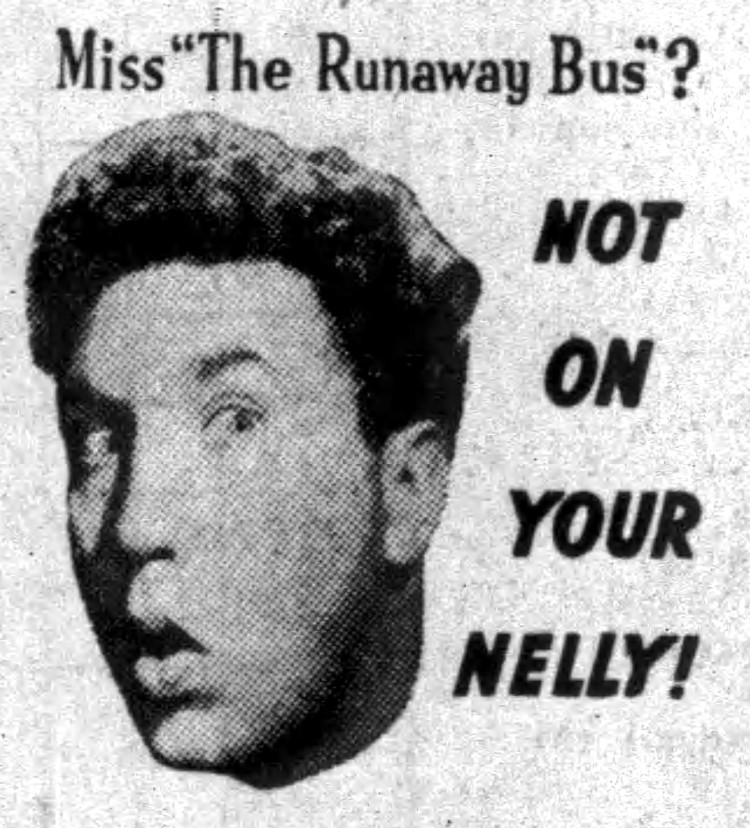
‘not under any circumstances’—Royal Air Force slang, 1942—short for ‘not on your Nelly Duff’, i.e., ‘not on your life’, ‘Nelly Duff’ being rhyming slang for ‘puff’ as used colloquially in the sense of ‘life’
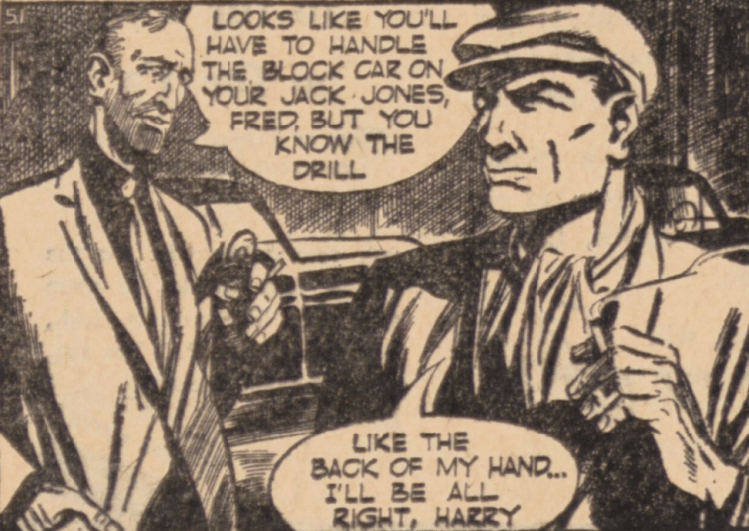
Australia, 1943—a foolish or silly person—from the synonymous noun ‘dill’ (1933), itself apparently a back-formation from the adjective ‘dilly’, meaning ‘foolish’, ‘silly’
one of the German air raids in 1942 on places of cultural and historical importance in Britain—from ‘Baedeker’: any of a series of guidebooks to foreign countries, issued by the German publisher Karl Baedeker (1801-1859) and his successors
UK, 1915—a female worker in a munitions factory, especially during the First World War (1914-18)—from ‘munition’ and the suffix ‘-ette’, denoting women or girls linked with, or carrying out a role indicated by, the first element
a person embodying the civilised qualities supposedly characteristic of both an officer in the armed forces and a gentleman—UK, 1749, in the Articles of War
to hurry up (1849 in Charles Dickens’s David Copperfield); the image is of a skater gliding rapidly over an ice surface—also, in early use (USA, 1886): to get drunk; the rolling gait of a drunk person is likened to the swaying motion of an ice skater
to be utterly defeated—alludes to the defeat of Napoléon I at the Battle of Waterloo in 1815—UK, 1832, as ‘to meet with a Waterloo’—USA, 1838, as ‘to meet one’s Waterloo’
UK, 1942—a weekly hour of religious instruction provided by chaplains to British-Army units—‘padre’ (literally ‘father’) is colloquially used to designate and address a male chaplain in the armed forces
prostitution—1889 as ‘the most ancient profession in the world’ in On the City Wall, by Rudyard Kipling—was used earlier, with positive connotations, of various professions, especially agriculture