‘Skinny Lizzie’: meaning and origin

UK, 1916—a scrawny girl or woman—may have originated in the title of a successful song (and in the name of an equally popular character) created in 1911 by the comedienne Lily Long
Read More
“ad fontes!”
UK, 1916—a scrawny girl or woman—may have originated in the title of a successful song (and in the name of an equally popular character) created in 1911 by the comedienne Lily Long
Read More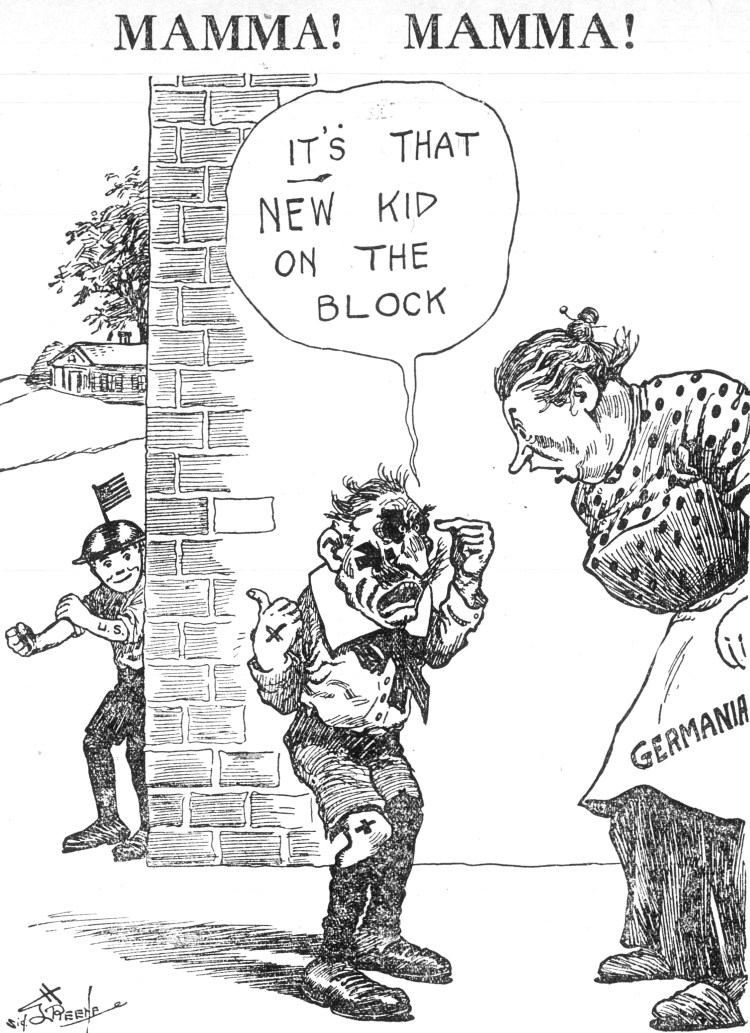
USA, 1911: a newcomer—but, from 1903 onwards, as ‘new kid in one’s block’: a child who has recently moved into the block where one lives—‘block’: a group of buildings in a city bounded by intersecting streets on each side
Read Moreimpressively or shockingly big—a blend of ‘gigantic’ and ‘enormous’—apparently coined by Welsh novelist Berta Ruck in Wedding March (1938)
Read Morea picture conveys far more than words—USA, 1877, as ‘a picture tells more than printed words’—from 1866 to 1876 the notion had been used with specific reference to pictures by the cartoonist Thomas Nast
Read Morea cake made with the ingredients available during wartime—first used during the First World War (1914-1918)—came back into usage during the Second World War (1939-1945)
Read More1785—Britain and Ireland—meaning: ‘more harshness than kindness’
Read Morea makeshift incendiary device for throwing by hand, consisting of a bottle filled with flammable liquid and with a piece of cloth as a fuse—Finland, 1940, in reference to Vyacheslav M. Molotov, who led the Soviet campaign against Finland
Read MoreNew Zealand, 1917—a mess, a muddle; something unattractive or unappetising—alludes to the jumbled nature of a pig’s meal
Read MoreUSA, 1951—to act in a way that inadvertently damages one’s cause or reputation or spoils one’s chances—alludes to accidental shooting
Read Moregrim and ironical humour—UK, 1860, in reference to the practice of public executions—UK, 1870, as a loan translation from German ‘Galgenhumor’, in the context of the Franco-Prussian War
Read More
