‘brolly hop’: meaning and origin
UK, 1933—a jump made with a parachute—hence also the verbal noun ‘brolly-hopping’ and the verb ‘brolly-hop’—‘brolly’ (university slang, late 19th century): a clipped and altered form of ‘umbrella’
Read More
“ad fontes!”
UK, 1933—a jump made with a parachute—hence also the verbal noun ‘brolly-hopping’ and the verb ‘brolly-hop’—‘brolly’ (university slang, late 19th century): a clipped and altered form of ‘umbrella’
Read More
classical Latin ‘mare nostrum’, literally ‘our sea’: one of the names given by the Romans to the Mediterranean Sea—USA, 1824: any sea or other stretch of water belonging to, or under the control of, a nation
Read More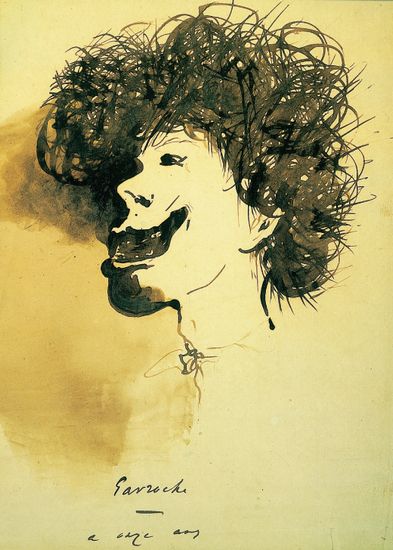
USA, 1863—a street urchin, especially in Paris, France—from ‘Gavroche’, the name of a street urchin in Les Misérables (1862), a novel by Victor Hugo
Read More‘parlour patriot’ (1797)—the earliest of the phrases in which ‘parlour’ is a depreciative attributive modifier used of a person claiming to be committed to a cause but not actually involved in the achievement of that cause—‘parlour’ is also used of the claimed commitment to a cause without actual involvement in the achievement of that cause
Read MoreThe noun ‘armchair’ is used as an attributive modifier meaning: 1) based or taking place in the home as opposed to the world or environment outside; hence, chiefly depreciatively: 2) lacking or not involving practical or direct experience of a particular subject or activity.
Read More‘to be destined or appropriate for a particular person’—originated during the First World War as ‘to have a person’s name and number on it’, and meant, of a bullet, etc., ‘to be destined to hit a particular person’
Read MoreUK, 1890—used to indicate that the person or persons guilty of a misdemeanour will not be named, in order to spare them recrimination—‘pack drill’: a military punishment involving a lengthy period of marching up and down carrying full equipment
Read Moredismissal from employment—UK, 1882, as ‘the noble order of the boot’—‘the boot’ refers to kicking somebody out—the phrase puns on two acceptations of ‘order’: an authoritative command and an institution founded for the purpose of honouring meritorious conduct
Read MoreUSA, 1937—an uneasy sensation felt, especially in the stomach, as a result of nervousness or apprehension—based on the notion that the fluttering of butterflies may produce a similar sensation
Read MoreUK, 1854—to belong to, or to sympathise with, two opposite groups, factions, etc.—probably a loan translation from French ‘avoir un pied dans les deux camps’ (1843)
Read More word histories