21st century: the practice of maintaining a certain distance between oneself and other people in order to prevent infection with a disease—20th century: the practice of maintaining a degree of remoteness or emotional separation from another person or social group
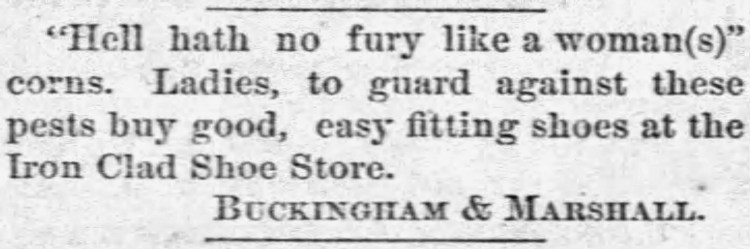
Ireland, 1845: ‘hell has no fury like a woman corned’—puns on ‘hell hath no fury like a woman scorned’, which refers to Congreve’s ‘The Mourning Bride’ (1697)
USA, 1959—a summary of social life in Washington DC, especially for aged men—attributed by columnist Betty Beale to Columbia University President Grayson Kirk
1911—‘Damaged Goods’, translation of ‘Les Avariés’, by French dramatist Eugène Brieux, about the dangers of ignorance concerning sexually transmitted diseases
used of images suggestive of real or imaginary events—UK and USA early 1900s: popularised by its use as an advertising slogan for Doan’s Backache Kidney Pills
American English, 1965—signification: to be kept in a state of ignorance and told nonsense—in use a few years later in Australian English and British English







 word histories