Sir John Herschel The announcement last Friday of the death, at the age of 81, of the Rev. Sir John Herschel, Bart., which occurred at Observatory House, Slough, revives a host of memories of 18th century Bath. Sir John Herschel was the great-grandson of Sir William Herschel, the famous astronomer, who discovered from his scientific […]
The noun marrowsky, which has also been spelt Marouski, Marowsky, morowski and mowrowsky, denotes a variety of slang, or a slip in speaking, characterised by the transposition of the initial letters or syllables of two words. The more usual term is spoonerism (cf. also malapropism and eggcorn). The word is first recorded in the verbal form Marrowskying in […]
photograph of William Archibald Spooner in The Leeds Mercury (Yorkshire) of Monday 1st September 1930 There is a rather awkward moment in “An Italian Straw Hat” when Laurence Payne, as a young bridegroom, looking desperately into the auditorium of the Old Vic, cries: “The thick plottens!” Hearing this elementary Spoonerism, graver members of the […]
photograph: Google+ Communities The noun philtrum denotes the vertical groove between the base of the nose and the border of the upper lip. The literal and obsolete signification of this word, which appeared in the early 17th century, is love potion, from classical Latin philtrum, of same meaning. In post-classical Latin, philtrum came to also denote the dimple in the upper lip. It […]
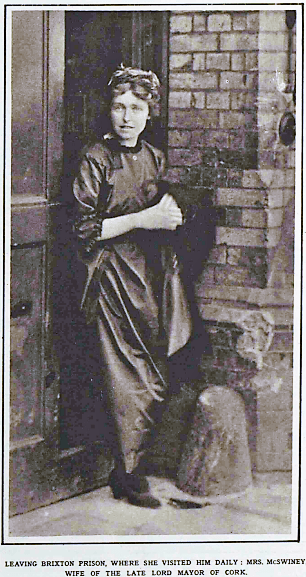
the Prisoners (Temporary Discharge for Ill-health) Act, 1913 – image: http://www.parliament.uk The Prisoners (Temporary Discharge for Ill-health) Act, 1913 was rushed through Parliament by Herbert Henry Asquith’s Liberal government in order to deal with the problem of hunger-striking suffragettes, who were force-fed, which led to a public outcry. The Act allowed for the […]
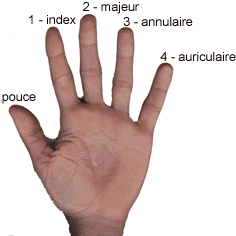
In the Etymologies (Etymologiarum sive Originum libri viginti), compiled between around 615 and the early 630s in the form of an encyclopaedia arranged by subject matter, St Isidore (circa 560–636), bishop of Seville and Doctor of the Church, wrote the following about the names of the fingers (the original Latin words are […]
The French masculine noun sanglier denotes a full-grown wild boar. It literally means a boar living on its own, separated from the herd, since, via Old and Middle French forms such as sengler and senglier, it is from the popular Latin singularis (porcus), solitary (pig) – cf. Middle-French terms such as porc sanglier, and in the Vulgate, the Latin version of the Bible, singularis ferus, the noun ferus meaning wild animal (cf. the […]
The Latin noun lupus/-pi meant wolf. It is kindred with ancient Greek λύκος (lukos). —Cf. lycanthrope, which originally designated a person who believes that he or she is a wolf, and which, via the modern Latin noun lycanthrōpus, is from Greek λυκάνθρωπος (lukanthropos), literally wolf-man, from λύκος and ἄνθρωπος (anthropos), man. The Latin lupus has sometimes been used in English in the sense of wolf; for instance, a Scottish […]
This Latin expression is composed of virtus, virtue, and dormitiva, feminine of dormitivus, dormitive. It first appeared in the following lines in dog Latin of Le Malade imaginaire (The Imaginary Invalid – 1673), in which the French playwright Molière (Jean-Baptiste Poquelin – 1622-73) satirised the circular explanations sometimes used in early medicine: (original edition) BACHELIERVUS. Mihi à docto Doctore Domandatur causam & rationem, […]
MEANING any plant of the European genus Reseda, including mignonette and dyer’s rocket, which has small spikes of greenish, yellowish or whitish flowers ORIGIN Through translations of Naturalis Historia (Natural History – 77), a vast encyclopaedia of the natural and human worlds by the Roman statesman and scholar Pliny the Elder […]




 word histories