‘no man’s land’ and three different types of death

‘no man’s land’—first a place of execution outside London; then a mass burial ground during the Black Death; later an unoccupied zone between opposing forces
Read More
“ad fontes!”
‘no man’s land’—first a place of execution outside London; then a mass burial ground during the Black Death; later an unoccupied zone between opposing forces
Read More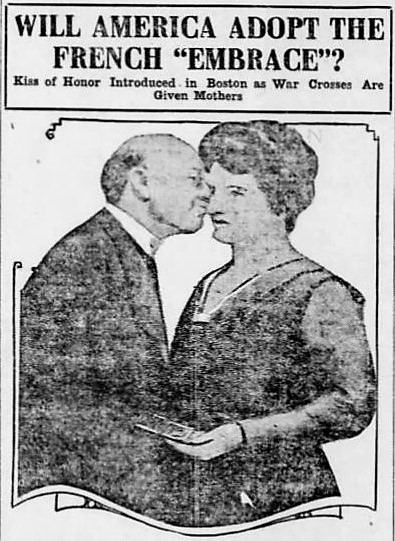
‘French kiss’—19th century: a kiss on both cheeks—early 20th century (USA): a kiss with contact between tongues
Read More
a sweet smell produced when rain falls on parched earth—1964; literally ‘tenuous essence derived from rock or stone’, from Greek ‘petro’ and ‘ichor’
Read More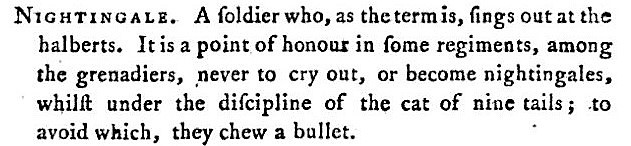
late 19th century—from the practice consisting, for a soldier, in biting on a bullet when being flogged
Read More‘Once in a blue moon’ is a development from ‘once in a moon’, meaning ‘once a month’, hence ‘occasionally’—‘blue’ is merely a meaningless fanciful intensive.
Read More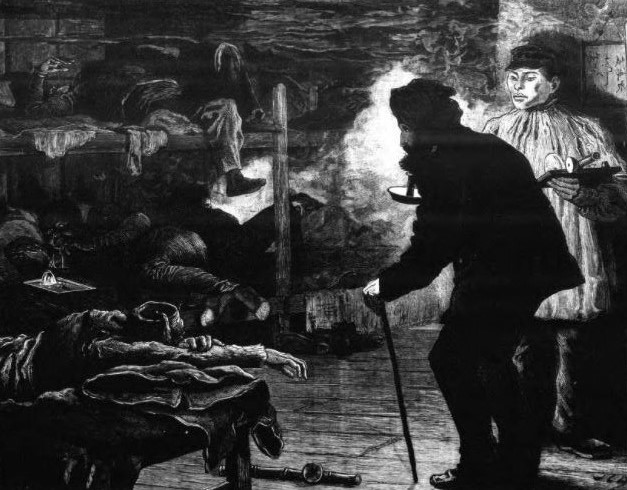
pipe dream: American English, late 19th century—originally with reference to the kind of visions experienced when smoking an opium pipe
Read More‘Mad as a hatter’ might be from ‘like a hatter’, an intensive phrase meaning ‘like mad’, perhaps related to the verb ‘hotter’, expressing motion and emotion.
Read More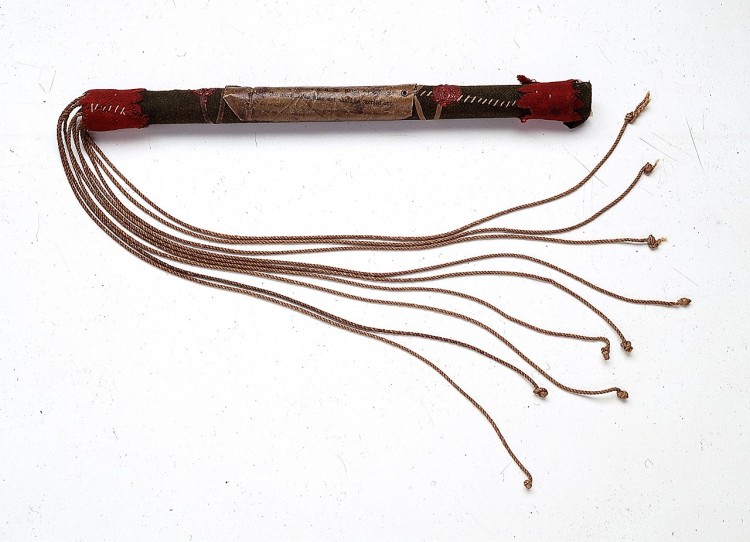
cat-o’-nine-tails (1866-79) – photograph: National Maritime Museum The noun cat-o’-nine-tails denotes a rope whip with nine knotted cords, formerly used, especially at sea, to flog offenders. This instrument of punishment was authorised in the British navy and army until 1881—cf. also to run the gauntlet. The word is first recorded in Love for […]
Read More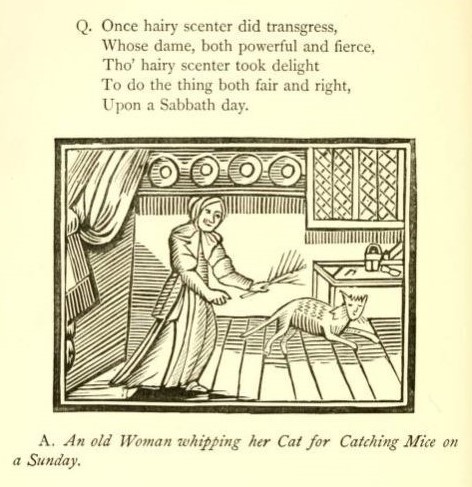
Q. Once hairy scenter did transgress, Whose dame, both powerful and fierce, Tho’ hairy scenter took delight To do the thing both fair and right, Upon a Sabbath day. A. An old Woman whipping her Cat for Catching Mice on a Sunday. from The True Trial […]
Read More
A Mad Dog in a Coffee House (London, 20th March 1809) by the English caricaturist Thomas Rowlandson (1756-1827) The term hair of the dog denotes an alcoholic drink taken to cure a hangover. It is a shortening of the phrase hair of the dog that bit you, first recorded in A dialogue […]
Read More
